How to Sell a Veterinary Practice Confidentially in 2026

How to Sell a Veterinary Practice Confidentially in 2026
Key takeaways
- Confidentiality is not paranoia — it is value protection. A leak can trigger staff flight, client churn, and competitor poaching, and because your price is built on stable earnings, any of those can lower the number before you ever close.
- A confidential sale replaces a public listing with staged disclosure. A blind teaser, signed non-disclosure agreements, and a controlled list of vetted buyers mean the market never learns your practice’s name until you decide to tell it.
- You can sell without your staff knowing until the deal is essentially done. Route every deal communication to your personal email and cell phone, and let your advisor be the buffer that fields buyer interest.
- Tell the team last, and tell them yourself. Associates get a little advance notice to review contracts; the full team hears it directly from you in the final weeks before closing.
- An advisor is the structure that makes confidentiality hold across the 5 to 8 months a sale usually takes, when an owner trying to do it alone is the most common source of the leak.
The single most common question I get on a first call has nothing to do with price. Before an owner asks what their practice is worth, before they ask about taxes or timing, they lower their voice a little and ask some version of the same thing. How do I do this without my team finding out?
It is the right first question. Selling your practice is one of the biggest financial events of your life, and the people whose paychecks depend on it have no idea it is happening.
A receptionist who overhears the wrong call, a competitor who hears a rumor at a continuing-education dinner, a long-time client who senses something is off — any one of them can damage the value of the very thing you are trying to sell, while you are mid-sale and least able to absorb it.
So this article is the honest answer to that quiet first question. Not a vague promise that “we keep things confidential,” but the actual mechanics — the non-disclosure agreements, the blind teaser, the controlled buyer list, and the timing of what you tell your staff and when — that let an owner sell a veterinary practice confidentially from the first conversation all the way to the closing table.
To sell a veterinary practice confidentially means running the entire sale so that staff, clients, and competitors do not learn the practice is for sale until you choose to tell them. You achieve it not by secrecy alone but by structure: staged disclosure, signed agreements, and a controlled list of vetted buyers, instead of a public listing.
Done right, the broad market never even learns your practice’s name, and your team hears the news directly from you, in the final weeks, when the deal is essentially certain.
Why confidentiality matters more than owners expect
Most owners think of confidentiality as a comfort — they would simply prefer their staff not know yet. The truth is harder and more financial than that.
A confidential veterinary practice sale protects the price.
Here is the logic. A buyer pays for your practice based on its earnings and its stability, the durable profit that will still be there after you hand over the keys.
Anything that shakes the team or the client base during the deal can lower that number, and a premature disclosure shakes both at once.
In the deals I have watched, premature disclosure tends to create three concrete risks, all of which erode value mid-sale. Staff fear and turnover come first, because the moment your team thinks a sale is happening, the most marketable people quietly start looking.
Competitors come second, using the rumor to recruit your staff or your clients. And third, pet owners begin questioning the practice’s future, which is poison for a practice built on long-term trust.
None of those are abstract. When a key associate leaves on a rumor, others sometimes follow, and the market starts to perceive the practice as unstable, which is precisely the perception a seller must avoid mid-transaction.
The general principle from business litigation is blunt: when someone uses inside knowledge to poach, the harm extends far beyond a single lost client, into lost staff, disrupted strategy, and reputational damage.
There is a reason this risk is sharper in veterinary medicine right now than it was a decade ago. Private equity poured an estimated $51.6 billion into the U.S. veterinary sector between 2017 and 2023, plus another $9.3 billion in just the first four months of 2024, per PitchBook figures cited by Stateline.
Consolidators now own roughly 30 percent of U.S. general veterinary practices, up from about 8 percent a little over a decade earlier, per estimates compiled by Pets.Care.
The point is not that any of those well-funded buyers are a threat — many of them may end up bidding on your practice and paying you a premium. The point is that the market around you is busier, better-capitalized, and more aware than ever, which means a leak travels faster and costs more than it used to.
What a confidential sale actually looks like
So how do you run a sale where, for months, almost nobody knows it is happening? The honest answer is that you do not rely on people keeping a secret.
You build a process where there is no secret to keep, because information is released in deliberate stages to a tiny, vetted group.
Confidential M&A sales use a layered disclosure model, and it works the same way for a veterinary practice as for any well-run sale. The table below is the one I walk owners through over dinner when they ask how this is even possible.
| Stage | What the buyer sees | What protects you |
|---|---|---|
| 1. Blind teaser | A one-page anonymous summary: broad region, practice type, financial ranges only | Nothing identifies the practice; the market never learns your name |
| 2. Signed NDA | The practice’s identity and high-level financials | The buyer is legally bound to confidentiality and barred from soliciting your staff |
| 3. Confidential memorandum (CIM) | Detailed financial and operational information | Shared only after the NDA, only to genuinely interested buyers |
| 4. Full due diligence | Complete records, contracts, and data room | Opened only to buyers who show real intent via a letter of intent or proof of funds |
Read down that table and the design becomes obvious. At every step, a buyer has to earn the next layer of information by giving up something — their signature, their seriousness, their proof that they can actually fund the deal.
A blind teaser is the first gate — a one-page anonymous summary that shares only broad details like general region, practice type, and financial ranges, with nothing that could identify the specific practice. It is enough to make a serious buyer raise their hand, and not enough for anyone to guess which practice it is.
A buyer who raises that hand then signs a non-disclosure agreement (NDA) before learning anything more — a contract promising to keep the practice’s identity and financials confidential, signed before any meaningful information changes hands. Only then do they receive the confidential information memorandum (CIM) — the detailed package of financial and operational information about the practice, shared only after the NDA is signed.
The full data room comes last, and only to buyers who have shown real intent through a letter of intent (the short document setting general deal terms) or proof of funds (evidence they can actually pay).
This is why owners are advised to reveal nothing beyond “I’m interested” until a letter of intent is in hand. Every layer of disclosure is matched to a layer of buyer commitment, so your sensitive information is never sitting in front of someone who was just curious.
The NDAs that do the real work
The non-disclosure agreement is the legal backbone of a confidential sale, and in veterinary practice deals it often does more than one job. Some advisors use two distinct NDAs, and understanding why is useful even if your process combines them into one.
The first is sometimes called an identity NDA. Its job is to prevent disclosure of the practice’s identity, and it is what allows a buyer to move from the blind teaser to learning your name.
The second, a data NDA, protects the detailed financial and operational information you share afterward and, critically, prohibits the buyer from soliciting your employees.
That non-solicitation clause is the part owners should care about most. It bars the buyer from recruiting your staff for a set period if the deal falls through, which closes off one of the ugliest ways a failed deal can hurt you.
A buyer who walks away should not get to walk away with your best associate.
A few details matter when these agreements get drafted. The NDA is signed before any meaningful financial or operational information changes hands, never after.
And a seller should avoid making representations at the NDA stage that the disclosed information is complete or accurate, because the deep verification of all of it comes later, during diligence. Our full walk-through of that phase lives in our guide to veterinary practice due diligence.
I will say plainly that this is not the place to use a generic template you found online. The non-solicitation terms, the time limits, the carve-outs for general job advertising — these are the clauses that actually protect you if a deal dies, and they are worth having drafted by someone who has done it in a practice sale before.
How an advisor keeps the secret you cannot keep alone
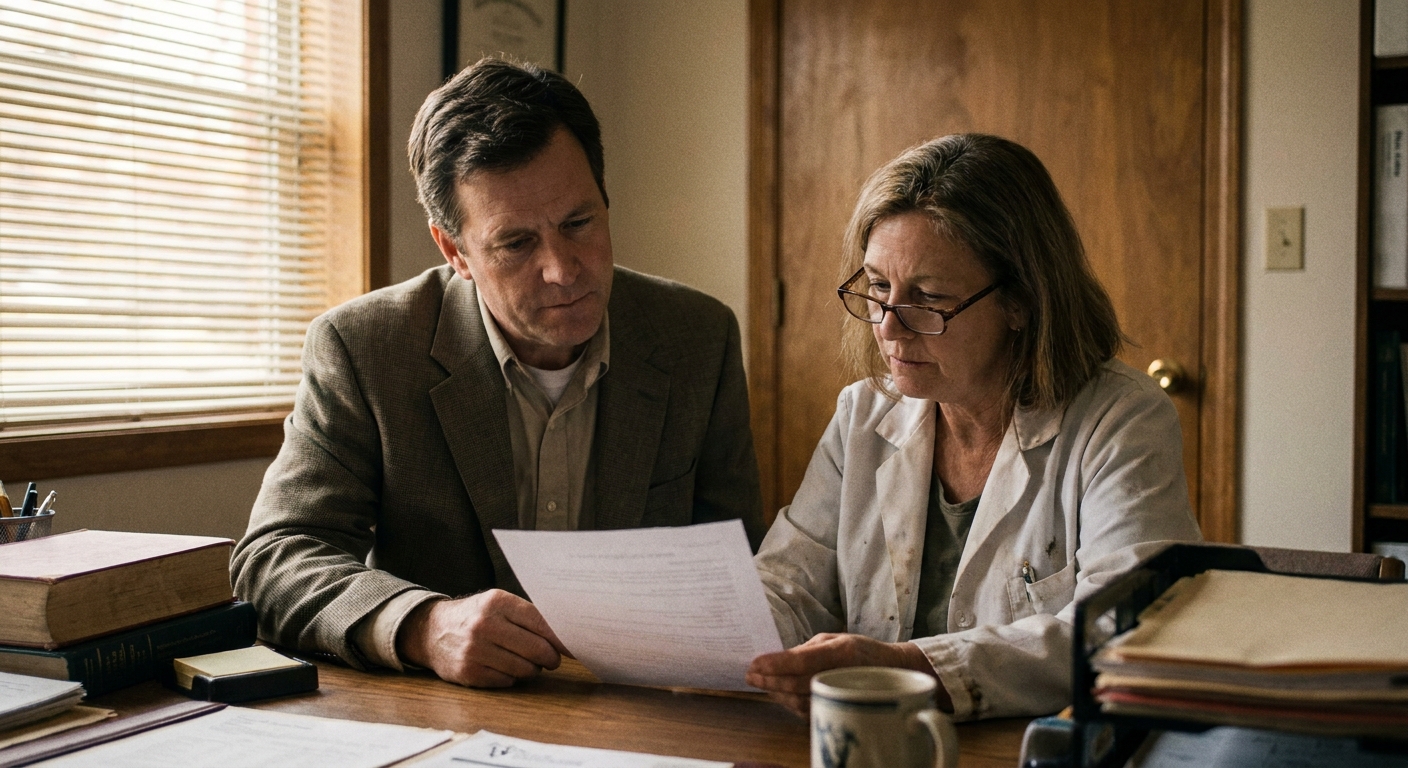
Here is the part owners underestimate. The single most common source of a leak is not a careless buyer.
It is the owner, trying to run a confidential sale alone while still showing up to work every day.
Think about what a do-it-yourself sale requires. You field buyer calls between appointments, you take meetings that your practice manager notices, you forward financial files from your work email, and you do all of it while your staff watches you behave slightly differently than you did last month.
People are perceptive, and a practice is a small place.
A sell-side advisor exists, in large part, to be the buffer that removes you from that exposure. A reputable veterinary advisor does not promote listed practices publicly at all, not even anonymously on its own website, specifically to prevent speculation about which practices are for sale.
The advisor fields buyer questions, qualifies interest, and runs the staged disclosure, so the owner is never the one seen taking the call.
The operational discipline goes deeper than that. Confidentiality is preserved by routing all deal-team communication only to the owner’s personal email and cell phone, never the practice line or a shared inbox, specifically so that a practice manager or front-desk staffer never sees the conversation.
Documents live on encrypted, access-controlled platforms with logged viewing, so you always know exactly who has seen what.
This is also where the structure of the process itself becomes a confidentiality tool, not just a price tool. The methodology we use to sell practices is the Elite Selling System — we hand-select and vet every buyer who gets to bid on your practice, the way a doorman with a velvet rope lets in only the right people, then run a private competitive window inside that vetted group.
A controlled, hand-picked buyer list is inherently more confidential than a public listing, because you are never broadcasting to the open market and hoping discretion holds. You are inviting a small number of qualified, vetted buyers behind a closed door.
That controlled list is the difference between hoping for confidentiality and engineering it. If you want to see how the same approach drives the final number, our guide to selling a veterinary practice walks the full process, and the veterinary practice brokers page covers how a sell-side advisor differs from a listing broker.
When and how to tell your staff
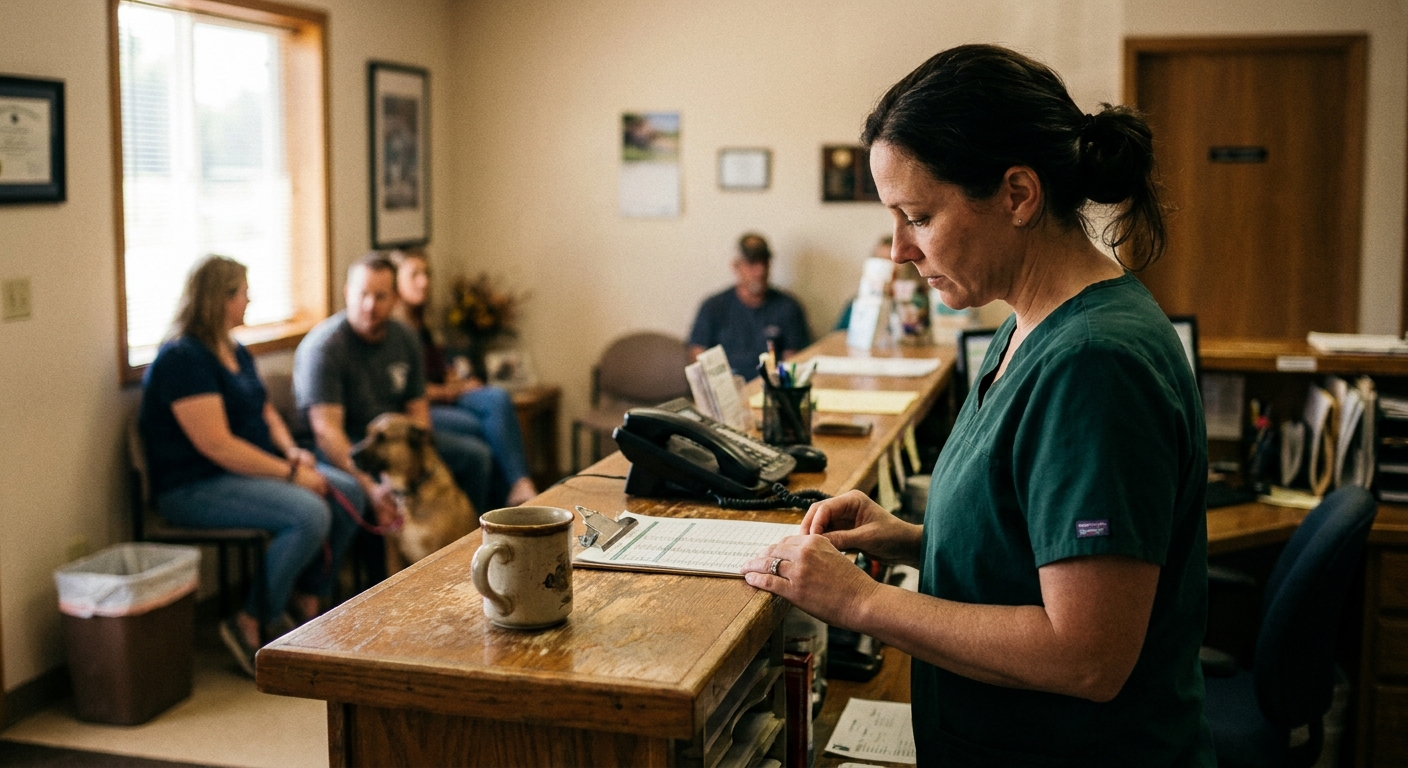
Every owner eventually arrives at the hardest question of a confidential sale. Not whether to keep it quiet, but when to stop.
Your team will find out, and how that lands matters enormously, both to them and to the deal.
The general guidance across vet-sale advisors is consistent. General staff are usually told only in the last few weeks before closing, after the owner is confident the deal will actually close.
Telling them earlier buys nothing but risk, because the period between “we might sell” and “we have sold” is exactly when fear does its damage.
Associate veterinarians are the exception, and they are usually told a little earlier than the rest of the team. They need time to review new employment contracts, get their own independent legal advice, and discuss any retention terms, so giving them a short head start is both practical and respectful.
There is one hard limit on confidentiality, and it is non-negotiable. At or just before the moment final documents are signed and proceeds are wired, the sale must be disclosed to the entire team.
And the news should come directly from you, the owner, so your staff feel respected and informed about their future rather than blindsided by a stranger.
I treat that final conversation as part of the deal, not an afterthought to it. The owners who handle it well are the ones who planned the message weeks earlier, decided what to say about job security and the buyer, and delivered it themselves with the buyer’s transition team ready to answer questions.
A well-run process protects your team’s stability right through the announcement, which is part of why the buyer is paying full value for the practice in the first place.
It is worth saying that telling staff late is not about treating them poorly. It is the opposite.
The whole point of waiting until the deal is certain is so that you never put your team through the fear of a sale that might not have happened, and so they hear good, finished news instead of anxious speculation.
Setting realistic expectations on the timeline
Owners often assume confidentiality is fragile, that it can only hold for a few weeks before something slips. The reality is that a well-structured process holds confidentiality across the entire sale, which is longer than most expect.
A veterinary practice sale typically takes about 5 to 8 months from preparation to closing, roughly one month per phase across valuation, marketing, bidding, due diligence, document preparation, and closing. Some sources cite a tighter 3 to 6 months from listing to close.
Either way, you are protecting a secret for the better part of a year.
Across nearly all of that timeline, your staff knows nothing, and the broad market never learns your identity at all. Vetted buyers see your name only after signing an NDA, and your team hears it only in the final stretch.
That is not luck. It is the predictable result of releasing information in stages to a controlled group rather than listing a practice publicly and hoping.
The deals that hold confidentiality cleanest are the ones where it was designed in from day one. Confidentiality is far harder to recover once it has slipped, which is why the process is built around prevention, not damage control.
What to do next
If you are even considering a sale, the most valuable thing you can do first is the quietest. Get a clear, confidential read on what your practice is worth and how a sale would actually run, before you tell a single soul, and before you do anything that a sharp practice manager might notice.
That first conversation changes nothing about your day-to-day and commits you to nothing. It simply replaces the anxious guessing — what is it worth, who would buy it, how do I keep this quiet — with a real answer and a real plan you control.
Get a Free Practice Value Estimate →
We pull your numbers, build a defensible valuation, and lay out exactly how a confidential process would work for your specific practice, all without a word reaching your staff, your clients, or your competitors. From there, if you decide to move, we run the staged disclosure, the NDAs, and the controlled buyer list ourselves, so you stay anonymous to the market until the moment you choose otherwise.
The Transitions Elite engagement model is success-based, with no upfront fees and no retainer, so we are only paid when a deal closes, out of the value the process protects and delivers.
Further reading
These are the related TE resources I would point any vet toward as they think about a confidential exit. Each goes deep on a single piece of the decision.
- Sell my veterinary practice — the owner’s decision guide to your sale paths and what each one delivers.
- How to sell a veterinary practice — the full process from advisor engagement to closing, with confidentiality built into every phase.
- Veterinary practice brokers — how a sell-side advisor differs from a public listing broker, and why that difference protects confidentiality.
- Veterinary practice due diligence — what a buyer’s team checks after the letter of intent, and how staged disclosure protects you through it.
- How long does it take to sell a veterinary practice — the realistic timeline, phase by phase.
- Veterinary practice consolidators directory — the verified directory of major PE-backed and strategic buyers operating in 2026.
Frequently asked questions
How do you sell a veterinary practice confidentially?
You sell confidentially by replacing a public listing with staged disclosure to a controlled list of vetted buyers. A one-page blind teaser shares only broad region, practice type, and financial ranges with nothing identifying.
A buyer learns the practice’s name and sees detailed financials only after signing a non-disclosure agreement. Full records open only to buyers who show real intent through a letter of intent or proof of funds.
All deal-team contact routes to the owner’s personal email and cell phone, never the practice line, so staff never see the conversation.
Why does confidentiality matter when selling a veterinary practice?
Premature disclosure creates three concrete risks that all erode value mid-sale: staff fear and turnover, competitors trying to exploit the situation by poaching staff or clients, and pet owners questioning the practice’s future. Because the price a buyer pays is built on the practice’s earnings and stability, anything that shakes the team or the client base during the deal can lower the very number the owner is selling on.
A confidential process protects the practice’s value until the deal is essentially certain.
When should I tell my staff I am selling my veterinary practice?
General staff are usually told only in the last few weeks before closing, once the owner is confident the deal will close, with the news coming directly from the owner so the team feels respected and informed about their future. Associate veterinarians are typically told a little earlier than the rest of the team, because they need time to review new employment contracts, get their own legal advice, and discuss retention terms.
The one hard limit is closing itself: at or just before signing, the entire team must be told.
What is a non-disclosure agreement in a veterinary practice sale?
A non-disclosure agreement, or NDA, is a contract a prospective buyer signs before receiving meaningful information about the practice, promising to keep the practice’s identity and financials confidential. In a practice sale it is signed before any real financial or operational information changes hands and usually includes a non-solicitation clause barring the buyer from recruiting the seller’s staff for a set period if the deal falls through.
Some processes use two NDAs: one protecting the practice’s identity at the teaser stage and one protecting the detailed data shared afterward.
Can I sell my veterinary practice without my staff knowing?
Yes. In a well-run confidential process, employees learn of the sale only when paperwork is nearly finalized, which minimizes panic and keeps productivity, and therefore value, from dropping during the deal.
The mechanics that make this possible are a blind teaser, signed non-disclosure agreements, a controlled buyer list, and routing all deal communication to the owner’s personal email and cell phone so a practice manager or front-desk staffer never sees it. The single point where staff must be told is at or just before closing.
How does a sell-side advisor keep a veterinary practice sale confidential?
A sell-side advisor preserves confidentiality by never marketing the practice publicly, releasing only a blind teaser to a hand-picked list of vetted buyers, requiring a signed non-disclosure agreement before sharing the practice’s name or financials, and storing all documents on encrypted, access-controlled platforms with logged viewing. The advisor also acts as the buffer, fielding buyer questions and qualifying interest so the owner is never seen taking calls or meetings that staff might notice.
The owner stays anonymous to the broad market until they choose otherwise.
What happens if word gets out that my veterinary practice is for sale?
A leak can trigger staff resignations, clients drifting to other practices on rumors about the future, and competitors using the moment to recruit your team or your clients. When key staff leave, others sometimes follow, and the market starts to perceive the practice as unstable, which is exactly the perception a seller must avoid mid-transaction.
Because the price is built on stable earnings, a leak can lower the number before a deal even closes, which is why structured processes are built to prevent one in the first place.
How long does a confidential veterinary practice sale take?
A veterinary practice sale typically takes about 5 to 8 months from preparation to closing, roughly one month per phase across valuation, marketing, bidding, due diligence, document preparation, and closing, though some sources cite 3 to 6 months from listing to close. Confidentiality holds across nearly all of that timeline.
Staff are generally told only in the final few weeks, and the broad market never learns the practice’s identity at all, because vetted buyers see the name only after signing a non-disclosure agreement.
Sources
Confidentiality and M&A process
- OffDeal. “Best Practices for Managing Confidentiality During a Small Business Sale.” offdeal.io
- Mahan Law. “Timeline and Process for Selling a Veterinary Practice.” mahanlaw.com
Veterinary practice sale, legal, and confidentiality guidance
- Today’s Veterinary Business. “Best-Kept Secrets: Protect Information (Legal Lingo).” todaysveterinarybusiness.com
- Today’s Veterinary Business. “Seal the Deal.” todaysveterinarybusiness.com
- Mandelbaum Barrett PC. “How to Strategically Sell a Veterinary Practice / Hospital.” dmcounsel.com
Market context: consolidation and competitive risk
- Pets.Care. “Corporate Consolidator Ownership of Veterinary Practices.” pets.care
- Stateline. “Vets fret as private equity snaps up clinics, pet care companies.” 2024. stateline.org
- Hendershot Cowart P.C. “Client Poaching.” hchlawyers.com

Melani Seymour, co-founder of Transitions Elite, helps veterinary practice owners take action now to maximize value and secure their future.
With over 15 years of experience guiding thousands of owners, she knows exactly what it takes to achieve the best outcome.