Hiring a New-Grad Veterinarian in 2026: What Owners Should Know
Key takeaways
- The new-doctor discount has mostly disappeared: companion-animal starters averaged $140,000. Established veterinarians earned 93% more than new graduates in 2001, versus 19% more in 2024.
- Debt belongs in the management conversation, not the diagnosis: indebted members of the class of 2025 averaged $212,499 in DVM debt, while the class-wide debt-to-income ratio was 1.4:1. The populations differ, so the figures cannot be combined to infer income.
- Wellbeing pressure has a measurable financial edge: flourishing fell from 60.8% with no educational debt to 37.7% at debt of $300,000 or more.
- A larger pipeline will not solve this year’s vacancy: first-year enrollment passed 4,000 in 2022-23. Separately, nearly 60% of graduating seniors in 2025 already had full-time work before graduation.
- Mentorship is a budgeted operating commitment: protected doctor time, reachable case backup, a staged clinical ramp, team support, and regular feedback must exist on the schedule before the offer goes out.
- The best new-grad hires solve tomorrow’s capacity problem: if the practice needs unsupervised production immediately, it should wait for experience rather than place a new doctor into a role built to fail.
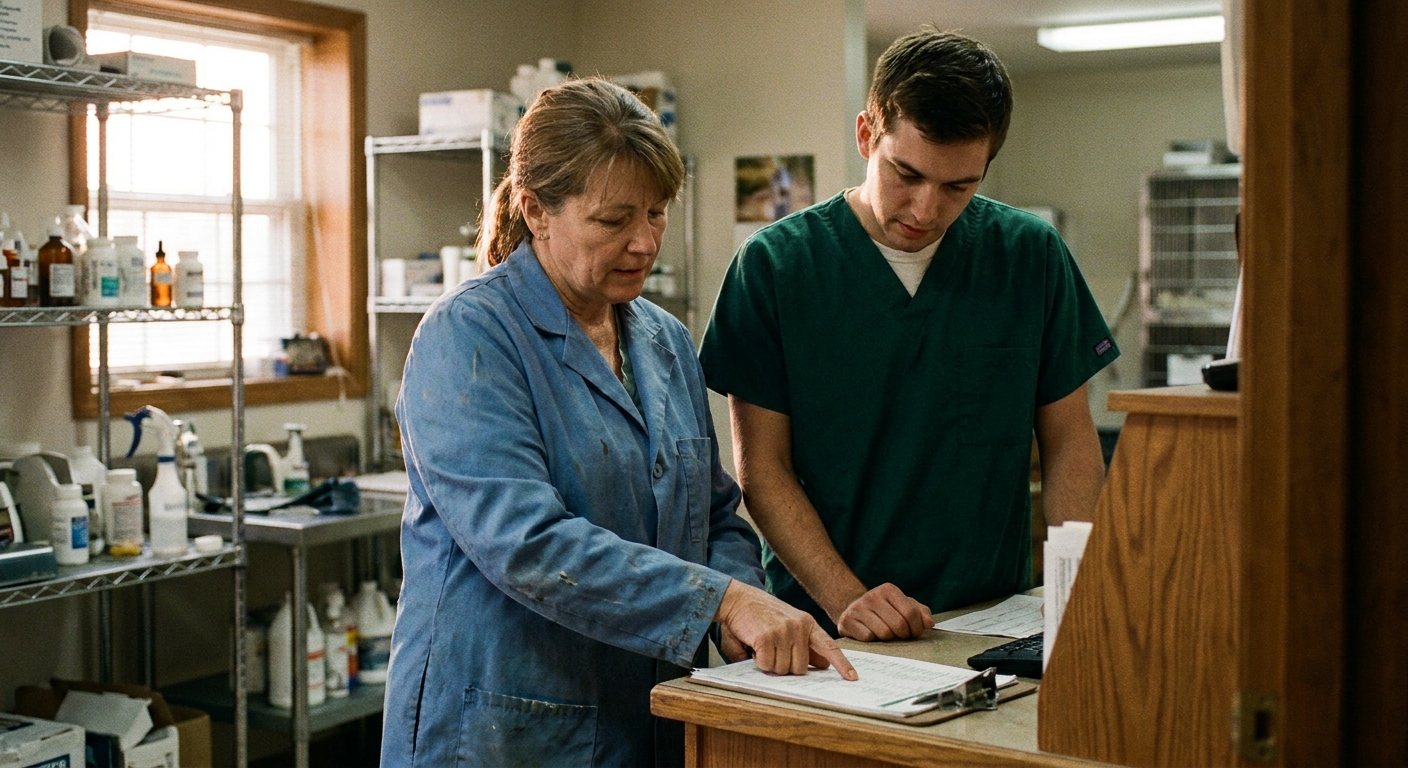
When I walk an owner through a new graduate’s offer over dinner, the decision usually stops at one scheduling question: who steps out of appointments when the new doctor needs help?
The candidate may be bright, teachable, and kind with the team. The practice still needs another doctor now, yet nobody has assigned the mentor’s time on the schedule.
Hiring a new-grad veterinarian in 2026 works when an owner treats lower experience as a need for more support, not as a reason to expect much lower pay.
The practice must fund market compensation and protected mentor time, reachable case backup, team help, and a gradual clinical ramp before expecting the doctor to carry a full schedule.
Is a new-grad veterinarian still a discounted hire in 2026?
Not in the way many owners remember. Companion-animal starters averaged $140,000, while established veterinarians earned 93% more than new graduates in 2001, versus 19% more in 2024.
The owner is buying less immediate independence, but not receiving a deep salary discount for it.
AVMA’s later compensation reporting gives the clearest current anchor. New graduates entering full-time employment across career paths earned an average inflation-adjusted starting salary of $129,000.
That broad average includes several career paths. For a companion-animal GP owner, the companion-animal figure is the cleaner starting point, not the lower number that looks friendlier in a budget.
AVMA’s inflation-adjusted comparison explains the shift: established veterinarians earned 93% more than new graduates in 2001, versus 19% more in 2024.
That is salary compression, the narrowing difference between starting compensation and the pay of established doctors. The old bargain is gone.
Do not solve that problem by recreating the full associate-hire budget here.
Our separate guide to the cost to hire an associate veterinarian handles that model. The new-grad question is whether the practice can fund support on top of compensation without resenting either one.
| What the owner is buying | New graduate in 2026 | Experienced associate |
|---|---|---|
| Compensation advantage | Narrower than many owners remember | Higher experience may still command a premium |
| Immediate clinical independence | Usually lower | Usually the reason to wait |
| Support requirement | Protected mentor and team capacity | Practice-specific orientation and support |
| Ramp design | Staged by demonstrated readiness | Faster only if experience fits the actual role |
| Best use case | Build durable doctor capacity with time to teach | Fill a role that needs independent coverage sooner |
Read the table as a comparison of roles, not guarantees. It does not promise every experienced doctor walks in ready or every graduate needs the same help.
It compares supported development with earlier independence, not cheap with expensive.
What does veterinary debt change in a 2026 new-grad offer?
Debt changes how a candidate evaluates security, not whether the candidate can become an excellent veterinarian. Indebted members of the class of 2025 averaged $212,499 in DVM debt.
The 1.4:1 ratio covers the full class, so do not combine the figures to infer income. Predictable compensation, a credible ramp, and usable support carry financial as well as clinical meaning.
A debt-to-income ratio compares educational debt with annual income.
A ratio of 1.4:1 means debt equals 1.4 times income for the population measured. Repayment plans can still produce very different monthly obligations.
VIN Foundation’s guidance reinforces that boundary. The balance does not tell you the payment, so an owner should not make assumptions about a candidate’s finances, repayment plan, or tolerance for risk.
Even so, the offer carries financial weight. A vague promise of future production upside asks the graduate to absorb uncertainty.
A clear salary, explicit case support, and an honest schedule tell the candidate what will happen when the first difficult week arrives.
Debt is not a reason to handle a new doctor as fragile. It is a reason to remove avoidable ambiguity.
How are debt and wellbeing connected for veterinarians in 2026?
The published US wellbeing data show an association. Flourishing measured 60.8% among veterinarians with no educational debt, compared with 37.7% among those carrying $300,000 or more.
That does not prove debt caused every difference. It does make a production-first ramp with weak support a risk no thoughtful owner should dismiss.
“Flourishing” is a wellbeing measure based on how people rate their current and expected lives.
Across the full veterinarian sample, 53.9% were flourishing, but the debt split was much wider than the overall number suggests.
Merck Animal Health’s broader study also found that about 73% of veterinarians expressed career satisfaction, providing useful context alongside the debt split.
A new doctor can love the profession and still struggle when appointment speed, surgery expectations, and case complexity rise faster than judgment can safely follow.
An owner cannot repair educational debt, but the work environment around it is controllable.
Will the education pipeline make new graduates easier to hire in 2026?
The education pipeline is expanding, but it will not rescue an unsupported opening this year. Enrollment growth and schools in development point toward more graduates over time.
Those doctors still need years of education, enter different sectors and regions, and often accept positions before graduation. Future national supply is not present local availability.
First-year veterinary enrollment rose from 2,938 in 2012-13 to 4,047 in 2022-23, an increase of 37.7% over the decade.
Separate education-pipeline reporting said at least 12 additional schools were in various stages of development in 2023.
Those seats reach the labor market slowly, and the current AAVMC annual data report continues to track enrollment and applicants.
Workforce models still disagree about the exact national balance. One AVMA-commissioned analysis concluded existing colleges could meet companion-animal demand through at least 2035.
That lag makes a waiting strategy risky. A school announcement today does not put a licensed doctor in your exam room.
Nearly 60% of graduating seniors in 2025 had already secured full-time employment before graduation.
Availability also remains local. Owners may see a broader pool over time, but practices must still show how a new doctor is supported after the welcome lunch ends.
For the larger national labor debate, use our separate analysis of why owners cannot find a veterinarian to hire. Here, pipeline growth is not a substitute for readiness.
What does a new-grad veterinarian actually need from a practice in 2026?
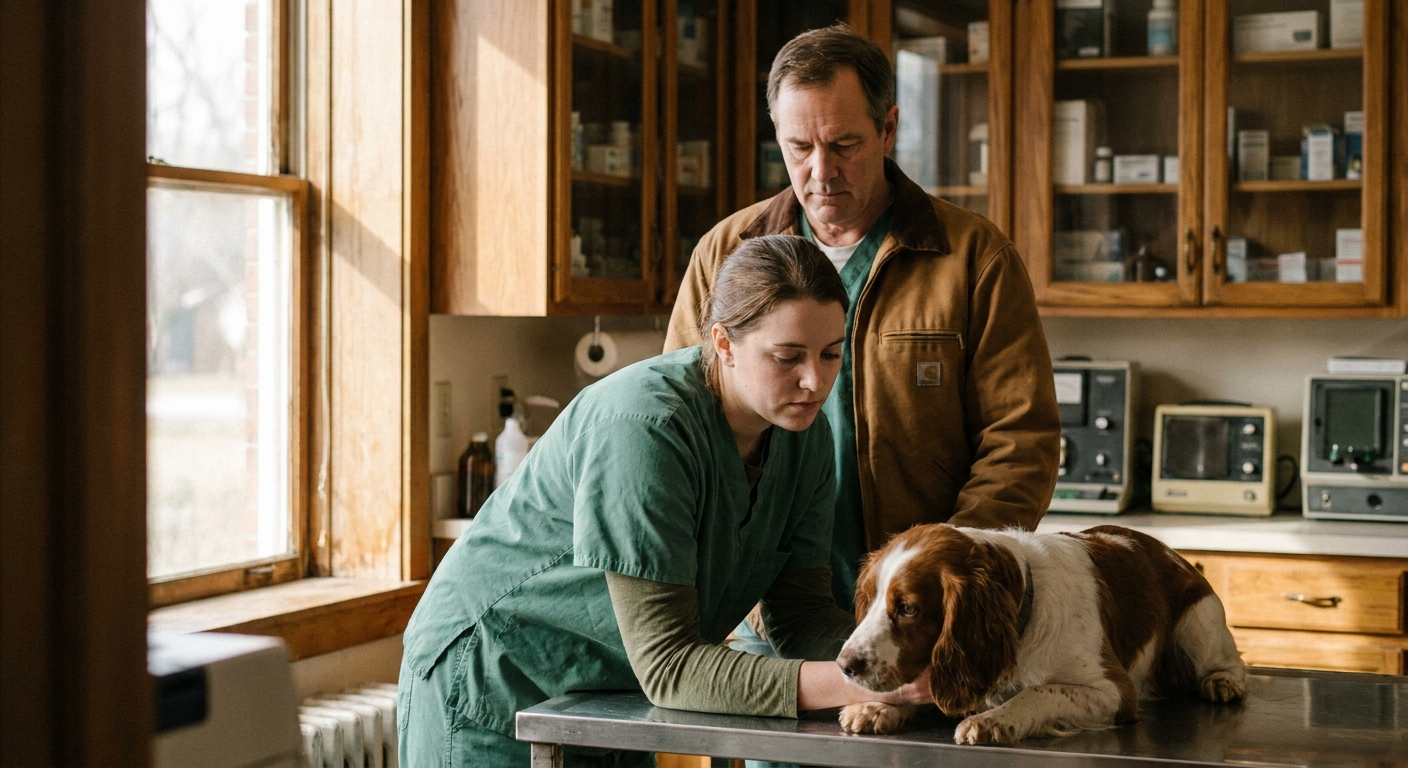
A new graduate needs a practice-designed clinical runway: protected mentor time, a named backup doctor, a case mix that expands with demonstrated readiness, technician and assistant support, and direct feedback.
Appointments also need room to run differently at first. Each item consumes real capacity, which means each belongs in the operating plan.
A clinical ramp is the staged move from closely supported cases to broader independent responsibility. It should respond to what the doctor demonstrates, not an arbitrary date or the moment the schedule gets inconvenient.
The promise must survive the calendar. “Ask me anytime” fails when the mentor is double-booked, in surgery, or carrying the very cases the owner hired the graduate to relieve.
Otherwise, the promise disappears exactly when it is needed.
Build the commitments before recruiting:
| Commitment | What it looks like in the practice | What quietly breaks without it |
|---|---|---|
| Protected mentor time | Case discussion is reserved on the schedule | Questions wait until they become stress or rework |
| Reachable case backup | The graduate knows who can step in and how | “Ask anyone” becomes “interrupt everyone” |
| Staged case mix | Complexity expands when judgment and communication are ready | The schedule, not competence, sets the pace |
| Procedure progression | Observation, assistance, and lead responsibility are deliberate | Confidence is mistaken for readiness |
| Team support | Technicians and assistants know the ramp plan | The team experiences development as chaos |
| Direct feedback | Cases are reviewed candidly and without theatre | Small gaps harden into habits |
| Client handoffs | The practice introduces the graduate as a supported doctor | Clients read “new” as “on your own” |
The team needs the plan too. These commitments need no national benchmark; they need names, calendar space, and an owner willing to fund temporarily uneven capacity.
If you need the broader recruiting and offer sequence, read how to hire an associate veterinarian. This decision comes first: whether your practice can be the place your job listing claims it is.
When does hiring a new-grad veterinarian work brilliantly in 2026?
A new-grad hire works brilliantly when the practice has time to teach, enough team stability to support learning, a case mix that can be staged, and leadership that enjoys coaching.
The graduate gains confidence without being abandoned. The practice builds doctor capacity around its own standards instead of waiting indefinitely for a perfect experienced candidate.
The owner must want the teaching. Tolerance is not enough.
In the right setup, the senior doctor can pause without feeling every question steals from an impossible day.
The team knows what the graduate owns today, what needs a second look, and how responsibility will expand.
During ramp-up, candor beats performance. Curiosity, honesty about limits, willingness to receive feedback, and steady communication are more useful than performative certainty.
Done well, the practice develops a doctor who understands its medicine, clients, and team from the inside.
How does a new-grad hire quietly fail in 2026?
The quiet failure starts when an owner hires a new graduate to create immediate relief, then discovers that safe development consumes the very doctor time the practice lacks.
Full schedules arrive too soon, backup stays theoretical, and the team absorbs unplanned training. Both sides begin treating a capacity mismatch as a character problem.
The first failure is a motive mismatch. If the owner needs someone to take the schedule without interruption, that is an experienced-associate job description, however promising the new graduate may be.
Invisible mentorship comes next: no named doctor, protected review time, or agreement about which cases trigger help.
Comparison follows. The graduate’s pace is measured against an owner who has practiced for years, and every slower appointment starts to feel like a broken financial promise.
The failure can look calm: nobody storms out, the mentor becomes harder to reach, the graduate stops asking, and the team works around both until the vacancy returns.
The mismatch was predictable. This is not a bad-graduate story; it is an underfunded-support story.

Should you hire a new grad or wait for experience in 2026?
Hire the new graduate when the practice can protect teaching capacity and accept a staged move toward independence.
Wait for experience when the role must carry a full caseload quickly, senior doctors cannot step away, or the team has no room to absorb training. Need, not optimism, should decide.
Use this screen before you talk yourself into the wrong profile:
| Current practice condition | Better fit |
|---|---|
| A senior doctor can protect time for coaching | Hire the new graduate |
| The opening requires immediate independent coverage | Wait for experience |
| The team is stable and understands developmental roles | Hire the new graduate |
| Technicians, assistants, or managers are already overloaded | Wait for experience |
| Case complexity can expand in deliberate stages | Hire the new graduate |
| Every doctor is already carrying an unsustainable schedule | Wait for experience |
| Leadership enjoys teaching and gives direct feedback | Hire the new graduate |
| The owner needs the hire mainly to stop personal exhaustion now | Wait for experience |
A vacancy is visible, but a failed ramp often hides inside the schedule until far more trust has been spent.
What does the new-grad decision say about practice value in 2026?
If the practice cannot release enough doctor and team capacity to develop a new graduate, that is more than a hiring inconvenience. It may show that care delivery depends heavily on the owner’s personal output.
Owners should price that dependence by learning how the practice’s earnings and doctor coverage affect transferability and value.
Transferability means the practice can keep delivering care and producing earnings without the owner’s constant clinical presence.
A practice with no room to teach, no backup coverage, and no way to reduce the owner’s schedule may have a capacity problem another job ad cannot solve.
Selling is not the default. The owner should stop treating value as a question reserved for retirement and learn what the veterinary practice is worth while choices remain open.
Some owners will invest and build. Others will recognize that waiting for an experienced associate has become another way to postpone a timing decision the practice is already forcing.
If a transition becomes the better path, our Elite Selling System hand-selects and vets every buyer allowed to bid on the practice.
It works the way a doorman with a velvet rope admits only the right people, then creates competition inside that qualified group.
The method is designed to price the practice owners actually built, including its doctor coverage and dependence on the seller.
What should an owner do next in 2026?
Decide whether your practice needs development or immediate independence. If it can protect mentor time, stage cases, support the team, and carry a gradual ramp, write those commitments into the operating plan.
Do that before hiring. If it cannot, wait for experience and measure what the capacity constraint is doing to your choices.
If the clean answer is hire, fund the conditions that make the hire fair and let readiness, not schedule pressure, widen the role.
If the answer is wait and the practice cannot keep waiting comfortably, a free, confidential practice value estimate gives you a current number to place beside the next recruiting cycle, without obligating you to sell.
Capacity becomes a value question. We look at earnings, doctor coverage, owner dependence, and transferability, then explain what those facts mean in the current market, putting information first.
Our work is success-based: we are paid only after an owner approves the outcome and the practice sells. Pricing varies depending on the value of the practice.
If the answer is to keep the practice and build the right runway for a new doctor, you will know exactly what must be protected when Monday’s schedule fills up.
Frequently asked questions
Is hiring a new-grad veterinarian cheaper than hiring an experienced associate in 2026?
Not by much at the compensation line. Companion-animal starters averaged $140,000.
In inflation-adjusted terms, established veterinarians earned 93% more than new graduates in 2001, versus 19% more in 2024.
A new graduate may bring less independent capacity at first, so budget support separately.
What mentorship does a new-grad veterinarian need in 2026?
A new graduate needs protected mentor time, a clearly reachable doctor for case support, a staged case and procedure ramp, scheduled feedback, and a team that understands the plan.
“Ask anytime” is not a mentorship system if the senior doctor is booked solid and unavailable when the hard case arrives.
How much debt does a typical new veterinary graduate carry in 2026?
Among indebted members of the class of 2025, average DVM debt was $212,499; the class-wide debt-to-income ratio was 1.4:1.
Those populations differ, so do not combine the figures to infer income. They explain why compensation, predictability, and support can become financial-security questions, not any candidate’s payment.
Does educational debt affect veterinarian wellbeing in 2026?
The strongest published US comparison found flourishing declined from 60.8% among veterinarians with no educational debt to 37.7% among those with $300,000 or more.
That is an association, not a diagnosis of an individual candidate, but it makes careless financial pressure during ramp-up a poor management choice.
Will veterinary-school growth make new graduates easier to hire in 2026?
The pipeline is expanding, but it is not an immediate local solution.
First-year enrollment passed 4,000 in 2022-23 after growing 37.7% over the prior decade, and at least 12 additional schools were in development in 2023.
Graduates still take years to reach the market and choose where to work.
How quickly should a new-grad veterinarian ramp up in 2026?
There is no defensible universal timetable. Ramp responsibility by demonstrated readiness: begin with supported cases, expand the case mix as judgment and communication strengthen, and keep backup available.
The right pace depends on the doctor, mentor capacity, team support, and the medicine the practice expects the graduate to perform.
When should an owner wait for an experienced veterinarian in 2026?
Wait when the opening requires immediate independent coverage, the current doctors cannot protect mentoring time, the support team is already overloaded, or the practice cannot absorb a gradual ramp.
An experienced associate may be harder to find, but a new graduate cannot fix an urgent capacity problem without help.
What does an inability to support a new graduate say about practice value in 2026?
It can reveal that clinical capacity depends too heavily on the owner or a small number of doctors.
That does not determine value by itself, but it is a reason to examine transferability, meaning whether care and earnings can continue without the owner’s constant presence, before another hiring cycle.
Sources
New-graduate compensation, debt, and wellbeing
- AVMA News. New-graduate compensation coverage: “Inflation continues to dampen gains in veterinarian salaries, fewer new grads entering full-time employment” (October 15, 2025) and “Gap shrinks between new graduate, overall veterinary salaries” (November 7, 2024). 2025 compensation · salary compression
- AVMA. Debt and wellbeing coverage: “Chart of the month: Average DVM debt climbing” (January 27, 2026) and “Veterinary profession heading in right direction with mental health” (January 22, 2024). class of 2025 debt · debt and flourishing
- VIN Foundation. “The First Two Years of Student Loan Repayment for Veterinarians.” Updated March 14, 2025. vinfoundation.org
- Merck Animal Health. “Fourth Veterinary Wellbeing Study.” January 15, 2024. merck-animal-health-usa.com
- Today’s Veterinary Business. “US Veterinary Industry Grows Amid Rising Challenges.” March 19, 2026. todaysveterinarybusiness.com
Education pipeline and workforce context
- AVMA. Education and supply coverage: “US veterinary colleges increase seats at accelerating rate” (September 26, 2023), “Chart of the Month: More veterinarians in the educational pipeline” (October 10, 2023), and “Existing veterinary colleges adequate to meet US companion animal veterinary demand until at least 2035” (November 25, 2024). seat growth · schools in development · supply through 2035
- AAVMC. “2024-2025 Annual Data Report.” November 2025. aavmc.org
- Gitter, Robert J., and Bill LaFayette. “Demand for and Supply of Veterinarians in the U.S. to 2032.” AAVMC-hosted, June 7, 2024. aavmc.org
- AVMA. “2025 Report on the Economic State of the Veterinary Profession.” 2025 edition. ebusiness.avma.org
Support-team capacity
- Frontiers in Veterinary Science. “Trends in enrollment, retention, and graduation of United States veterinary technicians/nurses schools.” 2024. pmc.ncbi.nlm.nih.gov

Melani Seymour, co-founder of Transitions Elite, helps veterinary practice owners take action now to maximize value and secure their future.
With over 15 years of experience guiding thousands of owners, she knows exactly what it takes to achieve the best outcome.