Mission Pet Health Events and Roadshows in 2026: What Sellers Need to Know

Mission Pet Health Events and Roadshows in 2026: What Sellers Need to Know
Key takeaways
- Mission Pet Health is the merged entity of Southern Veterinary Partners (SVP) and Mission Veterinary Partners (MVP), backed by Shore Capital Partners, with 850-plus hospitals in 41 states as of its July 2025 brand launch and growing rapidly into 2026.
- Mission does not publish a formal 2026 public roadshow calendar for sellers. Their team reaches practice owners through direct outreach, veterinary industry conference presence, and structured competitive processes run by sell-side advisors.
- Any direct contact from Mission’s acquisition team is a buyer interaction, not neutral education — the development team’s job is to identify motivated sellers and start building a relationship before alternatives are on the table.
- The 2026 market context matters: Mission completed a $268 million sale-leaseback of 102 properties with Four Corners Property Trust, signaling continued institutional capital and an active acquisition program.
- The seller’s best leverage is information and competition. Knowing what the full market would pay — not just what one active buyer offers — is the only way to evaluate whether a direct Mission offer is fair.
The call came on a Thursday afternoon, and the vet who told me about it described the experience the same way a lot of owners do. Friendly.
Professional. The person on the other end knew her market, knew her approximate patient volume, and asked really good questions. “They seemed genuinely interested in the practice,” she told me. “It felt more like a conversation than a pitch.”
That’s Mission Pet Health’s development team doing their job well. And they do it well.
The question I put back to her was the same one I’d ask any owner in that situation: before that call, did you know what your practice was worth to anyone else?
She didn’t.
That’s the whole thing right there. Mission Pet Health is one of the most active veterinary practice acquirers in the US market in 2026.
Their events presence, their direct outreach, their conference visibility — all of it is designed to get a conversation started. That conversation is an asset for them.
How much of an asset it is for you depends entirely on what you bring into the room.
Mission Pet Health events — whether that means a direct call from their development team, a meeting at a veterinary conference, or an introductory discovery session — are the opening move in an acquisition relationship. What follows is the part that determines how your sale turns out.
What is Mission Pet Health and how did it get here in 2026?
Mission Pet Health is the combined PE-backed veterinary platform formed when Southern Veterinary Partners and Mission Veterinary Partners merged. The merger formally closed in late 2024.
On July 21, 2025, the two organizations publicly launched the unified Mission Pet Health brand, marking what their announcement described as “a transformative moment in veterinary care.”
The financial sponsor behind the platform is Shore Capital Partners, a Chicago-based middle-market private equity firm. Shore Capital backed Southern Veterinary Partners and Mission Veterinary Partners independently before the merger, and the combined entity represents one of their flagship portfolio investments.
The July 2025 press release from the company confirms Shore Capital as the primary sponsor of the merged platform.
At the time of the brand launch, Mission Pet Health operated 850-plus hospitals across 41 states with more than 20,000 team members. By mid-2026, that footprint had grown to over 930 locations, as reported in connection with the FCPT real estate transaction in May 2026 (discussed below).
The platform’s CEO is Dr. Jay Price, a veterinarian who founded Southern Veterinary Partners in 2014.
The scale of Mission Pet Health‘s operation is relevant to sellers for a specific reason: platforms of this size run systematic acquisition programs. They have dedicated development teams, regional business development representatives, defined acquisition criteria, and established processes for identifying and approaching independent practice owners. The outreach a practice owner receives from Mission in 2026 is part of that program, not an informal inquiry from an interested buyer.
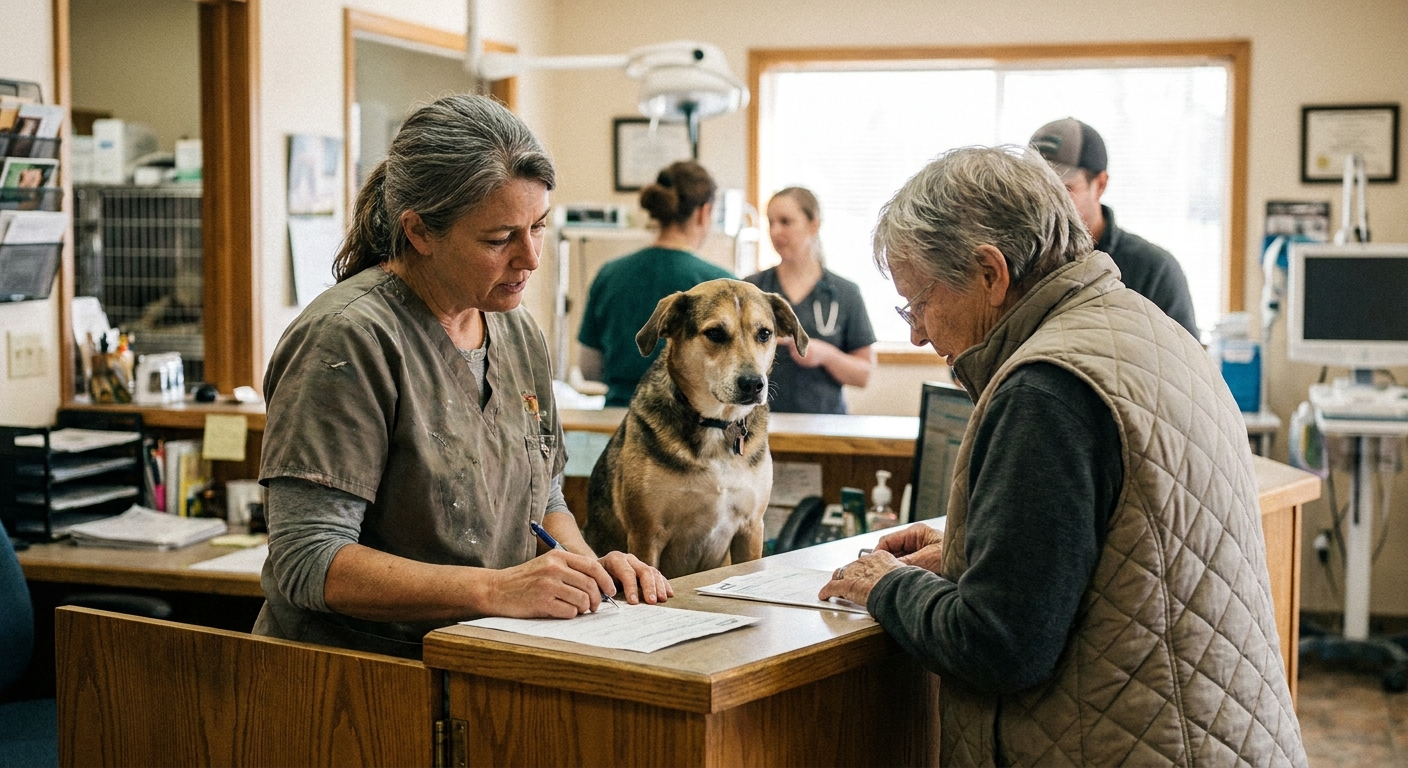
What Mission Pet Health events and outreach actually look like in 2026
Searching for a “Mission Pet Health roadshow” or a “Mission Pet Health 2026 events calendar” for sellers will come up short. Mission does not publish a structured 2026 public roadshow program for prospective seller-partners. No event schedule is listed on their news and events page as of the time this article was written, and no confirmed public seller-facing seminar series has been announced.
What Mission does have is an active presence across several channels that function as their primary seller-outreach mechanisms.
Direct outreach. Mission’s development team identifies practices through market research and proactively contacts owners by phone, email, or referral. This is the most common way an independent practice owner first hears from Mission.
The contact is typically friendly and non-pressuring, focused on learning about the practice and whether the owner has thought about the future of the practice.
Veterinary conference and professional association presence. Mission Pet Health and its predecessor entities have maintained a consistent presence at major veterinary industry events. VMX — the annual conference organized by NAVC in Orlando — draws nearly 30,000 veterinary professionals and features an extensive expo hall.
The AVMA annual convention similarly draws large attendance from practice owners. Mission’s development team uses these events to meet practice owners in person, make introductions, and continue conversations already underway.
Attendance at a VMX presentation, a booth conversation, or a networking dinner tied to a conference is a version of a Mission Pet Health event, even if it doesn’t appear on a formal calendar under that label.
Inbound through the partnerships page. Mission maintains a partnerships page at missionpethealth.com/partnerships that describes their approach to acquisition, their stated commitment to preserving local practice identity, and their flexible deal structure philosophy. Owners who reach out through that page are entering Mission’s development pipeline on the buyer’s terms.
Structured competitive sale processes. When a sell-side advisor runs a competitive process and invites Mission as one of several qualified buyers, Mission participates through that process on equal terms with other bidders. This is the channel where a seller’s leverage is highest, because Mission is bidding against known competition during a defined window rather than negotiating in isolation.
The practical upshot: if you are hearing from Mission Pet Health in 2026, in any form, their acquisition program has identified your practice as a potential target. That is useful information. What you do with it is the decision that matters.
Why the 2026 Mission Pet Health event and outreach environment matters for sellers
The timing of Mission’s outreach is not random. The market context for 2026 shapes when and how active buyers engage practice owners.
Capstone Partners‘ April 2026 Pet Sector M&A Update notes that financial sponsor activity is expected to strengthen through 2026 and 2027, driven by LP demand for liquidity and the fundamental structure of PE fund lifecycles. Shore Capital, like every PE sponsor, operates on a fund cycle that creates defined windows when acquiring new practices and eventually positioning the platform for an exit makes strategic sense.
An active acquisition program in 2026 reflects where Mission sits in that cycle.
The FCPT transaction announced in May 2026 underscores this. Four Corners Property Trust agreed to acquire up to 102 Mission Pet Health veterinary properties for up to $268 million from Shore Capital Real Estate Partners Fund I, with closing expected in early Q3 2026, per the BusinessWire announcement. This sale-leaseback — in which Mission continues operating those locations under long-term triple-net leases — is a capital-recycling move that frees up balance sheet capacity for further acquisitions.
A platform executing a $268 million real estate transaction while simultaneously running an active acquisition program is a buyer with institutional capital and institutional intent.
That is good news for sellers who run a proper process. An active, well-capitalized buyer is a stronger bidder. The question is whether Mission’s development team is the only buyer in the conversation, or whether they are competing.
Axios reported in February 2026 that PE-backed platforms are navigating a more complex exit environment as the COVID-era pet ownership surge moderates. Practices coming to market in 2026 still command strong multiples for quality assets, but the buyers are more selective about what they acquire.
Today’s Veterinary Business described the 2025-2026 period as one where the “easy arbitrage is gone” and buyers focus more on operational fit, platform compatibility, and margin potential. For a practice owner, that means buyers are more deliberate in 2026, which also means a seller who runs a structured process has more negotiating leverage, not less, because fewer practices clear the bar the buyer actually wants.
How Mission Pet Health’s acquisition team approaches practice owners
Understanding what Mission has published about their partnership approach helps owners interpret any outreach they receive.
Mission’s partnerships page describes a model built around a stated commitment to preserving local practice identity. They write that they do not change a practice’s name, brand, logo, or community presence after acquisition.
Their deal-structure language emphasizes flexibility: “no partnership structure is the same,” and they describe accommodating different owner situations and timelines. The platform also offers back-office support infrastructure — payroll, HR, marketing, purchasing — as part of the value proposition for joining their network.
Their stated focus is on general and companion-animal hospitals, specialty practices, urgent cares, and pet resorts that share their values around medical autonomy and client service. The CEO, Dr.
Jay Price, founded Southern Veterinary Partners as a veterinarian-led alternative to PE-backed platforms that he felt deprioritized clinical culture. That origin story is part of Mission’s pitch to practice owners.
None of this is negative framing. Mission Pet Health is a legitimate, large-scale, well-capitalized buyer with a clear vision for the practices they acquire. Owners who have sold into Mission have had a range of experiences, and the platform’s footprint and ranking among the most active acquirers reflects genuine interest from veterinary practice owners.
The critical point for a seller is structural, not reputational. A single buyer’s stated flexibility and cultural values do not substitute for competitive information. What Mission is willing to pay in a direct conversation — absent other buyers — and what they would put on paper in a formal competitive process against other qualified bidders are two different numbers. That gap is not a knock on Mission.
It is how every buyer in every market operates. Leverage is relative, and the first offer in a direct conversation reflects the leverage the buyer perceives, which is highest when the seller has not yet talked to anyone else.
What “Mission Pet Health events” really means for a seller’s decision-making in 2026
I want to be direct about something, because owners sometimes misread the framing of a buyer’s outreach. When Mission’s development team attends a conference, sponsors a CE session, or hosts a dinner for practice owners in a given market, those activities serve Mission’s acquisition pipeline.
That is not a criticism. It is the function.
The equivalent for a seller would be using those moments to collect information — about Mission, about what the market is doing, about what other active buyers are looking for in 2026 — without surrendering the thing that creates leverage: exclusive access to your practice before a competitive process has been run.
The most common mistake I see owners make when they encounter Mission Pet Health events or direct outreach is answering too many questions too early. Mission’s development team is skilled at learning what an owner cares about, what their timeline looks like, and whether the owner has talked to anyone else.
Each of those data points is useful to a buyer calibrating an offer. An owner who has spoken freely about a desire to sell within 18 months, who hasn’t retained an advisor, and who says they “just want it done” has just negotiated against themselves before any offer exists.
This is not specific to Mission. It is how every well-run acquisition program operates.
The response that serves owners is: gather the information freely available — Mission’s partnership materials, their presence and scale, the kinds of practices they pursue — and save the financial conversation for after you know what your practice is worth in the full market.

What Mission Pet Health events in 2026 tell you about the buyer — and what to do with that
Here is the benchmark table that matters most when a seller is sorting out how to respond to Mission Pet Health events or direct contact.
| Channel | Who controls the information flow | Your leverage level | Best use |
|---|---|---|---|
| Cold outreach call from Mission | Mission’s development team | Low — you share what you know; they calibrate | Gather information; do not disclose financials or timeline |
| Conference booth or dinner conversation | Shared | Low to moderate — informal setting; Mission is listening | Learn about the platform; no commitments |
| Inbound via Mission’s partnerships page | Mission’s process | Low — you’ve identified yourself as a motivated seller | Collect materials; not a substitute for advisor engagement |
| Competitive sale process with Mission as one bidder | Sell-side advisor manages | High — Mission bids against known competition in a defined window | Maximum leverage; where competitive outcomes are produced |
The table is not a scoring of Mission as a buyer — they are an excellent buyer and a serious participant in competitive processes. It is a scoring of information dynamics.
The channel shapes the outcome.
EBITDA — what your practice earns in pure operating profit, before taxes and accounting choices — is the base number every buyer multiplies to set a price. The multiple — the multiplier applied to EBITDA — is what competitive pressure moves.
In our work across the deals we’ve closed over the past four-plus years, the Elite Selling System — our structured approach where we hand-select and vet every buyer who gets to bid on your practice, the way a doorman with a velvet rope lets in only the right people — consistently produces outcomes that are multiple turns of EBITDA higher than what the same practice would clear in a single-bidder direct conversation with any buyer, Mission included.
The arithmetic on that gap is real money. A single turn of EBITDA — one more multiplier point on your earnings number — on a practice generating $500,000 in EBITDA is half a million dollars.
Two turns is a million. The gap between a competitive outcome and a direct-offer outcome on a solid mid-size practice rarely shows up as fractions.
It shows up as millions.
How Mission’s 2026 footprint and activity affects the seller market broadly
It is worth naming what Mission Pet Health’s scale means for the seller market, not just for sellers evaluating Mission directly.
A platform with 930-plus locations and an active acquisition program in 2026 is bidding on practices that are also being pursued by NVA (backed by JAB Holdings), PetVet Care Centers (backed by Ares Management), Thrive Pet Healthcare (backed by TSG Consumer Partners), AmeriVet Veterinary Partners (backed by AEA Investors and Oaktree Capital), and others. The competition among well-capitalized buyers is one of the structural conditions that creates seller leverage in 2026 — provided that competition is surfaced through a structured process rather than hidden.
Mission’s acquisition activity also signals something about the direction of the market. A PE-backed platform executing a major sale-leaseback transaction in May 2026 while continuing its practice acquisition program is deploying capital with discipline, not desperation.
Capstone Partners characterizes 2026 as a period when financial sponsors are likely to accelerate deal activity driven by LP liquidity demand. For sellers, that means the capital is real, the buyers are motivated, and the conditions for a strong competitive outcome are present — if the process is structured to capture them.
The AVMA has documented the consolidation wave in veterinary medicine, and AAHA has published guidance on what practice owners should know before engaging with a consolidator. Both resources are worth reading alongside Mission’s own partnership materials.
Neither substitutes for a qualified sell-side advisor reviewing the financials and running the process on your behalf.
What to do if Mission Pet Health reaches out in 2026
The practical sequence that protects sellers who receive outreach from Mission’s team or encounter Mission at a veterinary event in 2026:
First, learn freely. Mission’s partnerships page, their public announcements, their news and events section — all public. Read it.
Understand what they prioritize, what they do and don’t change after acquisition, and how they describe their deal approach.
Second, do not share financials or confirm a timeline. The moment a seller shares gross revenue, EBITDA, or a preferred timeline in a casual conversation with a buyer’s development team, that information becomes part of the buyer’s offer calibration. Keep early conversations to the practice’s general characteristics, not its economics.
Third, get an independent value opinion before engaging. The only way to know whether what Mission would offer is competitive is to know what the practice is worth to the full market. That means a practice valuation conducted independent of any buyer, and ideally a sense of what multiple a practice with your profile clears in a competitive process in the current market.
Fourth, understand who to sell to beyond Mission. The buyer landscape in 2026 includes PE-backed platforms, regional independent groups, and associate buyout structures. Mission may turn out to be the best fit for a given practice — but that conclusion is only meaningful after the alternatives have been surfaced and compared.
Our guide to veterinary practice consolidators covers the full buyer pool.
Fifth, consider what a competitive process actually produces. A sell-side advisor who invites Mission and other qualified buyers to bid in a structured window is not excluding Mission — Mission participates as a serious bidder. They are often strong competitors in those processes.
What the process does is convert Mission from the only buyer in the room to one of several, which changes what they put on paper.
Understanding earnout and rollover equity structures — common in PE-backed transactions — is also worth doing before evaluating any offer’s headline number against its structure.
There is no version of this where speaking to Mission Pet Health first is the problem. Gathering information is smart.
The problem is gathering it without knowing what you’re walking into, and without a baseline of what the practice is actually worth on the open market.
The practice you’ve spent years building is the single largest financial asset you’re ever likely to sell. The process you use to sell it — who is in the room, how many of them are competing, and what information is on the table when the first number is proposed — determines more of the outcome than almost any other variable.
Get a Free Practice Value Estimate →
If you’ve received outreach from Mission Pet Health‘s team, or you’re planning to attend a veterinary conference where Mission will have a presence, now is the right time to know what your practice is worth before that conversation deepens. Our process starts with a free, no-commitment practice value estimate — a clear picture of what your practice would likely clear in a competitive process, based on current buyer activity and your actual financials.
We work on a success-based engagement model. No upfront fees, no retainers.
We get paid when a deal closes, and only out of the value we create above what you would have realized on your own.
Frequently asked questions
What are Mission Pet Health events in 2026?
Mission Pet Health does not publish a formal 2026 public roadshow calendar. Their acquisition team reaches practice owners through direct outreach, participation in veterinary industry conferences such as VMX and AVMA annual conventions, and through sell-side advisor processes.
Owners who receive direct contact from Mission’s team, or who encounter Mission representatives at a professional event, are being introduced to the buyer’s partnership program — not a neutral educational event. Understanding that distinction shapes how a seller should respond.
Who is Mission Pet Health and who backs them?
Mission Pet Health is the combined veterinary platform formed by the merger of Southern Veterinary Partners (SVP) and Mission Veterinary Partners (MVP). The merger formally closed in late 2024, and the unified Mission Pet Health brand launched publicly on July 21, 2025.
The platform is backed by Shore Capital Partners, a Chicago-based middle-market PE firm. As of 2026, Mission Pet Health operates 850-plus hospitals across 41 states and is one of the most active veterinary practice acquirers in the US market.
How does Mission Pet Health contact veterinary practice owners about selling?
Mission Pet Health‘s development team reaches practice owners through several channels: direct phone and email outreach to practices identified through market research, attendance at and sponsorship of veterinary conferences and professional association events, inbound inquiries through their partnerships page at missionpethealth.com/partnerships, and structured competitive sale processes where a sell-side advisor brings Mission in as one of several qualified bidders. Each channel serves Mission’s acquisition pipeline, though the seller’s information advantage and leverage vary significantly by channel.
Should I attend a Mission Pet Health event or meeting before talking to a sell-side advisor?
Gathering information is always reasonable, but owners should understand that any direct conversation with Mission’s acquisition team — whether at an industry event, a discovery call, or an in-person meeting — is a buyer interaction, not neutral education. Mission’s team is skilled at surfacing an owner’s motivations and timeline during early conversations.
Before sharing financial details or indicating an intent to sell, owners benefit from speaking with a qualified sell-side advisor who can help frame what the practice is actually worth to the full market before any single buyer’s offer is on the table.
What does Mission Pet Health look for in a veterinary practice acquisition in 2026?
Based on Mission Pet Health‘s published partnership materials, they pursue general and companion-animal hospitals that align with their values around medical autonomy, client service, and community presence. They state they do not change a practice’s name, brand, or logo after acquisition.
Their development criteria generally favor practices with stable or growing revenue, multi-doctor capacity, and geographic fit within their existing network. Specific acquisition criteria, including minimum revenue thresholds and preferred geography, are best confirmed directly with Mission’s development team or through a sell-side advisor process where Mission is an active bidder.
How large is Mission Pet Health as of 2026?
Mission Pet Health is among the largest PE-backed veterinary platforms in the US. As of mid-2026, the platform operates over 930 locations across more than 30 states.
In May 2026, Four Corners Property Trust announced an agreement to acquire up to 102 Mission Pet Health veterinary properties for up to $268 million, a sale-leaseback transaction that underscores the platform’s scale and real estate footprint.
What is a sale-leaseback in veterinary practice transactions?
A sale-leaseback is a transaction in which a practice or platform sells its real estate to an investor and simultaneously signs a long-term lease to continue operating from that location. For Mission Pet Health, the May 2026 FCPT transaction illustrates this at scale: Shore Capital Real Estate Partners Fund I sold 102 Mission properties to FCPT for up to $268 million, while Mission continues to operate those locations under long-term triple-net leases.
Individual sellers should ask whether real estate is included in any offer from Mission or any other buyer, as property ownership adds a separate layer of negotiation and value.
How does a competitive process compare to a direct Mission Pet Health offer?
A direct offer from Mission Pet Health reflects what Mission’s team believes the practice is worth at the moment of first contact, calibrated to the leverage they perceive in that single conversation. A competitive process introduces Mission alongside other qualified buyers bidding during the same window.
The competitive dynamic changes what any buyer will put on paper. Across the deals we’ve run over the past four-plus years, the gap between a direct-offer outcome and a competitive-process outcome on comparable practices consistently runs into meaningful money — often several million dollars on a mid-size practice.
More on Selling to Mission Pet Health
- Selling your practice to Mission Pet Health
- Mission Pet Health at VMX and WVC 2026
- Met Mission Pet Health at a conference
Sources
Industry M&A research and market context
- Capstone Partners. “Pet Sector M&A Update — April 2026.” capstonepartners.com
- Axios. “Private equity firms find COVID-fueled veterinarian deals hard to exit.” February 25, 2026. axios.com
- Today’s Veterinary Business. “The Great Compression, Year 3.” December 2025. todaysveterinarybusiness.com
Mission Pet Health company disclosures and announcements
- Mission Pet Health. “Southern Veterinary Partners and Mission Veterinary Partners Join Together as Mission Pet Health.” July 21, 2025. missionpethealth.com
- GlobeNewswire. “Southern Veterinary Partners and Mission Veterinary Partners Join Together as Mission Pet Health.” July 21, 2025. globenewswire.com
- Mission Pet Health. “Partnerships.” missionpethealth.com
- Shore Capital Partners. “Mission Pet Health.” Portfolio company page. shorecp.com
Real estate transaction and financial filings
- BusinessWire. “FCPT Announces Agreement to Acquire up to 102 Mission Pet Health Veterinary Properties for $268 Million.” May 29, 2026. businesswire.com
- Connect CRE. “FCPT Snags Mission Pet Health Portfolio Across 31 States.” 2026. connectcre.com
Veterinary profession and consolidation context
- AAHA. “Corporate consolidation and the rise of private equity.” Trends Magazine. aaha.org
- dvm360. “Merger of veterinary organizations yields a new name.” 2025. dvm360.com
- NAVC. “VMX 2026 from NAVC.” navc.com

Melani Seymour, co-founder of Transitions Elite, helps veterinary practice owners take action now to maximize value and secure their future.
With over 15 years of experience guiding thousands of owners, she knows exactly what it takes to achieve the best outcome.