
Selling a Veterinary Practice With Real Estate: The 2026 Owner’s Guide

Selling Veterinary Real Estate: What Clinic Owners Need to Know
Selling veterinary real estate alongside your practice can significantly increase your total transaction proceeds, but it requires carefully decoupling the real estate asset from the operating business entity. Because institutional buyers and private equity groups approach property structures differently than owner-occupiers, structuring the lease agreement and asset valuation correctly before going to market is critical to avoiding tax penalties and deal delays.
Key takeaways
- Most vet owners own their building, and how they handle the real estate is a separate, high-stakes decision worth real money on top of the practice sale.
- There are four structures for the real estate in 2026: sell it to the same buyer, keep it and lease it back as the landlord, sell it separately to a different buyer, or sell it to a veterinary REIT.
- The standard lease-back in PE-backed deals is a long triple-net lease, commonly 10 to 15 years, with rent set against a cap rate that in turn sets the building’s value.
- Veterinary real estate has been trading near a 7 percent cap rate in 2025 to 2026, which means roughly $14 of building value for every $1 of annual rent, with institutional buyers and REITs competing for stabilized properties.
- A 1031 exchange lets you defer the capital gains tax on the real estate by rolling the proceeds into another investment property, turning a single-use clinic building into passive income.
There’s a question I get from almost every vet who owns their building, and it usually comes a few minutes after we’ve talked about the practice itself. They lean in a little and ask some version of, “What about the real estate?
Do I sell that too, or hang onto it?”
It’s the right question to ask. For most practice owners, the building is the second-largest asset they have, sometimes the largest.
How you handle it is a separate decision from selling the practice, and the two decisions don’t have the same answer. I’ve watched owners leave a meaningful amount of money on the table simply because nobody walked them through the real estate as its own deal with its own buyers and its own math.
This is the piece I wish every owner read before they signed anything. I’ll lay out the four ways you can handle the real estate in 2026, what each one actually pays, the lease-back that’s become standard in private equity-backed deals, the veterinary REITs that will compete for your building on their own, and the tax move that can defer a big chunk of what you’d otherwise owe.
By the end, you’ll know which structure fits your situation and roughly what it’s worth.
Why the real estate is its own decision
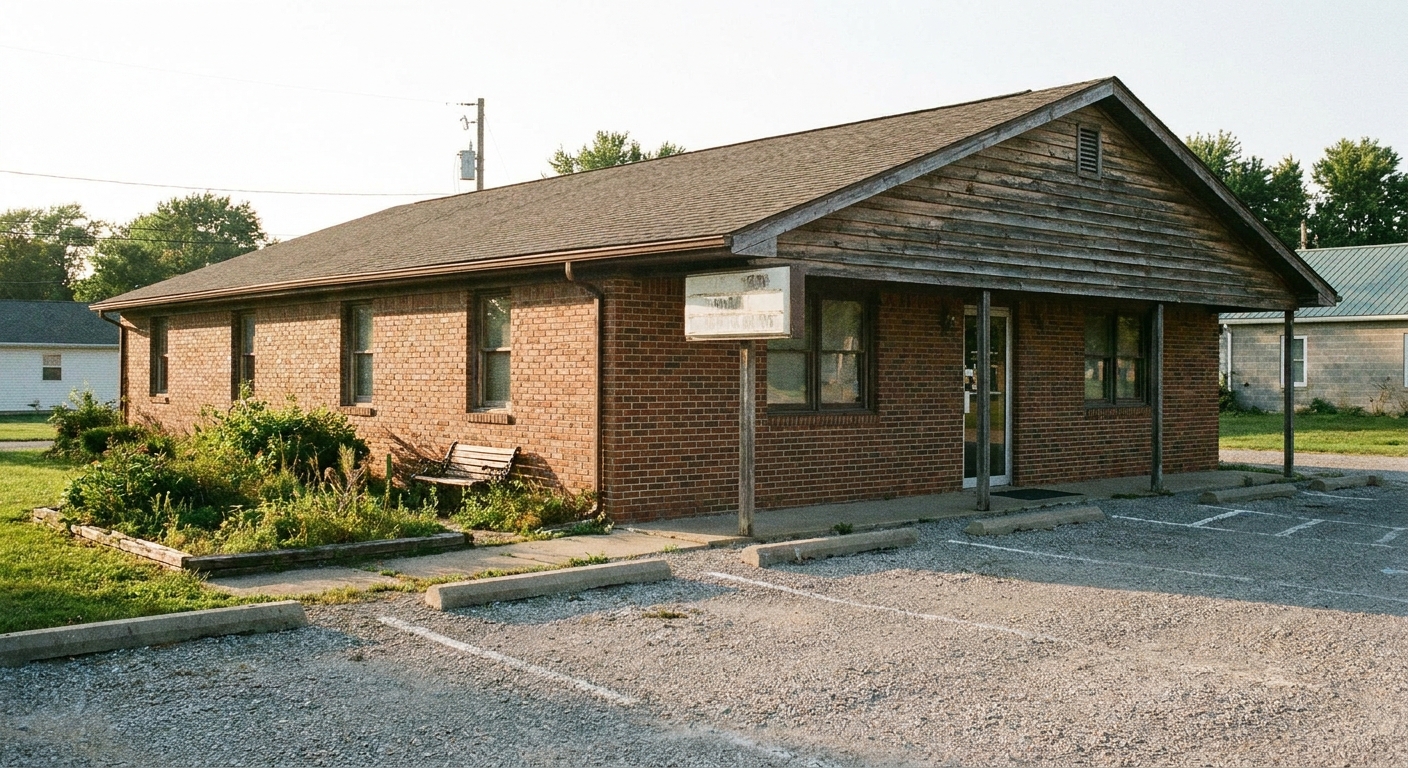
When you own the building your practice operates in, you actually have two assets sitting on top of each other. One is the practice, valued on its earnings.
The other is the real estate, valued on something completely different.
A buyer prices your practice off EBITDA — earnings before interest, taxes, depreciation, and amortization, which is what your practice produces in pure operating profit before financing and accounting choices — multiplied by a multiple. The real estate doesn’t work that way at all.
A building is priced off the rent it can produce and the cap rate — capitalization rate, the annual rent divided by the sale price — a real estate buyer is willing to accept.
Those are two different markets with two different sets of buyers. The practice attracts private equity-backed groups, regional acquirers, and individual vets.
The real estate attracts real estate investors, net-lease funds, and in 2026 a growing number of veterinary REITs that want nothing to do with running a clinic and everything to do with owning the building it runs in.
Treating both as one lump is how value gets lost. When you separate them and let each find its own best buyer, you usually end up with more in total than if you’d handed the whole thing to a single party who priced the package on their terms.
There’s real money in the building, too. U.S. pet spending hit roughly $152 billion in 2024, with veterinary care alone accounting for $39.8 billion of that, per the American Pet Products Association.
That demand has turned vet real estate into one of the more sought-after corners of net-lease investing, and it means your building has a deeper bench of buyers than you might think.
The four ways to handle your real estate in 2026
There are four structures, and almost every owner ends up in one of them. Here’s the comparison the way I’d sketch it on a napkin over dinner.
| Structure | Who keeps the real estate | Tax and cash implications | Best for |
|---|---|---|---|
| 1. Sell practice + real estate to the same buyer | The practice buyer | Largest single check at close; real estate portion taxed mostly at capital-gains rates; cleanest exit | Owners who want out fully and want one closing |
| 2. Keep the real estate, lease it back | You (you become the landlord) | Ongoing rent taxed as ordinary income; continued mortgage paydown; building sold later on your timeline | Owners who want income and believe in the building long term |
| 3. Sell practice and real estate to different buyers | A separate real estate buyer | Two transactions; real estate priced on its own cap rate; potential 1031 on the building | Owners with a strong building who want maximum total value |
| 4. Sell to or through a veterinary REIT | A real estate investment trust | Institutional price for a strong long lease; sale-leaseback cash now; 1031 available | Owners with a stabilized property and a long lease to offer |
None of these is automatically the right one. The best structure depends on your tax situation, whether you want to stay a landlord, how strong and re-leasable your building is, and which buyers in your specific pool actually want the dirt.
Let me take them one at a time.
Structure 1: Sell the practice and the building together
This is the most common path, and for good reason. Most buyers want the building.
When a buyer owns the real estate instead of renting it, they stop paying rent and start building equity from day one, which makes their economics cleaner. That’s especially true of individual buyers and smaller regional groups.
I’ve seen deals fall apart late in the process because a seller decided at the eleventh hour to keep the building and the buyer had always assumed they were getting it.
For you, selling both together has two big advantages. You get the largest single check, and you get one clean closing with no lingering relationship to manage.
You hand over the keys and you’re done.
The tax treatment helps here, too. When you sell the real estate outright, most of the proceeds come to you as capital gain, which is taxed at a lower rate than ordinary income.
That’s a meaningful difference against the alternative of collecting rent, which gets taxed at ordinary rates every year you hold the building.
The thing to watch is that the building’s value gets folded into the overall deal. A buyer purchasing the package has an incentive to frame the real estate conservatively, because every dollar they assign to the building is a dollar they can’t deploy elsewhere.
That’s exactly why you want the real estate valued independently before the conversation starts, so you’re negotiating from your own number, not theirs.
Structure 2: Keep the building and lease it back
The second path is to sell the practice but keep the real estate, then lease it back to the new operator. You stop being a vet and start being a landlord.
The appeal is steady income. You collect rent for years, you keep paying down the mortgage and building equity in the building, and you hold an asset you can sell later when it suits you.
Owners who do this typically target a 6 to 10 percent annual return on the building, and they like having one foot still in something they understand after the practice is gone.
The risks are just as real, and I make sure every owner hears them before they choose this path. First, the tax math runs against you.
Rent is taxed as ordinary income at the highest rate, year after year, where a sale would have been taxed mostly as capital gain.
Second, you’re now responsible for a single-use building. A veterinary hospital with a custom build-out is hard to repurpose, so if your tenant ever decides to move, you can be left holding a specialized property that needs real money to convert for anyone else.
The lease you sign is what protects you against that.
Which brings me to the most important point about this structure. The value of a building you keep is set almost entirely by the lease attached to it.
A long lease with a strong tenant and built-in rent escalations is worth a great deal. A short lease, or a lease with a shaky tenant, is worth much less, and it limits your options if you want to sell the building down the road.
The lease-back that’s standard in PE-backed deals

If your practice buyer is a private equity firm, there’s a good chance the deal includes a sale-leaseback — you sell the building and immediately sign a lease to keep operating in it as the tenant. PE-backed buyers are generally happy to lease rather than own, because they’d rather put their capital into practices than into real estate.
The lease they’ll want has a recognizable shape. The term commonly runs 10 to 15 years, and across net-lease veterinary deals leases frequently extend anywhere from 10 to 20 years with scheduled rent increases tied to inflation, per Northmarq’s net-lease research.
The buyer wants a long lease because it locks in their location and, when they go to sell the building or the platform later, a long lease is what makes the real estate valuable.
Almost always, it’s a triple-net lease — a lease where the tenant pays the property taxes, building insurance, and maintenance on top of base rent, so the landlord collects a clean rent check. The shorthand is “NNN.” Under a triple-net structure, whoever ends up owning the building gets predictable income without the usual landlord headaches, which is precisely why investors and REITs like these properties.
Here’s the part most owners miss. The rent in that lease isn’t just income.
It sets the building’s value. A real estate buyer takes the annual rent and divides it by a cap rate to get the price they’ll pay.
Set the rent too low to make the practice look more profitable, and you’ve quietly cut the value of your own real estate. Set it at a defensible market level, and the building holds its full worth as a separate asset.
That interplay between rent and building value is why the real estate deserves its own seat at the table. The lease you sign in a PE-backed deal isn’t a formality.
It’s a second negotiation worth real money, and it needs to be run with the same care as the practice sale itself.
Structure 3: Sell the practice and the building to different buyers
The third path treats the two assets as two separate sales to two separate buyers. The practice goes to a practice buyer.
The building goes to a real estate buyer who wants the income, not the clinic.
This is the structure that most often produces the highest total value, because each asset finds the buyer who values it most. A real estate investor will frequently pay more for a well-leased building than a practice buyer would have assigned to it inside a package deal, since the real estate buyer is in the business of owning income property and prices it accordingly.
The mechanics usually run like this. You sell the practice to the operating buyer and, as part of that deal, you sign a long triple-net lease.
That lease is what makes the building sellable on its own. Then you sell the building, with the lease attached, to a real estate buyer who’s buying a stream of rent backed by a tenant.
The reason this works is the same reason the lease matters everywhere else in this article. A building with a 10-to-15-year triple-net lease and a solid operator paying the rent is a clean, predictable investment, and that’s exactly what net-lease buyers compete for.
State ownership rules quietly support this separation, too. In most states, a veterinary practice itself must be owned by a licensed veterinarian, while the real estate and the management company can be owned by anyone, per veterinary practice ownership law summaries and corporate practice of medicine (CPOM) rules — the state laws that restrict who can own or control a medical or veterinary practice.
Because the building doesn’t have to stay with the clinical entity, putting it on its own track is natural rather than forced.
Structure 4: Sell to or through a veterinary REIT
The fourth path uses a buyer pool that didn’t really exist for vet owners a decade ago. A veterinary REIT — a real estate investment trust that buys clinic buildings as long-term income property and leases them back to the operators — buys the real estate and only the real estate.
These buyers have gotten active. Four Corners Property Trust, a net-lease REIT, acquired a National Veterinary Associates property for $4.4 million in late 2025 and has been adding veterinary buildings to its portfolio as part of a deliberate push into defensive, recession-resistant tenants, per the company’s own disclosures and Nasdaq coverage.
Across the broader net-lease market, vet real estate has become one of the corners institutional capital wants, and that competition is good for sellers.
The way you reach this pool is the sale-leaseback again. You, or your practice buyer, sign a long triple-net lease, and the REIT buys the building with that lease in place.
The REIT gets a stable, healthcare-backed rent stream. You get an institutional price for the real estate, in cash, now.
The catch is that REITs are selective. They generally want a long, credit-backed lease and a stabilized property in good condition, because they’re underwriting decades of rent.
Many veterinary buildings are older, and a REIT will look hard at the roof, the HVAC, and the parking before they commit, per net-lease industry commentary. If your building and your lease fit what they want, the REIT pool can produce a very competitive number.
If they don’t, a private real estate investor may be the better fit.
The point isn’t that a REIT is always the answer. It’s that a REIT is a third category of buyer for your building, separate from the practice buyer and separate from individual real estate investors, and a properly run process puts all three in competition.
The cap rate is the number that sets your building’s price
I keep coming back to the cap rate because it’s the single most important number in the real estate side of your deal, and most owners have never had it explained to them plainly.
A cap rate is the annual rent a building produces divided by its price. Flip it around and it tells you the price.
If a building throws off $200,000 a year in rent and a buyer wants a 7 percent cap rate, they’ll pay about $2.86 million for it, because $200,000 divided by 0.07 is $2.86 million. A lower cap rate means a higher price for the same rent.
A higher cap rate means a lower price.
In 2025 to 2026, veterinary properties have been trading at cap rates averaging around 7 percent nationally, with triple-net cap rates broadly ranging from about 5.5 to 7 percent, per Northmarq and net-lease market data. That FCPT purchase of a National Veterinary Associates building priced at a 6.7 percent cap rate on the rent, which sits right in that band.
Run the math and the leverage is obvious. At a 7 percent cap rate, every extra $10,000 of annual rent adds roughly $143,000 to the building’s value.
So the rent level you set in the lease, and the strength and length of that lease, translate directly into hundreds of thousands of dollars of real estate value. This is why I treat the lease as a negotiation, not paperwork.
The 1031 exchange: deferring the tax on your real estate
If you sell the building and you’d otherwise owe a large capital gains tax, there’s a well-established way to defer it. It’s called a 1031 exchange — a provision in the U.S. tax code that lets you defer capital gains tax on the sale of investment real estate by rolling the proceeds into another like-kind property.
The rules are specific and the clock is strict. After you close on the building, you have 45 days to formally identify the replacement property and 180 days to close on it, per the IRS.
The replacement has to be like-kind investment real estate, which the IRS interprets broadly, so you can trade a clinic building for almost any other commercial investment property held for business or investment use.
The key thing to understand is that a 1031 exchange defers the tax, it doesn’t erase it. You’ll owe the gain eventually, when you sell the replacement property without doing another exchange.
But deferral is powerful, because it keeps your full equity working for you instead of sending a chunk to the IRS at closing.
Here’s how owners actually use it. Many roll the proceeds from their single-use clinic building into passive net-lease real estate, sometimes even into REIT-eligible structures, so they trade a specialized building they had to manage for an income property they don’t.
They go from landlord-of-one-hard-to-re-lease-building to owner of something diversified and hands-off, and they defer the tax doing it.
A 1031 exchange has to be set up before you close, through a qualified intermediary, and it needs to be coordinated with your tax advisor. It’s not something you can bolt on after the sale.
But when it fits, it’s one of the most valuable moves available on the real estate side of a practice transition.
What the state rules do and don’t do
A quick word on the regulatory layer, because owners sometimes worry it complicates the real estate. It usually doesn’t, but it’s worth understanding.
In nearly all states, a veterinary practice must be owned by a licensed veterinarian and organized as a professional entity, while a management services organization (MSO) — the general business entity that PE-backed groups use to own shared services across multiple practices — can be owned by anyone. The real estate sits comfortably on the MSO or investor side of that line, which is part of why it’s so naturally sold or leased separately from the clinical practice.
A handful of states tightened their rules in 2025. Oregon’s SB 951 strengthened requirements that the practice retain genuine control over clinical operations, and Massachusetts adopted strong ownership-transparency rules for healthcare entities, per legal coverage from firms tracking healthcare consolidation.
Neither of those caps what your building is worth.
What rules like these can do is shape how the deal is structured, particularly around who owns the management entity and how the lease is papered. If you’re in a state with active legislation, the real estate path is worth confirming with counsel, but in my experience it changes the paperwork far more than it changes the price.
Setting realistic expectations for your building
So where does your specific situation land? A few honest guideposts.
If you want a clean break and the simplest possible exit, selling the practice and the building together to one buyer is usually the right call, and the capital-gains treatment on the real estate works in your favor. You trade a little total value for simplicity and certainty, and for many owners that’s a fair trade.
If you believe in the building and want income after you stop practicing, keeping it and leasing it back can work, but only if you sign a strong lease and you’re clear-eyed about the ordinary-income tax hit and the single-tenant risk. Don’t do this with a weak lease and a hope.
If your building is in good shape, well-located, and you can offer a long triple-net lease, the highest total value usually comes from selling the practice and the real estate on separate tracks, with the building going to a real estate investor or a veterinary REIT competing for the income. That’s where the separated approach earns its keep.
The expectation you don’t want to anchor on is that the practice buyer’s number for the building is the building’s actual market value. It rarely is.
The only way to know what your real estate is truly worth is to let the real estate market bid on it.
How a competitive process changes the real estate outcome
Everything I’ve described comes down to one principle. Whichever structure you choose, the value you realize depends on whether the right buyers are competing.
This is the heart of how we work. Running a practice through a structured competitive process is what we call the Elite Selling System, and the name describes the mechanism.
We hand-select and vet every buyer who gets to bid, the way a doorman with a velvet rope lets in only the right people, then we let those buyers compete inside that vetted group. The same discipline applies to the real estate.
When the building is run as its own asset with its own qualified buyers, the practice buyers who want the dirt, the real estate investors, and the veterinary REITs all end up bidding against each other instead of one party setting the terms. That competition is what surfaces the real number, on both the practice and the building.
I’ve watched the difference enough times to stop calling it a pattern. An owner who lets the practice buyer quietly absorb the real estate at whatever value the buyer assigns leaves money behind.
An owner who runs the building as its own competitive process, with the lease structured to maximize its value, captures the full worth of both assets. Same building, same financials underneath.
Different process to find out who would actually pay the most.
What to do next
Most of what I’ve laid out here is the kind of thing I’d walk a vet through over dinner in the first hour of getting to know them and their practice. The real estate is its own decision, with its own buyers and its own math, and it deserves the same care as the sale of the practice.
If you’re inside the window where you’re thinking about selling, the first move is simple. Get the building valued on its own, separate from the practice, based on a market lease and the prevailing cap rate.
That one number reframes the entire conversation, because now you know what the dirt is worth before any buyer tells you.
The second move is to decide what you actually want after closing, a clean exit or an income stream, and let that guide which of the four structures fits. Then run both the practice and the real estate through a process where the right buyers compete for each.
If you want a defensible estimate of what your specific practice and building would clear in a real competitive process, that’s exactly what we built our work to find out.
Get a Free Real Estate + Practice Value Estimate →
We pull your numbers ourselves, value the practice and the real estate separately, identify the right buyer pool for each, including the real estate investors and veterinary REITs that compete for buildings on their own, and send you back a defensible range with the math behind it. The estimate is free and there’s no obligation to engage further.
The Transitions Elite engagement model is success-based, with no upfront fees and no retainer. We only get paid when a deal closes, and only out of the value our process delivers above what you would have realized on your own.
Further reading
These are the related TE resources I’d point any vet who owns their building toward. Each one goes deep on a single dimension of the decision.
- Veterinary practice EBITDA multiples in 2026 — what practices sell for, how the multiple is set, and what moves it.
- How much private equity is paying for veterinary practices — the four components of any PE-backed offer and why the headline rarely equals the cash check.
- How to sell a veterinary practice — the full process from advisor engagement to closing, including tax considerations.
- Veterinary practice consolidators directory — the verified directory of every major PE-backed and strategic buyer operating in 2026.
- Our practice sale results — case studies and outcomes across the practices we’ve represented.
- About Transitions Elite — the team, the methodology, and the firm’s track record.
Frequently asked questions
Should I sell my veterinary practice and the real estate together in 2026?
It depends on whether you want a clean exit or an income stream. Most buyers prefer to buy the building too, so selling them together gives you the largest single check and the simplest close, with the real estate portion taxed mostly at capital-gains rates.
Keeping the building and leasing it back gives you years of rent instead, taxed as ordinary income. Neither is automatically right.
The decision turns on your tax picture, your appetite to stay a landlord, and how much the building is worth on its own. Running both pieces through a competitive process is the only way to see what each is actually worth before you choose.
What is a sale-leaseback in a veterinary practice sale?
A sale-leaseback means you sell the building and immediately sign a lease to keep operating in it as the tenant. In most private equity-backed practice deals, the buyer wants the seller to sign a long-term lease, commonly 10 to 15 years, structured as a triple-net lease where the tenant covers taxes, insurance, and maintenance.
The rent is set against a cap rate, which in turn sets the building’s sale value. The longer and stronger the lease, the more the real estate is worth to the buyer.
How is veterinary real estate valued when I sell?
Veterinary buildings are valued mostly on the lease that comes with them, not on comparable-sale price per square foot. A real estate buyer divides the annual rent by a cap rate to get the price.
In 2025 to 2026, veterinary properties have traded at cap rates averaging around 7 percent, which means roughly $14 of value for every $1 of annual rent. A 10-to-15-year triple-net lease with a creditworthy tenant and built-in rent escalations produces the highest building value.
A short lease or a weak tenant produces a lower one.
Can I keep my veterinary real estate and become the landlord?
Yes, and many owners do. You sell the practice, sign a lease with the new operator, and collect rent for years.
The upside is ongoing income, continued mortgage paydown, and a building you can sell later when you choose. The risks are real too.
Rent is taxed as ordinary income at the highest rate, you stay responsible for a single-use building, and if your tenant ever leaves you can be left with a specialized property that is hard to re-lease. The strength of the lease you sign is what protects you.
What is a veterinary REIT and can I sell my building to one?
A veterinary REIT is a real estate investment trust that buys clinic buildings as long-term income property and leases them back to the operators. They buy the real estate, not the practice.
Net-lease REITs such as Four Corners Property Trust have been active veterinary real estate buyers in 2025, paying institutional prices for buildings with strong long-term leases attached. Selling your building to a REIT through a sale-leaseback can produce a competitive price, but REITs generally want a long, credit-backed lease and a stabilized property, so the structure has to fit their model.
Can I use a 1031 exchange on my veterinary practice real estate?
Yes. A 1031 exchange lets you defer the capital gains tax on the sale of your practice real estate by rolling the proceeds into another like-kind investment property.
You have 45 days from closing to identify the replacement property and 180 days to close on it. The tax is deferred, not erased, so you pay it later when you eventually sell the replacement without exchanging again.
Many owners roll the gain into passive net-lease real estate so they trade a single-use clinic building for an income property they do not have to manage. Talk to a qualified intermediary and your tax advisor before you close.
Does it cost me money to keep the real estate out of the practice sale?
It can. Some buyers, especially individual buyers and smaller groups, will only do the deal if they get the building too, because paying rent makes their economics worse and they want to build equity from day one.
Deals have fallen apart when a seller refused to sell the real estate. Private equity-backed buyers are usually comfortable leasing rather than owning, so a lease-back is more workable with them.
Either way, you want to know going in which buyers in your pool care about owning the dirt, so you can structure the process around it.
Do state ownership laws affect how I sell my veterinary real estate?
Sometimes, indirectly. In most states a veterinary practice itself must be owned by a licensed veterinarian, while the real estate and the management company can be owned by anyone.
That separation is exactly why the building is frequently sold or leased on its own track, often to a management entity or a real estate buyer rather than to the clinical practice. A handful of states have tightened ownership and transparency rules in 2025.
None of them caps what your building is worth, but they can shape how the deal is structured, so the real estate path is worth confirming for your specific state.
Sources
Veterinary real estate market, cap rates, and net-lease data
- Northmarq. “How Veterinary Real Estate Is Quietly Becoming the Next Defensive Net Lease Play.” northmarq.com
- GlobeSt. “Consolidation Sparks Net Lease Opportunities in Veterinary Real Estate.” 2024. globest.com
- Matthews Real Estate Investment Services. “Is Veterinary Real Estate a Good Investment?” matthews.com
- Veterinary Practice News. “Should a Practice and Real Estate Be Sold Together?” veterinarypracticenews.com
- DVM360. “A Closer Look at Veterinary Real Estate.” dvm360.com
Veterinary REIT and net-lease acquisition activity
- Four Corners Property Trust / Business Wire. “FCPT Announces Acquisition of a National Veterinary Associates Property for $4.4 Million.” 2025. businesswire.com
- Nasdaq. “FCPT Boosts Portfolio With Strategic Veterinary Real Estate Purchase.” 2025. nasdaq.com
Tax, 1031 exchange, and regulatory analysis
- Internal Revenue Service. “Like-Kind Exchanges Under IRC Section 1031.” irs.gov
- Internal Revenue Service. “Like-Kind Exchanges — Real Estate Tax Tips.” irs.gov
- Today’s Veterinary Business. “At Your Service: Management Services Organizations.” todaysveterinarybusiness.com
- DVM360. “Veterinary-Owned Management Companies: Why Not?” dvm360.com
Pet sector and veterinary economics
- American Pet Products Association. “Pet Industry Market Size, Trends & Ownership Statistics.” americanpetproducts.org
- AVMA. “Veterinary Economics.” avma.org

Melani Seymour, co-founder of Transitions Elite, helps veterinary practice owners take action now to maximize value and secure their future.
With over 15 years of experience guiding thousands of owners, she knows exactly what it takes to achieve the best outcome.