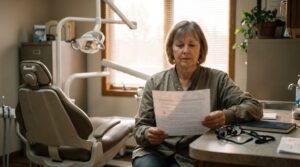
Selling a Rural Veterinary Practice in 2026
Key takeaways
- Rural does not mean small or automatically discounted. A substantial companion-animal general practice can attract strong interest when its earnings, local demand, staffing history, and operating model are clear.
- The catchment must be demonstrated, not described. Client addresses, drive-time patterns, rebooking, referral flows, and new-client sources show why the practice works in its particular community.
- Buyer geography is an operating question. The right bidder needs regional leadership, recruiting reach, and financial capacity to support the location after the seller steps back.
- Local recruiting history outranks national forecasts. Buyers study actual doctor and technician searches, accepted offers, onboarding, tenure, and dependence on the owner’s personal network.
- The building and the practice are separate assets. Facility utility and sustainable occupancy cost affect underwriting, but the property should not obscure normalized EBITDA or transferability.
- A qualified competitive process still matters. Rural fit may narrow the field, which makes disciplined buyer screening more important, not less.
The rural conversations usually begin with a map.
An owner points to the roads, county lines, nearby towns, and the long stretch clients drive because the practice has earned their trust over many years and generations of pets.
Then comes the question over dinner: “Will a buyer understand why this place works?”
That is the right question when selling a rural veterinary practice. A ZIP code never tells the whole story, and rural does not mean small.
I have seen substantial companion-animal general practices whose geography looked limiting from far away and compelling once the local evidence was assembled clearly enough for an outsider to see.
What changes when selling a rural veterinary practice in 2026?
Geography changes which buyers can operate the practice, not the basic valuation rules.
Buyers still test normalized earnings and transferability, then examine the catchment, regional support, recruiting history, client loyalty, facility, and leadership needed to keep those earnings durable after closing and through the transition.
That distinction matters. Owners sometimes hear “rural” and assume the market has already assigned a discount.
It has not.
A buyer must first understand the practice as an operating system. Where clients come from, who serves them, and how the team is supported matter more than a label on the address.
The national veterinary market provides scale, not an answer. IBISWorld estimated US veterinary services at $74.5 billion in 2026, with 1.5% growth during the year.
Capstone Partners counted 18 pet-sector transactions through early 2026, compared with 8 in the prior-year period. Veterinary and health led those categories with 9 deals.
That activity does not mean every buyer serves every region. It means a rural seller should test the qualified market before treating one bidder’s geographic preference as a valuation verdict.
A 2025 Today’s Veterinary Business analysis by a buyer-group executive counted 32,634 US veterinary establishments, including about 9,500 owned by larger groups.
The map is broad. Operating footprints are not.
| The rural question | Evidence a buyer can test | What the evidence helps answer |
|---|---|---|
| Where does demand come from? | Client addresses, drive-time bands, rebooking, new-client sources | Whether the catchment is durable rather than assumed |
| Where does demand leave? | Referral destinations, lost appointments, service gaps | Whether referral leakage is a risk or measured opportunity |
| Can the location stay staffed? | Search history, accepted offers, onboarding, tenure | Whether local capacity can be rebuilt without the seller |
| Who runs the day? | Decision map, call coverage, manager duties | Whether leadership survives the owner’s reduced role |
| Does the site work? | Lease or ownership terms, maintenance, room use | Whether occupancy and facility needs support the earnings |
| Can a buyer support it? | Regional leadership, recruiting, finance, legal structure | Whether interest can become an executable closing |
The rest of the sale should be built around that file.
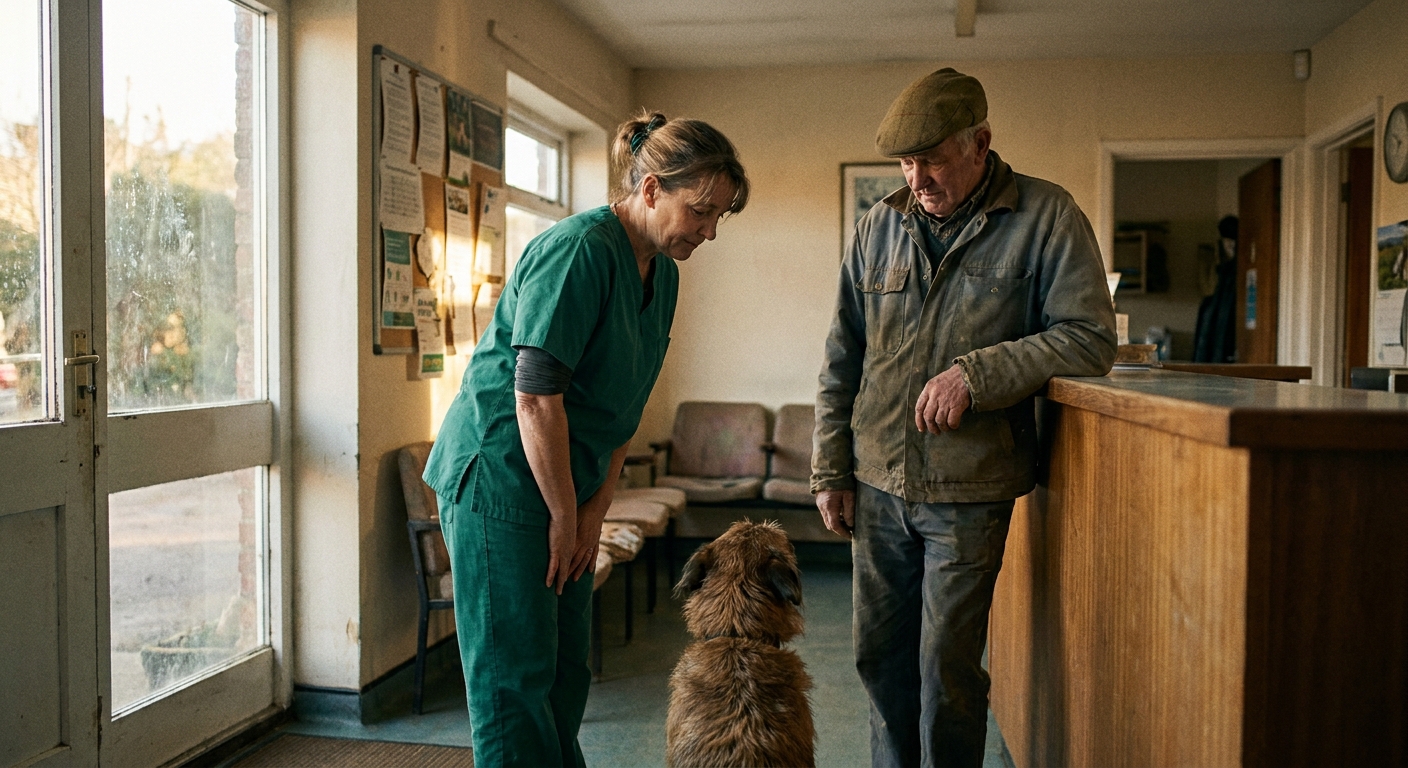
How should a rural catchment be documented in 2026?
Start with actual client behavior, not population slogans.
A defensible rural catchment shows where active clients live, how far they travel, why they return, where referrals leave, and whether demand reaches the wider doctor team instead of depending on the owner alone.
A catchment area is the geography from which the practice consistently draws clients. It should come from the practice-management system, not a circle drawn around the building.
I would map active clients by ZIP code and, where the records allow it, by practical drive-time bands. County borders can be less useful than the roads people actually take.
New-client sources add another layer. A reliable stream from neighboring communities says something different from a temporary jump caused by one nearby closure.
Rebooking and appointment history show whether those clients keep returning. Several years of behavior carry more weight than a single busy season.
The national demand backdrop is large. APPA reported 95 million pet-owning US households and $158 billion in total pet-industry spending during 2025.
It projected spending of $165 billion in 2026. Those figures establish the scale of pet ownership, but they cannot prove demand in one rural catchment.
Local visit data can.
Vetsource tracked 6,412 practices averaging $2.2 million in revenue and found trailing-year revenue up 2.2% while visits fell 2.9% in October 2025.
That split is important. Rising revenue can hide a softer appointment base when prices, rather than volume, carry the growth.
For a rural seller, I want the demand file to answer a blunt question: do clients keep choosing this practice when they travel farther than expected, and do they keep doing it year after year?
Referral patterns belong in the same discussion. Referral leakage is demand that leaves the catchment when services, equipment, scheduling capacity, or clinical coverage are unavailable locally.
Leakage is not automatically bad. Appropriate referrals can protect medicine and trust.
The buyer wants to know what leaves, why it leaves, and whether any part of that demand could be served responsibly under the practice’s existing model after a change of ownership.
Do not convert every referral into imagined revenue. Document destinations, reasons, frequency, and the clinical or capital requirements behind them.
That is evidence. A promise that “everyone in town comes here” is not.
Does rural location automatically reduce veterinary practice value in 2026?
No fixed rural discount applies in 2026.
Buyers begin with normalized EBITDA and transferability, then decide whether demand, staffing, leadership, and facility economics make those earnings dependable; a strong rural operating case can matter more than the mileage to a major city.
EBITDA means earnings before interest, taxes, depreciation, and amortization. In plain language, it is the practice’s operating profit before financing, tax, and certain accounting choices.
Normalized EBITDA is that profit after personal, one-time, and above-market expenses are adjusted. It is the buyer’s working view of earnings under new ownership.
The rural questions enter through the adjustments and the risk around them.
If the owner also owns the building, the practice needs a sustainable market occupancy cost. If a spouse performs essential management work below market pay, the replacement cost belongs in the model.
Travel stipends, recurring relief coverage, unusual freight, or location-specific maintenance may also deserve attention. Each item needs records and a clear reason.
None should be treated as a rural penalty by default.
The AVMA’s 2025 economic report put average US practice revenue at roughly $1.5 million in 2024.
It also reported 3,351 active clients per practice after an average decline of about 95 clients annually since 2019.
This article is for a substantial companion-animal general practice, not the statistical average. Scale should be shown through clean earnings and capacity, not assumed from location.
Transferability is the second half of the valuation case. It means clients, earnings, people, and daily operations can remain stable when the selling owner reduces their role.
I separate the questions clearly.
What does the practice earn today? What will it cost to replace the seller’s work?
Which part of the demand and operating rhythm can continue?
That is more useful than arguing about a rural multiple before the earnings have been rebuilt.
Our veterinary practice valuation guide explains the financial mechanics in greater depth. The location-specific work sits on top of that foundation; it never replaces it.
How do buyers judge rural recruiting history in 2026?
Buyers trust the local hiring record over a national shortage headline.
They examine how long doctor and technician roles stayed open, where candidates came from, which offers were accepted, how onboarding worked, and whether recruiting can continue without the seller’s relationships.
National forecasts disagree, which is exactly why they cannot settle a local underwriting question.
AVMA’s workforce projection found no national veterinarian shortage or excess capacity by 2030 or 2035. Companion-animal veterinarian supply was expected to rise faster than pet and pet-household counts.
A separate AAVMC-hosted forecast reached a tighter conclusion. It projected a need for 70,092 new veterinarians through 2032, compared with 52,926 graduates entering the workforce.
Both are national models. Neither tells a buyer how the last search went in one small-town companion-animal practice.
I would show the actual record: opening date, sourcing channels, interviews, accepted offer, start date, onboarding, schedule ramp, and reason for any departure across every search completed over several years.
The same discipline applies to technicians. A 2024 peer-reviewed study found 43% of surveyed US veterinary technician programs reported declining enrollment during the 2018–2022 window.
That does not predict one practice’s next hire. It explains why buyers want more than “we have always found someone.”
Independent identity may help with some clinicians. A 2025 peer-reviewed analysis found 55.1% of associates preferred independent practice, although preference is not a staffing plan.
The valuable proof is repeatability. Who found the candidate and what made the role workable matter, as does what remains when the owner leaves.
A long search is not fatal when it is explained honestly. It may reveal a narrow channel that should be widened, a schedule issue, or a role the practice eventually filled well.
Buyers are not expecting recruiting to be effortless. They are deciding whether the capacity risk is measurable and manageable.
That is why this section should remain an underwriting record, not a hiring tutorial.
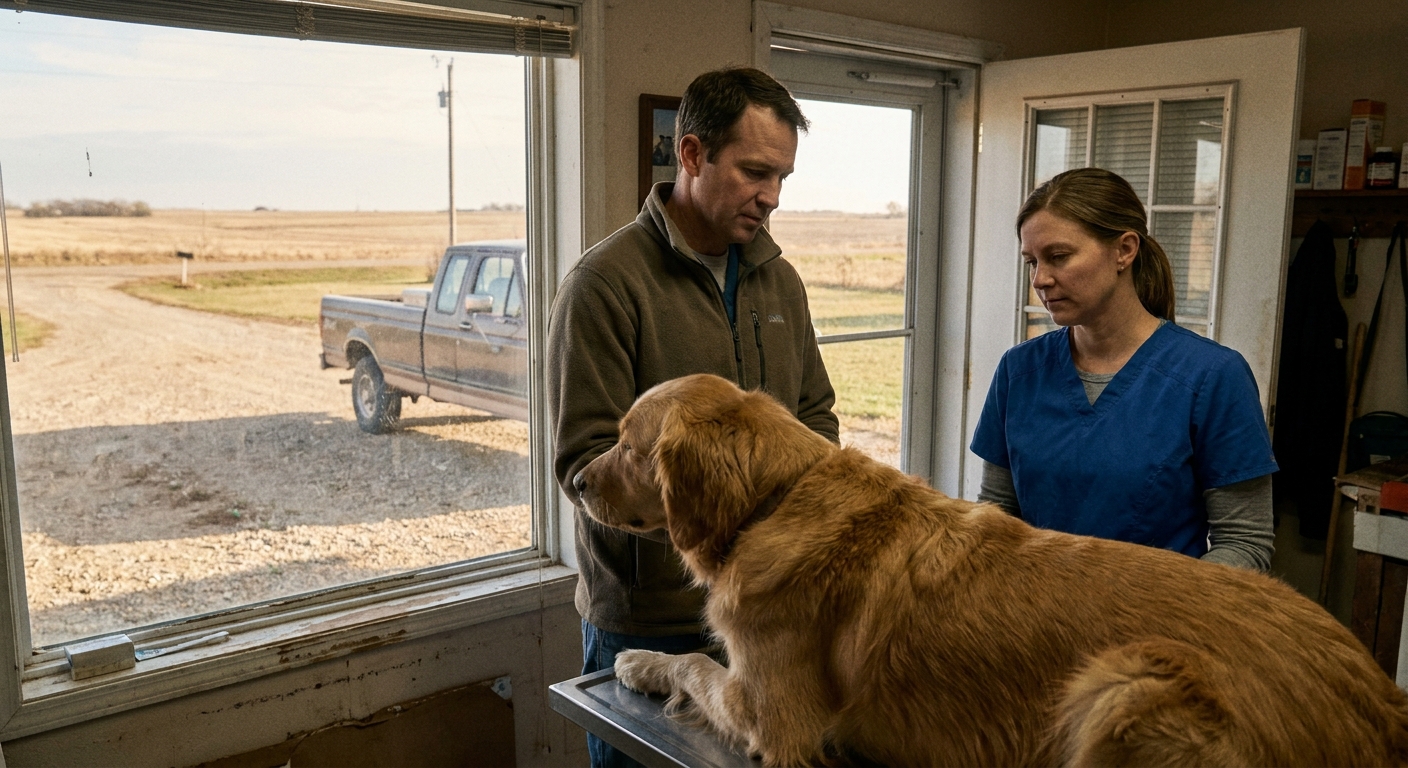
What shows that rural client loyalty will transfer in 2026?
Client loyalty transfers when it belongs to the practice’s people and routines, not only its owner.
Buyers look for rebooking across doctors, trusted technicians, consistent communication, documented service standards, and a transition plan that preserves what clients recognize without making promises no seller controls.
Rural relationships can be deep. That is an asset until every relationship points to one person.
The records help separate the two. Appointment history shows whether clients accept more than one doctor, while rebooking shows whether the practice keeps the next visit inside the team during ordinary vacations and schedule changes.
Technician continuity matters too. Clients often trust the person who knows how their dog enters the building, who calls after a procedure, and who remembers a medication concern without needing the owner to intervene.
That familiarity should not live only in memory. Protocols, callbacks, reminders, and handoffs make the experience repeatable.
I also look at who handles difficult conversations. If every complaint, exception, and medical judgment rises to the owner, buyers see a hidden leadership job.
The goal is not to make the owner invisible before a sale. It is to show that trust has more than one safe landing place.
A transition plan can then use what already exists. Introductions, shared appointments, consistent communications, and clear internal responsibilities help clients experience continuity rather than a sudden handoff.
The owner cannot guarantee that every client stays. No buyer can either.
What the seller can provide is evidence that loyalty has survived vacations, schedule changes, new clinicians, and the ordinary disruptions of practice life without a collapse in client demand.
That history is more persuasive than a testimonial about how long the owner has known everyone in town.
How do facility and real estate affect a rural sale in 2026?
The building matters because it must support care at a sustainable occupancy cost, yet the property and practice remain separate assets.
Buyers inspect utility, maintenance, expansion limits, lease or ownership terms, and local alternatives without turning the practice valuation into a real-estate appraisal.
Rural facilities can carry features a distant buyer may not understand from photographs. Parking, visibility, backup power, room flow, storage, internet reliability, and travel access may all affect daily use.
Document them plainly.
The same goes for deferred maintenance. Roof history, major systems, equipment age, service records, and planned replacements should be easy to inspect.
If the owner holds the property separately, the practice’s earnings need a supportable rent expense. The buyer also needs workable term, renewal, assignment, and maintenance provisions.
If the property will be sold, the two transactions need coordination without blurring the price of one into the other.
I have watched owners defend an expensive renovation because it meant a great deal to them. Buyers ask a narrower question: what does it do for capacity, workflow, retention, or earnings?
That is not dismissive. It is underwriting.
The absence of nearby alternative sites can cut both ways. A well-maintained, usable facility may be especially important, while a constrained building can make future growth harder.
Show the buyer what the site can support now, what would require capital, and which property decisions are still open.
Then keep the scope clean. Our guide to selling veterinary real estate covers the property paths; this sale file should explain how occupancy supports the practice.
How does buyer geography change the qualified field in 2026?
A buyer’s travel radius is really a support radius.
The qualified field includes buyers that can supply leadership, recruiting, finance, and local execution to this location, because willingness to tour a rural practice is not the same as capacity to operate it.
Buyer travel radius means the distance a buyer can reliably support with people and systems. It is not the number of miles someone will drive to inspect the building.
Regional fit can take several forms.
A buyer may already have leadership nearby, understand the labor market, or see the practice as a logical extension of an existing operating area that its teams can support reliably.
Another may have capital but no practical support model for the location.
That difference becomes visible in questions. Who covers leadership?
Where does recruiting sit? How often can an operator be present?
What happens during a prolonged vacancy?
Financial capacity also needs scrutiny.
Octus reported that business-development-company lenders held $3.1 billion in principal lent to veterinary companies as of the third quarter of 2025.
The same research found veterinary-company loan fair-value marks ranging from 88% to 101.2% of par. Those marks are lenders’ estimates of debt value, not scores for any practice buyer.
The dispersion still carries a useful lesson: capital availability and financial strength are not identical across buyers.
A rural seller should screen for execution, not just enthusiasm.
The qualified buyer needs an operating answer for the location, a credible financing path, and a transaction structure that works under the applicable state rules after the selling owner leaves.
One regional “no” does not prove the practice is unmarketable. It may only prove that buyer’s support radius ends sooner than the owner’s catchment does.
Owners who want the broader buyer map can start with our guide to who buys veterinary practices. The real list should still be built around this practice, not a generic directory.
Can a private competitive process work for a rural practice in 2026?
Yes, when the field is built for fit rather than volume.
A private competitive process lets qualified buyers review the same rural operating evidence in the same window, so the seller can compare value, terms, staffing plans, regional support, property decisions, and closing capacity.
Rural geography can narrow the field. That makes screening more important.
I do not want curious names on a list. I want buyers who can understand the catchment, support the team, finance the transaction, and operate lawfully in the state.
Our Elite Selling System works like a doorman with a velvet rope, letting only the right people inside; we hand-select and vet every bidder, then run a private window among that qualified group.
Privacy matters in a small community. A loose rumor can move through clients and staff long before the owner is ready to explain anything.
The process should control access to information and sequence disclosures carefully. Buyers earn deeper access as their fit, capacity, and seriousness are established.
Competition then does more than test price. It reveals how different buyers view travel radius, leadership coverage, recruiting risk, real estate, transition length, and local identity.
One unsolicited offer can be sincere and still represent only one operating model.
The owner deserves to see whether another qualified buyer understands the rural case differently. That is what a market test is supposed to discover.
Our guide to selling a veterinary practice explains the wider sale sequence. The rural work is the evidence and screening layered into it.
What should a rural veterinary owner do next in 2026?
Build the evidence before building the buyer list.
Map clients, drive times, referrals, recruiting, leadership, facility needs, and normalized EBITDA, then use that record to identify buyers with the regional capacity to operate the practice and compare complete offers instead of headline prices.
The first useful step is a candid boundary around the practice. Which strengths are already visible, and which depend on the owner explaining them in the room?
Put the invisible pieces into records.
That may mean a client-origin map, a referral log, a recruiting timeline, a leadership responsibility map, property documents, and a rebuilt earnings view, all supporting the same operating story.
If you want to see how qualified buyers may read that file, request a free, confidential practice value estimate. We can connect the rural operating story to the earnings beneath it.
The map on the table is only the beginning. The value sits in why clients cross it and which buyers are equipped to continue serving them.
Frequently asked questions
Is a rural veterinary practice harder to sell in 2026?
Not automatically. Rural geography can narrow buyer fit and heighten recruiting questions, but a substantial companion-animal practice can remain attractive when local demand, normalized EBITDA, team continuity, and an executable operating plan are well documented.
Does rural location reduce veterinary practice value in 2026?
No fixed rural discount applies. Buyers still value normalized EBITDA and transferability, then assess whether demand, staffing, leadership, and the facility support those earnings in that specific catchment.
What records prove rural veterinary demand in 2026?
Show active clients by ZIP code, visit and rebooking trends, new-client sources, referral destinations, doctor-level production, and service-line revenue. Several years of consistent behavior are more persuasive than broad claims about community loyalty.
Why does recruiting history matter in a rural practice sale in 2026?
National workforce forecasts cannot predict one town’s hiring reality.
Buyers examine how long roles stayed open, which channels produced candidates, why offers were accepted, how onboarding worked, and whether recruiting depended on the seller’s personal relationships or could continue under a new owner.
How does real estate affect a rural veterinary practice sale in 2026?
Treat the practice and property as connected but separate decisions. Buyers need a usable facility, sustainable occupancy cost, clear lease or ownership terms, deferred-maintenance records, and enough flexibility to operate after the seller leaves.
Can rural veterinary clients transfer to a buyer in 2026?
They can when loyalty is distributed across the practice.
Appointment history, rebooking across doctors, trusted technicians, consistent communications, and a deliberate transition plan help show that relationships remain with the team and systems after closing, not only the owner.
Will veterinary buyers travel for a rural practice in 2026?
Some will, but only when the location fits their operating map and they can support it.
A qualified buyer needs regional leadership, recruiting reach, financial capacity, and a lawful transaction structure, not merely interest in the revenue.
How do I find the right buyer for a rural veterinary practice in 2026?
Build a private, qualified field around the practice’s geography and operating needs. Compare price, terms, staffing plan, leadership support, real-estate approach, and closing capacity so one unsolicited offer does not define the market.
Related Reading
Sources
Industry M&A research and veterinary-market data
- Capstone Partners. “Pet Sector M&A Update.” April 10, 2026. capstonepartners.com
- Octus. “Private-Credit Exposure to Veterinary Rollups Shows Growing Dispersion; VSOs Under Increasing Pressure.” January 16, 2026. octus.com
- IBISWorld. “Veterinary Services in the US, Market Size.” 2026 edition. ibisworld.com
- American Pet Products Association. “U.S. Pet Industry Reaches $158 Billion in 2025.” March 26, 2026. americanpetproducts.org
Veterinary demand and practice economics
- Vetsource Veterinary Analytics. “Veterinary Industry Summary, October 12–18, 2025.” October 21, 2025. veterinaryanalytics.com
- American Veterinary Medical Association. “2025 Report on the Economic State of the Veterinary Profession.” 2025 edition. ebusiness.avma.org
- Lester, Bob. “Veterinary Main Street and Wall Street.” Today’s Veterinary Business, April 1, 2025. todaysveterinarybusiness.com
Veterinary workforce and operating capacity
- American Veterinary Medical Association. “No Dire Shortage of Veterinarians Anticipated in Coming Years.” October 4, 2024. avma.org
- Gitter, Robert J., and Bill LaFayette. “Demand for and Supply of Veterinarians in the U.S. to 2032.” June 7, 2024. aavmc.org
- Traub-Werner, B., et al. “Making the Case for a Resurgent U.S. Independent Veterinary Practice Segment: A SWOT Analysis.” Frontiers in Veterinary Science, May 13, 2025. frontiersin.org
- “Trends in Enrollment, Retention, and Graduation of United States Veterinary Technicians/Nurses Schools.” Frontiers in Veterinary Science, 2024. pmc.ncbi.nlm.nih.gov

Melani Seymour, co-founder of Transitions Elite, helps veterinary practice owners take action now to maximize value and secure their future.
With over 15 years of experience guiding thousands of owners, she knows exactly what it takes to achieve the best outcome.