Selling Your Veterinary Practice for Health Reasons: A 2026 Owner’s Guide
Key takeaways
- Health changes the calendar, not the valuation formula. Protect value by showing that revenue, staffing, and decisions can continue without your full clinical schedule.
- Speed comes from parallel preparation. Build the financial record, continuity plan, confidentiality rules, and buyer list together instead of cutting the work that protects you.
- Your diagnosis and your transition are different subjects. Buyers need accurate limits on what you can do after closing, while counsel controls any necessary medical disclosure.
- A short or nonclinical handoff must be supported. Retained associates, clear leadership, documented workflows, and a fallback decision-maker can replace continuity that you cannot provide personally.
- Waiting without a plan is the dangerous option. The first move is to define your medical limits, stabilize the practice, and learn what it is worth now.
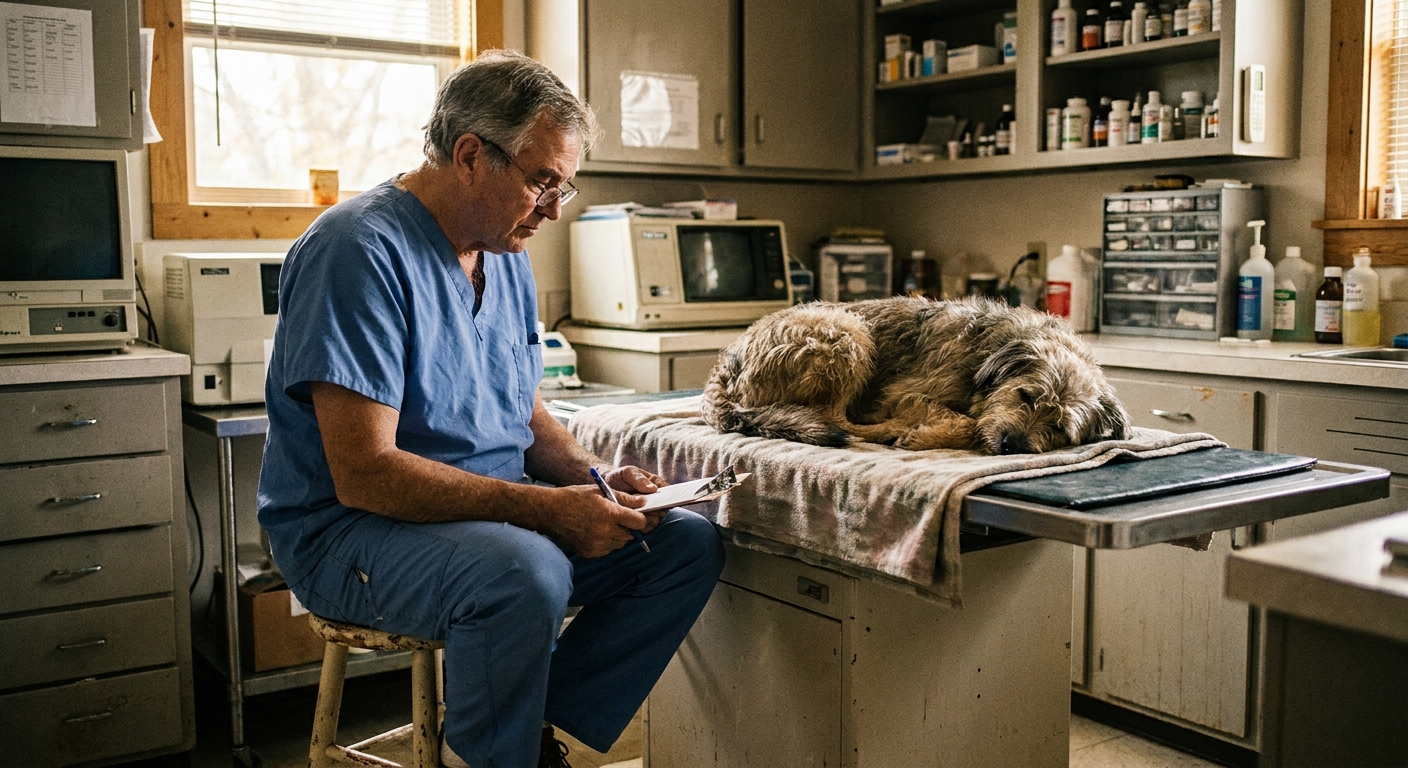
First the surgery schedule gets lighter. Then an owner blocks another afternoon, hands more cases to an associate, and starts answering payroll questions from home.
By the time the word “sale” is spoken, the practice has often been adapting for months. I can usually see the transition before the owner names it.
You can sell because of health without accepting a distressed result. The job is to keep the practice stable, control disclosure, and preserve buyer choice while medical limits set the calendar.
A compressed process still needs verified financials, credible coverage, and executable transition terms. Health changes the sequence and pace; it does not erase the work that protects value.
Mahan Law lists illness among the recurring reasons veterinary owners sell. A 2024 peer-reviewed Frontiers study also found 59% of surveyed clinicians cited maintaining good health when considering a career change.
That tells me the question is common. The answer still has to be personal, because no transaction is worth asking an owner to work beyond a safe limit.
Can you sell a veterinary practice for health reasons in 2026 without fire-sale pricing?
Yes, and health alone does not set the sale price. Greater risks include falling owner production without coverage, unstable staff, incomplete records, and a process that leaves one buyer.
Stabilize first, then preserve private competition among qualified buyers. That gives the market evidence to price the practice instead of letting the owner’s medical clock dominate.
I separate urgency from desperation. Urgency means the work moves quickly.
Desperation means the other side believes you cannot say no.
Those are not the same condition.
The 2026 buyer market is active enough to support a real process. Capstone Partners counted 18 announced or completed pet-sector transactions early in 2026, compared with 8 in the prior-year period.
Veterinary and health transactions led Capstone’s count with 9 deals. That broad sector measure does not promise a buyer for every practice, but it rebuts the idea that a health event leaves one door open.
The fastest caller may still be a suitable buyer. I simply do not want that conclusion made before the owner sees alternatives.
Our Elite Selling System works like a doorman with a velvet rope: we hand-select and vet who gets inside, then let qualified buyers compete in a private window.
The filter matters even more when time is tight.
| Decision point | Unprotected rush | Managed health-driven process |
|---|---|---|
| Production | Owner hours fall with no coverage record | Associate and relief coverage are documented |
| Financial story | Buyers explain every variance themselves | Health-related changes are separated and supported |
| Disclosure | Personal detail moves casually | Counsel sets written confidentiality boundaries |
| Buyer choice | First conversation becomes the path | Vetted alternatives stay available |
| Transition | Seller agrees before testing capacity | Role is built around actual medical limits |
That is why I resist the phrase “fire sale.” It describes a broken process, not a diagnosis.
How quickly can a health-driven veterinary practice sale move in 2026?
No responsible adviser can promise a closing date before reviewing the practice, buyer pool, financing, and legal path. Speed comes from running essential workstreams together, not from deleting preparation or buyer diligence.
Start financial review, continuity planning, document collection, confidentiality design, and buyer mapping at the same time. Each completed workstream removes a later reason for delay or renegotiation.
Owners often ask for a number of months before I have seen the numbers. I understand why.
A treatment plan, surgery, or physical limit may have already created a date that feels immovable.
Still, a fixed promise would be false precision.
Buyer diligence means the financial, legal, and operational review performed before closing. Financing, licensure structure, real estate, associate agreements, and incomplete records can each change the path.
The practical response is a critical-path calendar. We identify which decisions only the owner can make, which records the team can assemble, and which work can happen without waiting for the prior task.
I also set an owner’s capacity budget. A sale creates calls, decisions, and document requests even when the clinical schedule is reduced.
That workload belongs in the plan.
If health is deteriorating, when to sell a veterinary practice becomes a question of preserved options. Starting now does not force a closing; it stops further delay from making the choice narrower.
How does stepping back for health affect veterinary practice value in 2026?
Buyers focus on whether earnings can continue after the owner leaves. Reduced hours are not automatically fatal when associates carry care, leaders run the day, and records explain the change.
Concern grows when one departing clinician drives a large share of production or decisions. Show the replacement system instead of asking a buyer to trust that continuity will appear later.
When I walk an owner through this over dinner, I start with normalized EBITDA. That is operating profit before interest, taxes, depreciation, and amortization, adjusted for owner-specific expenses and market-rate owner compensation.
Then we separate cause from noise.
If collections changed after the owner reduced appointments, the record should show when hours moved, who absorbed the caseload, and whether total practice production held. A vague dip invites a buyer to assume the worst.
The second issue is key-person risk. It means the practice depends heavily on one departing clinician for revenue, referrals, relationships, or daily decisions.
There is no honest universal percentage that turns that risk on. Practice size, associate capacity, client loyalty, leadership, and service mix all change how a buyer reads it.
Market pressure makes clean evidence more important. AVMA reported client visits fell about 3% in 2025, while only 32% of surveyed practices reported improved profitability.
That does not mean your practice declined for the same reason. It means the analysis must distinguish owner health from the broader operating environment.
I want that distinction made before buyers see the file. A current veterinary practice valuation should test continuity, owner dependence, and earnings together rather than treating last year’s total as the whole answer.
What should you stabilize before buyers see the practice in 2026?
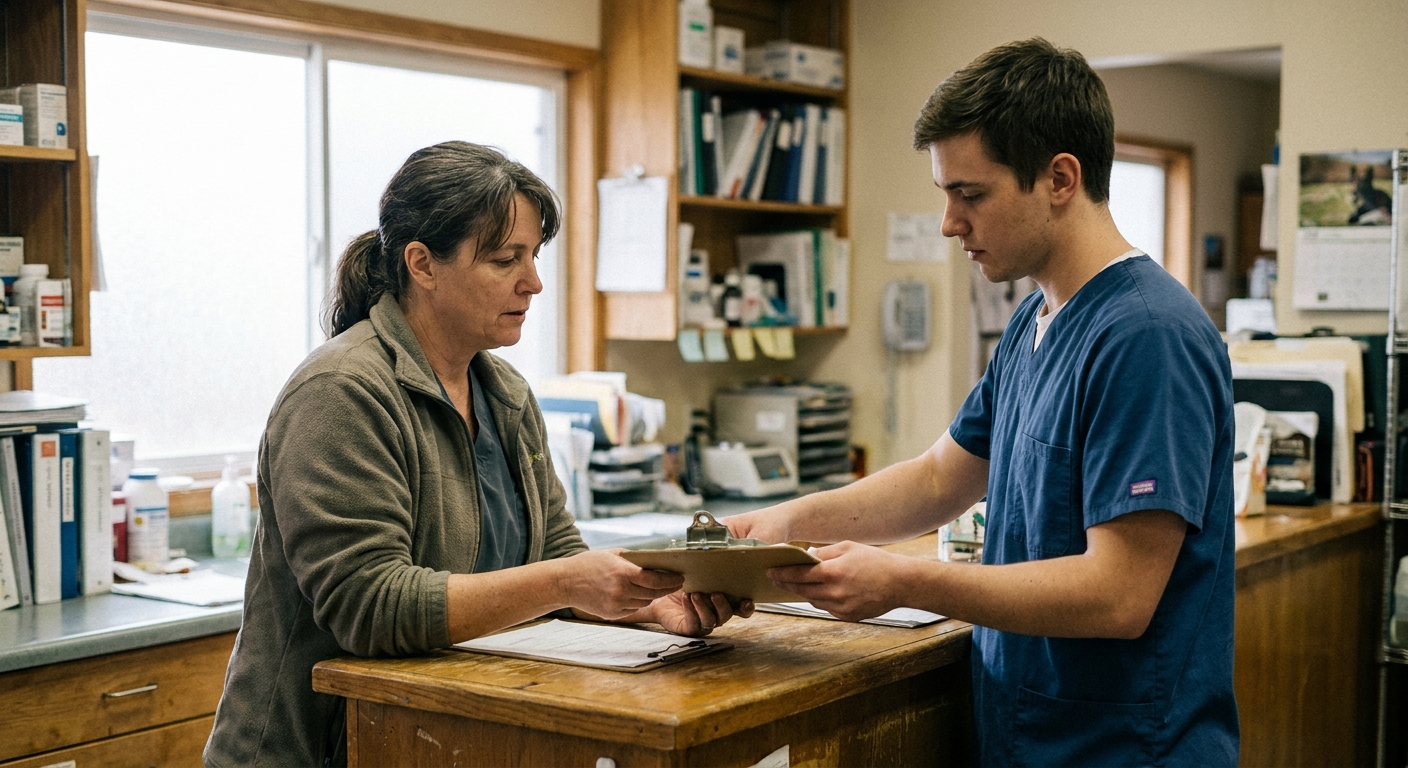
Stabilize appointments, clinical coverage, daily authority, team communication, and financial reporting. Buyers should be able to see who treats patients, who solves problems, and how the practice performs when the owner is absent.
Do not chase a perfect month. Build a repeatable operating pattern that the team can sustain through diligence without relying on the owner to rescue every gap.
Clinical coverage comes first because it produces the visible evidence. The AVMA’s 2025 report found relief or contract veterinarians represented 9.1% of private-practice veterinarians in its 2024 census.
That tells me relief work is an established part of the workforce, not an exotic emergency measure.
Price it carefully. Relief marketplace Roo reported an average $144 hourly rate in its own 2024 platform data, so I treat that as one vendor’s benchmark, not a universal quote.
The right question is what the coverage protects.
If a relief clinician preserves appointments, supports associates, and stops the owner from exceeding medical limits, the cost may serve continuity. If demand has shifted, filling every historic block may not make sense.
Next, write an authority map. Name who handles schedule changes, vendor decisions, controlled records, payroll questions, complaints, and clinical escalation when the owner is unavailable.
Buyers notice ambiguity fast.
Financial reporting should follow the same rule. Close the books consistently, track provider production, preserve staffing records, and document one-time costs related to the transition.
I do not want buyers reconstructing the story from bank activity.
| Continuity evidence | What it answers for a buyer |
|---|---|
| Provider production by month | Whether care shifted successfully from the owner |
| Coverage calendar | Whether appointment capacity can hold |
| Decision-authority map | Who runs the practice during owner absence |
| Associate agreements and tenure | Whether clinicians are likely to remain |
| Current monthly financials | Whether earnings changes are understood |
| Written contingency plan | What happens if the owner’s capacity changes again |
The goal is not to hide the health constraint. It is to prove the practice knows how to operate within it.
How can you protect medical privacy during a veterinary practice sale in 2026?
Separate private medical detail from transaction-relevant capacity. Buyers need an accurate description of the work and transition you can perform, while transaction counsel decides what must be disclosed and how.
Use written confidentiality terms before sensitive information moves. Keep the buyer group small, record who receives what, and avoid putting unnecessary diagnosis details into general marketing materials.
A nondisclosure agreement, or NDA, is a contract limiting how a prospective buyer may use or share confidential information. It is a gate, not a magic shield.
Process discipline still matters after signature.
I use separate lanes. The practice lane contains financials, operations, staffing, and the proposed transition.
The personal lane contains only medical information counsel says must be addressed.
That separation prevents curiosity from becoming a disclosure policy.
It also improves accuracy. “The owner can provide weekly nonclinical support for a defined handoff” is transaction language. A casual discussion of treatment, prognosis, or family concern is not.
Staff confidentiality needs the same restraint. A team can receive truthful operational direction without hearing a private diagnosis before the owner is ready.
The broader staff transition is covered in what happens to staff when a veterinary practice sells. For this process, decide the message, speaker, timing, and retention plan before rumors make those choices for you.
No article can determine your legal disclosure duties. State law, entity structure, contracts, and the facts of the owner’s role differ, so transaction counsel should approve the plan.
That is the boundary I would want for my own family.

Can you leave at closing if health limits your work in 2026?
There is no universal stay-on period for every veterinary practice sale. Your role is negotiated, and the credible alternative is a stable team, clear leadership, documented workflows, and a precise handoff.
Never promise work your health cannot support. An executable short or nonclinical role is stronger than a bigger promise buyers later learn you cannot keep.
The seller’s future role belongs in the first process design, not the final document review. Otherwise, owners can spend months building a deal that never fit their medical reality.
I start with a plain capacity sheet.
- Clinical hours: the maximum schedule that is medically realistic, including travel and recovery.
- Nonclinical work: introductions, records context, team communication, and decisions the owner can handle safely.
- Duration: a period counsel can document and the owner can complete without optimistic assumptions.
- Fallback: the person and process that take over if capacity drops further.
Team retention makes that conversation easier. AAHA’s second retention study, summarized by AVMA, surveyed 2,713 veterinary professionals and found fair compensation was the strongest attrition-reducing factor.
Appreciation and career development followed. That gives owners practical work to do before promising their own labor.
AVMA also reported 19.4% average team turnover in companion-animal-exclusive practices for 2022. I would rather show a buyer recent team-specific evidence than pretend a national average predicts one hospital.
The independent-practice story can help. A 2025 Frontiers paper reported 55.1% of associates preferred independent practice, even though about 70% of respondents worked in group-owned settings.
Use that advantage while the culture is still yours to explain.
If a capable associate wants ownership, explore it without making it the only path.
The SBA says its 7(a) program may finance complete or partial changes of ownership, with a maximum loan amount of $5 million.
Lender underwriting still controls the result. Compare that option with outside buyers and read selling a veterinary practice to an associate before treating familiarity as proof of financing or value.
What if your health worsens before the veterinary practice sells in 2026?
Build a fallback before diligence begins. Name the daily decision-maker, confirm signing authority with counsel, organize succession documents, and define the minimum transition you can perform if capacity changes.
Tell advisers immediately when medical limits move. Buyers can work with a disclosed constraint more easily than a sudden gap they discover through missed calls, delayed records, or inconsistent production.
This is where sale planning meets succession planning.
Today’s Veterinary Business recommends starting succession and estate planning several years before an anticipated transition.
Its core toolkit includes wills or revocable trusts, durable powers of attorney, and buy-sell agreements with valuation formulas and transfer procedures.
A health event may remove the luxury of several years. It does not remove the need to check those documents now.
I would ask counsel 4 questions:
- Who can sign if the owner becomes unavailable?
- Who can direct operations without exceeding licensed authority?
- What do the governing documents require before ownership can transfer?
- What happens to the process if the owner dies or loses decision-making capacity?
The answers depend on state law, entity documents, and personal estate planning. Do not borrow a checklist from another owner and assume it controls yours.
Medical uncertainty also changes communication discipline. The adviser, attorney, accountant, practice leader, and family decision-maker should know who calls whom if capacity changes.
Write that sequence down.
The 2024 Frontiers study makes the risk of delay hard to dismiss. Among surveyed clinical veterinarians, 61% planned to reduce clinical work within 5 years, and 31% planned to stop entirely.
Those are career intentions across a survey, not predictions for your practice. They do show that stepping back is a profession-wide planning issue, not a personal failure.
What should you do in the next 30 days if health may force a sale in 2026?
Define your medical limits, stabilize coverage, appoint a backup decision-maker, and obtain a current valuation. Those 4 moves protect options whether you sell now, later, or after testing another continuity plan.
Then build the confidential sale path around facts instead of fear. The first month should leave the practice more stable and the owner carrying less uncertainty, not more work.
Start with your capacity. Write the hours, travel, lifting, treatment schedule, and decision load you can safely carry.
Do not negotiate against an imaginary healthier version of yourself.
Next, build the practice snapshot: current financials, provider production, staffing, contracts, real estate position, leadership coverage, and any operating change tied to the owner’s reduced schedule.
That snapshot should answer 2 questions. What is stable now, and what still depends on the owner?
Ask your attorney to review authority, confidentiality, entity, and succession documents. Ask your accountant to close current reporting and identify adjustments that need support.
Neither adviser should be learning the health timeline after a buyer appears.
Finally, learn the value before choosing the path. A number does not force a sale.
It shows what delay, continuity work, an associate path, or a competitive process may mean in dollars and obligations.
If you want that baseline, start with a free, confidential practice value estimate. We will look at earnings, owner dependence, team continuity, and the transition you can actually perform.
Our engagement is success-based, and pricing varies depending on the value of the practice. More important today, the first conversation can be quiet, factual, and limited to the options your health still leaves open.
Frequently asked questions
Can I sell my veterinary practice quickly for health reasons in 2026?
You can move the workstreams quickly, but no responsible adviser can promise a closing date before reviewing the practice.
Protect speed by preparing the financial record, continuity plan, buyer path, and disclosure rules together instead of skipping them.
Does selling my veterinary practice due to health reduce its value in 2026?
A diagnosis does not create an automatic valuation discount. Value becomes vulnerable when owner production falls without coverage, the team becomes unstable, or urgency removes buyer choice.
Buyers need evidence that the practice can continue without the owner’s full clinical schedule.
Do buyers need to know my diagnosis during a 2026 veterinary practice sale?
Buyers need accurate information about the transition you can perform and related practice risk. They do not need casual access to your private medical history.
Let transaction counsel control required disclosure, written confidentiality terms, and unnecessary medical detail.
Should I use a relief veterinarian while my practice sells in 2026?
Relief coverage can help when it preserves appointments and gives the team a workable schedule.
Compare its cost with the continuity it protects, document the plan for buyers, and do not assume every historic shift still needs filling.
Do I have to keep working after selling my veterinary practice in 2026?
No universal stay-on period applies to every sale. Your role is negotiated.
If health limits clinical work, support a shorter or nonclinical handoff with retained associates, clear leadership, and documented workflows. Never promise a transition you cannot safely complete.
Can an associate buy my veterinary practice during a health-driven sale in 2026?
Possibly. An associate still needs the clinical fit, leadership capacity, capital, and financing to close.
The SBA says its 7(a) program may fund complete or partial ownership changes, subject to lender underwriting. Compare that path with outside buyers.
What if my health worsens before the veterinary practice sells in 2026?
Build a written fallback before buyer diligence. Name the daily decision-maker, confirm signing authority with counsel, organize succession documents, and define the minimum transition you can perform.
If capacity changes, update your advisers before buyers discover the gap indirectly.
What is the first step when health is forcing a veterinary practice sale in 2026?
Write down your nonnegotiable medical limits, then pair them with a current valuation and continuity review.
That shows where owner dependence creates risk and which sale path can work without asking you to carry an unsafe clinical or transition burden.
Sources
Veterinary career, workforce, and practice continuity research
- Frontiers in Veterinary Science. “Career Transition Plans of Veterinarians in Clinical Practice.” July 26, 2024. pmc.ncbi.nlm.nih.gov
- American Veterinary Medical Association. “2025 Report on the Economic State of the Veterinary Profession.” 2025 edition. ebusiness.avma.org
- American Veterinary Medical Association. “Veterinarians Report Increasing Price Sensitivity, Decreasing Visits.” February 13, 2026. avma.org
- American Veterinary Medical Association. “AAHA’s Second Retention Study Emphasizes Surveying Employees to Understand Workplace Needs and Desires.” February 20, 2025. avma.org
- American Veterinary Medical Association. “Just One Thing: Benchmarking Your Team’s Turnover Rate.” May 13, 2024. avma.org
- Frontiers in Veterinary Science. “Making the Case for a Resurgent U.S. Independent Veterinary Practice Segment: A SWOT Analysis.” May 13, 2025. frontiersin.org
- Roo. “How Much Do Roo Relief Vets Make?” Updated December 9, 2024. roo.vet
Sale, succession, market, and financing sources
- Mahan Law. “Common Reasons to Sell a Veterinary Practice.” mahanlaw.com
- Today’s Veterinary Business. “You, Your Legacy and Your Practice’s Future.” October 1, 2025. todaysveterinarybusiness.com
- Capstone Partners. “Pet Sector M&A Update.” April 10, 2026. capstonepartners.com
- U.S. Small Business Administration. “7(a) Loan Program.” sba.gov

Melani Seymour, co-founder of Transitions Elite, helps veterinary practice owners take action now to maximize value and secure their future.
With over 15 years of experience guiding thousands of owners, she knows exactly what it takes to achieve the best outcome.