
Selling Your Veterinary Practice to American Veterinary Group: A Vet’s 2026 Guide

Selling Your Veterinary Practice to American Veterinary Group: A Vet’s 2026 Guide
Key takeaways
- American Veterinary Group (AVG) is a private equity-backed veterinary network founded by veterinarians in 2015 and headquartered in Tampa, Florida, operating a network of general practice hospitals concentrated across the South and Southeast plus more than 95 UrgentVet urgent-care clinics across 20 states.
- Oak Hill Capital has been the current owner since 2021, when it acquired AVG from Trive Capital and Latticework Capital Management per public deal disclosures.
- Care-format innovation is AVG’s defining feature. The platform pairs traditional general practice hospitals with the UrgentVet dedicated pet urgent-care model, a format that sits between a GP and a 24-hour emergency hospital.
- The Southeast concentration shapes everything — sourcing, regional density, and the operational support AVG can deliver. Owners in Florida, Georgia, Texas, and the Carolinas are squarely in AVG’s core acquisition footprint.
- The care-format innovation is both a feature and a negotiation surface. New service lines, technology programs, and urgent-care adjacencies can move practice-level EBITDA in the earnout window, which makes the earnout protective clauses and clinical-autonomy language the terms most worth focusing on.
- The most reliable way to know what AVG, or any major buyer, would actually pay for your specific practice is to run a structured competitive process. We call ours the Elite Selling System: we hand-select and vet every buyer who gets to bid, the way a doorman with a velvet rope lets in only the right people, then run a private bidding window inside that vetted group. AVG is invited inside that rope on practices that fit their Southeast profile, and when they bid against a curated group of qualified competitors, the number is reliably very different from what they would offer in a direct, single-bidder conversation.
When a vet in the Southeast asks me about American Veterinary Group, the conversation almost always starts in the same place. It’s not “who are these people” in the abstract.
It’s “they keep building these new urgent-care clinics around me, and now they want my practice. What does it actually mean to join a group that thinks about care delivery differently than the other buyers?”
That question is the right instinct, because AVG is genuinely different in one respect. Most veterinary consolidators are, at their core, financial machines that buy good practices and run them well.
AVG does that too. But it has also spent a decade building new ways to deliver care, most visibly through UrgentVet, the dedicated pet urgent-care format it folded into the platform in 2018.
The care-format innovation is the through-line of every AVG conversation. It shapes how the platform sources practices, how it thinks about a market, and where the real negotiation leverage sits for a seller.
So that’s the lens I use when an owner hands me an AVG term sheet over dinner and asks what to do with it.
What follows is the same picture I’d lay out across that dinner table. Who AVG is, how Oak Hill’s ownership and the care-format model shape the deal terms, what the integrated GP-plus-urgent-care approach means for sellers in 2026, where the negotiation leverage actually sits, and how to think about AVG against the rest of the US veterinary buyer pool in a properly run process.
Quick facts on American Veterinary Group
American Veterinary Group was founded by veterinarians in 2015 and is headquartered in Tampa, Florida. The platform has grown to a network of general practice hospitals concentrated across the South and Southeast plus more than 95 UrgentVet urgent-care clinics across 20 states per AVG company materials.
AVG’s general practice footprint is concentrated heavily in the South and Southeast — Florida, Georgia, Texas, North Carolina, and South Carolina among them — while its UrgentVet clinics span 20 states per AVG company materials.
The ownership history runs through several private equity hands. AVG was previously backed by Trive Capital and Latticework Capital Management, who sold the platform to Oak Hill Capital in 2021 per public deal disclosures at the time.
Oak Hill Capital is a New York-based private equity firm, and its ownership represents the current chapter in AVG’s PE-backed history rather than the first.
The single most important thing to understand about AVG as a buyer. The platform’s identity is built around care-format innovation, not just practice aggregation. The clearest example is UrgentVet, a dedicated pet urgent-care brand founded in 2015 by Dr. Jim Dobies that merged into AVG in 2018, with Dr.
Dobies taking the role of president of the UrgentVet division per company materials. Where most consolidators offer back-office scale, AVG also offers a different way of thinking about how and when pets get seen.
One clarification worth making up front, because the names get crossed. Heart + Paw, the integrated pet-care company in the Northeast and Mid-Atlantic, is a separate company backed by different investors.
It is not part of American Veterinary Group. AVG’s care-format signature is UrgentVet and its Southeast-concentrated GP network.
What American Veterinary Group actually pays for veterinary practices in 2026

The consistent pattern we see. When a multi-doctor practice receives a direct offer from any major buyer’s acquisition team, AVG included, the offer reflects the leverage the buyer perceives in the conversation. A single bidder facing no visible competition has no structural reason to put forward their strongest cash percentage, tightest earnout protections, most flexible clinical-autonomy language, or most explicit brand-handling commitments in the first conversation.
Inside a properly structured competitive process, where the buyer knows other qualified bidders are underwriting the same practice in parallel, those dimensions tend to move, sometimes meaningfully. The pattern is not unique to AVG.
It is the basic dynamic of how every major buyer in this market calibrates an offer to the room.
AVG does not publish a standard price sheet for any specific practice profile. Per industry M&A commentary (Octus, Capstone Partners, 2025-2026), competitive outcomes for strong multi-doctor general practices in the $2 million-plus revenue range tend to land in the low-teens EBITDA range across the major buyer pool.
EBITDA is what your practice earns in pure operating profit, before taxes and accounting choices, and the multiple is the multiplier buyers apply to that earnings number to set the price.
The actual number for any specific practice depends heavily on whether other buyers are at the table and the specific profile of the practice. AVG participates in this competitive band when they bid on qualifying practices in their Southeast footprint, with the specific offer on any specific deal negotiated case by case under confidentiality.
For larger multi-location groups ($10 million-plus revenue, $2 million-plus EBITDA), the multiple range typically extends higher than for single-location GP practices, with deal sizes scaling into the eight-figure-plus range per industry research. AVG’s institutional capacity, backed by Oak Hill Capital, means the platform can be an active bidder for larger multi-location groups when the practice profile and geography match.
There is one AVG-specific wrinkle worth naming. A practice that sits in or near a market where AVG is building urgent-care density, or one whose location and case mix fit the integrated GP-plus-urgent-care model, may hold particular strategic value to AVG.
That strategic fit is precisely the kind of dimension that surfaces, and gets paid for, inside a competitive process where AVG has to reveal how much the fit is worth rather than keeping it as private leverage.
For practices below the $2 million revenue threshold or single-doctor practices, the buyer pool generally shifts toward regional PE-backed groups, smaller consolidators, and individual buyers. AVG’s historical focus has tilted toward established multi-doctor practices that fit the geographic density of the existing Southeast footprint.
The cash-at-close reality
For a platform backed by a firm like Oak Hill Capital, the cash-at-close component of any offer is unlikely to be the dimension where AVG underperforms competitive expectations. Per industry M&A commentary across the major buyer pool (Dechert LLP, Holland & Knight, Capstone Partners 2025-2026), the typical offer structure allocates the majority of total deal value to cash at close, with the remainder split among earnout, rollover equity, and occasional seller notes.
An earnout is part of the sale price paid later, only if the practice hits agreed performance targets after closing. Rollover equity means keeping a slice of ownership in the new entity instead of taking all cash at close.
AVG’s specific allocation on any given deal is negotiated case by case.
Where the care-format model shows up in the cash-at-close conversation is in the rollover-equity story. A current rollover into AVG equity is a bet on a platform that is not just aggregating practices but actively developing new care formats and service lines.
That can be a genuine upside for a seller who believes in the integrated model and wants exposure to its growth. It also means the rollover value is tied to the success of AVG’s broader care-format strategy, not just to same-store practice performance.
For sellers comparing an AVG rollover offer against a rollover into a more conventional aggregator, that difference in the underlying bet is worth thinking through carefully.
A note on deal structure types in the current market
The broader US veterinary M&A market has shifted measurably toward partnership and joint-venture structures over the past 18 months per MB Law Firm’s 2025 healthcare M&A commentary. In these structures, the buyer acquires a majority stake (commonly 60 to 80 percent), the seller retains a minority stake (commonly 20 to 40 percent) as direct equity in the practice itself, and a contractual put/call mechanism defines the buyout date and formula price for the retained equity.
Rarebreed Veterinary Partners, the legacy SVP playbook (now part of Mission Pet Health), and AmeriVet Veterinary Partners have publicly emphasized partnership variants in their company materials.
AVG’s specific posture on partnership versus 100-percent acquisition structures is determined case by case under confidentiality and is not publicly enumerated. What can be said with confidence is that AVG’s stated emphasis on local medical autonomy and treating hospitals as partners, per company materials, suggests a platform philosophically comfortable with seller-aligned structures.
Sellers evaluating an AVG offer should ask explicitly whether a partnership structure is available alongside the more traditional 100-percent acquisition with rollover. Our PE pricing guide covers the structure-by-structure comparison in depth.
How American Veterinary Group’s acquisition team operates
AVG’s corporate-development team sources within and around the platform’s Southeast footprint, where regional density makes the operational support and care-format integration easier to deliver per AVG company materials. The team works the standard mix of sourcing channels: direct outreach to practice owners identified through industry data and broker relationships, participation in structured competitive sale processes run by qualified sell-side advisors, and inbound inquiries from owners reaching out independently.
A practical implication for sellers. Because AVG’s model leans on regional density and care-format fit, the platform tends to engage most substantively with practices that strengthen an existing cluster or open a strategically attractive new market.
When a practice fits that profile, AVG has reason to compete harder, and that strategic value becomes visible, and negotiable, inside a structured process.
The same broad pattern holds across the institutional buyer pool: well-prepared seller-side materials and a sophisticated process draw more substantive engagement than a casual one-on-one conversation. With AVG specifically, the value of a properly run competitive process is amplified when the practice carries strategic fit, because the fit is exactly the thing a single-bidder conversation lets the buyer keep quiet about.
How American Veterinary Group integrates the practices it acquires
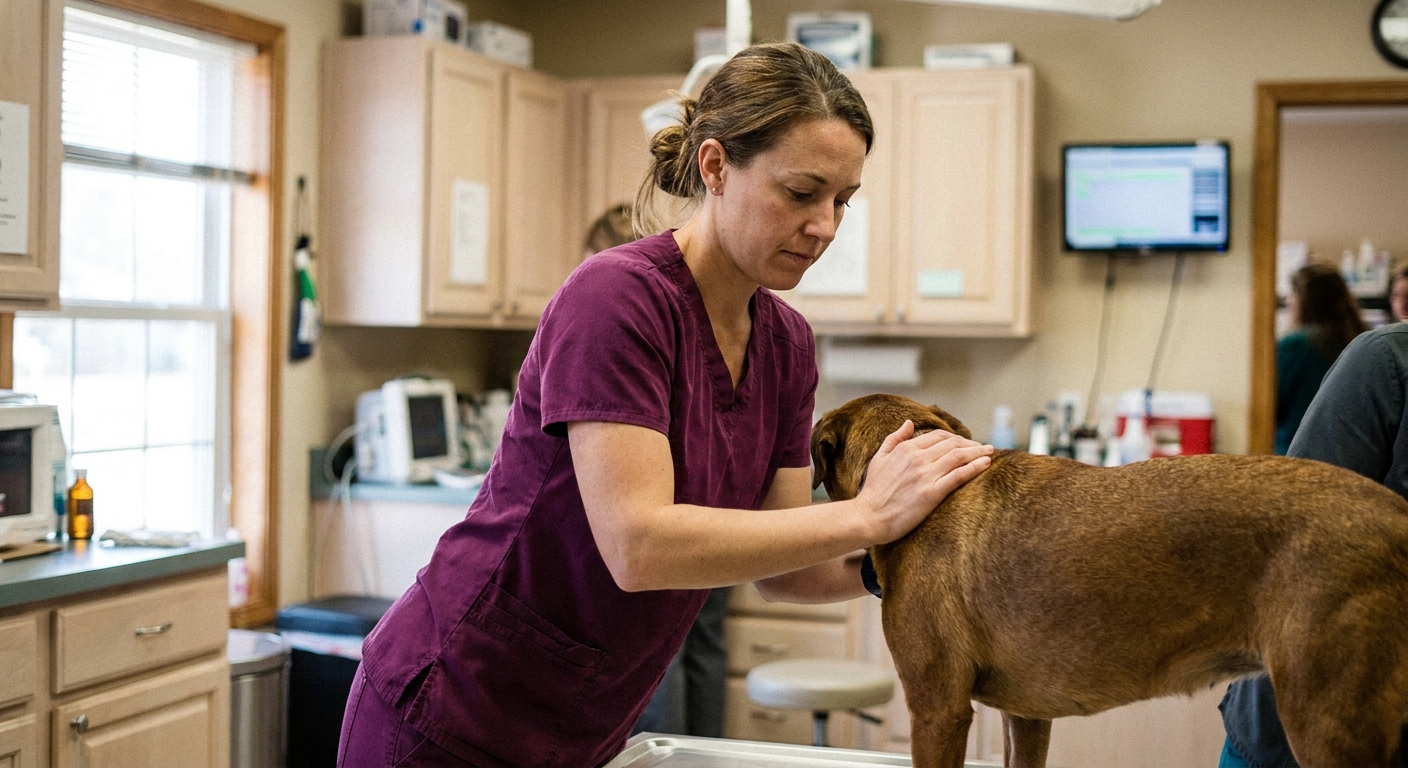
AVG’s integration model pairs conventional back-office support with a layer of care-delivery innovation that most consolidators do not bring to the table.
Local medical autonomy. Per AVG company materials, the platform describes its approach as treating each hospital as a partner without putting a corporate stamp on the practice, with an explicit emphasis on local clinical autonomy. Acquired general practices commonly retain their original name and customer-facing identity, while the UrgentVet urgent-care clinics operate under the UrgentVet brand.
Shared operational support. Per AVG company materials, the platform provides centralized recruiting, HR, accounting, payroll, marketing, supply purchasing, and practice-management resources across the network. The integration timing and approach are determined case by case under the definitive purchase agreement.
Care-format innovation. This is the dimension that distinguishes AVG. The platform brings the UrgentVet urgent-care format and a willingness to introduce new service lines and technology, including a reported partnership to equip UrgentVet clinics with point-of-care ultrasound per company announcements.
For a general practice joining AVG, this can mean new ways to capture after-hours demand and to add clinical capabilities. It also means the platform may introduce operational changes that a seller will want to understand before signing.
Centralized procurement. Platform scale translates into purchasing leverage that most independent practices cannot match. AVG’s negotiated vendor contracts for diagnostics, pharmaceuticals, equipment, and supplies typically reduce variable costs across the practice’s P&L compared to the independent baseline.
The earnout implication runs both directions: lower input costs raise practice-level EBITDA, which can support the earnout, but central procurement decisions that override seller preferences need protective language in the deal.
Doctor relationships. Per industry M&A commentary on PE-backed veterinary acquirers, selling owners commonly stay on as medical director or in a continuing clinical role for a multi-year post-close period, typically 3 to 5 years, with compensation structured as base salary plus production bonus. AVG’s specific post-sale employment terms for any given deal are negotiated case by case under the definitive purchase agreement.
American Veterinary Group’s recent activity in 2025-2026
AVG enters 2026 as an active, growth-oriented acquirer in the US veterinary buyer pool. The platform crossed the 100-practice mark and has continued to grow its network per company materials and dvm360 coverage, a trajectory that reflects a sustained acquisition program backed by Oak Hill Capital.
Capstone Partners‘ April 2026 Pet Sector M&A Update documents the broader sector acceleration heading into Q1 2026, with both PE-backed and strategic acquirers running active pipelines. AVG-attributable activity in trade press and Octus’s 2025-2026 sector coverage is consistent with a buyer continuing to build Southeast density and expand its urgent-care footprint.
The practical takeaway for an owner receiving 2026 AVG outreach: this is a buyer running a sustained acquisition program with a distinctive care-format strategy, particularly active in the South and Southeast. The implications of that strategy, both the upside of joining an innovation-oriented platform and the negotiation surface that new service lines and operational programs create, are the lens through which the offer in your hand should be evaluated.
Have an offer from American Veterinary Group? Get a Free Practice Value Estimate — send us the offer and we’ll decompose the terms, identify what’s typically negotiable, and project what your practice would likely clear in a structured competitive process with the broader qualified buyer pool. No upfront cost, no obligation.
How American Veterinary Group compares to the other major buyers
If you’re considering AVG, you’re probably comparing them implicitly to the other major buyers who would compete for your practice. Here’s how AVG stacks up across the dimensions that matter.
Versus Mars Veterinary Health (VCA, BluePearl, Banfield). Mars is the strategic family-owned exception in the US veterinary buyer pool per Mars company disclosures, distinguishing it from AVG’s PE-backed structure. The brand-handling difference is significant: AVG’s general-practice approach commonly preserves the local practice name, which contrasts with VCA’s historical brand-consolidation pattern under the VCA name.
Both Mars-affiliated entities and AVG may compete for qualifying practices in a structured sale process. Our Mars Veterinary Health buyer profile covers the Mars-specific dimensions in depth.
Versus NVA (JAB Holdings). NVA is owned by JAB Holdings, a privately-held long-hold investment vehicle distinguishable from AVG’s PE-fund-cycle ownership under Oak Hill Capital. Both NVA and AVG emphasize local practice identity per their respective company materials.
The key structural difference is the ownership horizon and the care-format orientation, where AVG’s integrated GP-plus-urgent-care model is more distinctive. Our NVA buyer profile walks through the NVA-specific dimensions.
Versus AmeriVet Veterinary Partners. AmeriVet has publicly emphasized partnership and JV structures as a distinguishing feature of its acquisition approach. AVG’s distinctive feature is its care-delivery innovation rather than a single standardized deal structure.
Both emphasize local practice identity per their respective company materials. The choice between them often comes down to whether the seller most values a partnership equity structure (AmeriVet) or exposure to a care-format-innovation platform (AVG).
Our AmeriVet buyer profile covers the partnership-model dimensions.
Versus VetCor (Harvest Partners). VetCor is one of the longest-tenured PE-backed platforms, with a brand-preservation integration philosophy refined over more than two decades. AVG is a younger platform whose signature is care-format innovation rather than institutional longevity.
Both may compete for qualifying multi-doctor practices, and the choice often comes down to whether a seller prefers a long-established operational playbook (VetCor) or an innovation-oriented model (AVG). Our VetCor buyer profile covers the longevity dimensions.
Versus the other PE-backed groups (Mission Pet Health, PetVet Care Centers, Thrive Pet Healthcare, Alliance Animal Health, Heartland, and others). Each has its own integration philosophy and target profile, and several share AVG’s Southeast and Sun Belt orientation. Smaller and newer groups sometimes pay more aggressively for practices that fill specific geographic or service gaps in their portfolio.
The right way to evaluate which buyer pays most is to put all of them in a competitive process and let them surface their best offers in parallel.
What to negotiate before signing with American Veterinary Group
Six priorities when negotiating with AVG’s acquisition team, with the earnout and clinical-autonomy provisions as the highest-leverage categories given AVG’s care-format model.
Earnout protective provisions (highest priority). AVG’s care-format innovation means the platform may introduce new service lines, technology, operational programs, or urgent-care adjacencies into or around an acquired practice. Each of those moves can shift practice-level EBITDA in either direction during the earnout window.
The protective provisions to negotiate: no major operational changes without seller consent during the earnout period; a working capital floor; explicit prohibition on shifting central services costs to the seller’s practice; and a clear definition of what counts in the EBITDA calculation at the earnout date, including how any new service lines or shared urgent-care economics are treated.
Post-sale clinical autonomy. AVG’s stated philosophy emphasizes local medical autonomy, but stated philosophy in marketing materials is not the same as a contractual commitment. Negotiate explicit language preserving your clinical autonomy, that you make medicine decisions, alongside a clear definition of which business decisions stay with you versus migrating to AVG’s regional operating structure.
Cash at close percentage. Push for higher cash percentages on the acquired stake. Every dollar shifted from contingent to cash is guaranteed money instead of conditional.
AVG’s capital position, backed by Oak Hill Capital, generally supports flexibility on this dimension when the process is competitive.
Rollover equity terms. If AVG’s offer includes rollover, recognize that the rollover value is tied to the broader care-format strategy, not just to your practice’s same-store performance. Negotiate the standard protections: defined liquidity windows tied to specific milestones, governance rights including information rights and minority protection clauses, and anti-dilution provisions.
Ask for clarity on how the urgent-care and new-format growth flows through to rollover holders.
Non-compete scope. Non-competes commonly run several years and cover a defined geographic radius for all veterinary work. Negotiate shorter duration (1 to 2 years), a tighter radius (5 to 10 miles), or a carve-out for specific specialty or modality work if you might continue clinical work post-employment.
Brand and identity in writing. AVG’s general-practice approach commonly preserves the local practice name, but negotiate explicit brand-handling language in the definitive purchase agreement, covering practice name, signage, website, and marketing materials, rather than relying on stated philosophy alone. If any part of your practice could be folded into the UrgentVet format, get the terms of that transition spelled out.
The care-format-innovation question, in depth
For sellers evaluating AVG specifically, the most useful frame is to think carefully about what it means to join a platform whose identity is built around innovating in care delivery, not just aggregating practices.
The case for the care-format model. AVG offers something most consolidators do not, a platform actively developing new ways to deliver care. The benefits can compound:
- Exposure to the UrgentVet urgent-care format, which can capture after-hours and weekend demand a standalone GP often loses to emergency hospitals
- New clinical capabilities and technology, such as point-of-care ultrasound rolled across the urgent-care network per company announcements
- Regional density in the Southeast that strengthens referral relationships and operational support
- A rollover bet tied to an innovation-oriented growth story, which can be attractive for sellers who believe in the model
- An acquisition team that competes harder for practices with strategic fit to the integrated model
The case for the care-format model as a negotiation surface. The flip side is that a platform actively changing how care is delivered will, by design, introduce changes into an acquired practice. Specifically:
- New service lines or urgent-care adjacencies can change patient flow and practice-level economics during the earnout window
- Operational programs and technology rollouts may differ from the seller’s existing approach
- The integrated model’s shared economics need to be defined clearly so they don’t dilute the seller’s earnout
- Strategic-fit value that AVG perceives is leverage the seller only captures if it surfaces in a competitive process
- Standard non-compete and post-sale-role templates reflect AVG’s accumulated experience, not the seller’s specific situation
The balance between these dimensions is exactly what gets negotiated in the definitive purchase agreement. Sellers who go into the conversation with a refined sell-side process, and other qualified bidders at the table, consistently land more favorable positions on both sides of this balance than sellers who engage in a one-on-one conversation.
Should I take an American Veterinary Group offer or run a competitive process?
For AVG specifically, the value of the competitive process is concentrated in two places: surfacing the strategic-fit value AVG perceives in your practice, and softening the earnout and clinical-autonomy defaults that a care-format platform brings by design. The headline cash percentage is unlikely to be where AVG underperforms, because the Oak Hill capital position generally supports competitive cash-at-close numbers.
Where the competitive process produces leverage is on the dimensions tied to the integrated model: the earnout protective clauses against new service lines, the clinical-autonomy language, the brand-handling commitments, and the strategic-fit premium AVG would rather not reveal in a single-bidder conversation.
The mechanical reason is the same as for any major buyer. Without competition, no buyer has incentive to soften the pre-set defaults in their standard template, or to pay full value for a strategic fit only they can see.
With competition, every term becomes negotiable and every dimension of value gets surfaced, because every bidder knows the seller has alternatives.
AVG participates in well-run competitive processes when invited and the practice fits their Southeast profile. The AVG-specific dimensions, the earnout protections interacting with new service lines, the clinical-autonomy carve-outs, the strategic-fit premium, get sharper attention from the AVG team when they know other qualified buyers are at the table on the same practice in the same window.
What our Elite Selling System actually does
For an AVG-affiliated transaction, our process runs with a specific eye toward the care-format dimensions, because that’s where both the upside and the negotiation surface live.
Phase one — the strategic-fit and integration-clause audit. Before any bidder packet goes out, we map where the practice sits relative to AVG’s existing Southeast density and urgent-care footprint, to gauge the strategic-fit value AVG is likely to perceive. We then deconstruct the AVG standard template against the comparable templates we’ve seen across the PE-backed buyer pool.
How does the AVG earnout treat new service lines and shared urgent-care economics? What clinical-autonomy language is in the draft, and what’s missing?
This audit identifies the leverage points before the competitive process opens.
Phase two — the bidder mix. From the 42-plus named veterinary consolidators TE actively tracks, we invite only the ones that legitimately compete with AVG for this specific practice. The Southeast and Sun Belt buyers (Mission Pet Health, and other regionally overlapping platforms) compete on geography.
The brand-identity buyers (NVA, VetCor) compete on local-identity preservation. The partnership-emphasis buyers (AmeriVet, and others) compete on structure flexibility.
The strategic family-owned alternative (Mars, where the practice fits Mars’s criteria) competes on long-hold posture. The right mix is typically 5 to 7 invited bidders, each genuinely competing on a dimension that matters to your practice.
Phase three — the term-by-term comparison. Bidders return their full term sheets, not just the headline numbers. The seller sees side-by-side comparisons across cash-at-close, earnout structure and protective provisions, rollover or partnership equity terms, non-compete scope, post-sale role, brand-handling commitments, and integration roadmap.
The seller chooses on the dimensions that matter, sometimes the platform with the most distinctive care-format upside (AVG), sometimes the platform with the most flexible post-sale autonomy, sometimes the platform with the highest headline number.
The economic result holds across deal types: practices in the qualifying revenue band that run our process consistently clear materially better total economic outcomes, typically multiple seven figures, sometimes more, than the same practice would have cleared by signing the original direct AVG term sheet without exploring the field.
Closing thought
The honest read on American Veterinary Group: it’s one of the more distinctive PE-backed platforms in the United States, built around care-format innovation and concentrated in the South and Southeast. Sellers who join the AVG network gain exposure to a model that thinks about care delivery differently, anchored by the UrgentVet urgent-care format, with the operational support and capital backing that Oak Hill ownership provides.
What separates a well-negotiated AVG outcome from a mediocre one isn’t only the cash multiple. It’s the earnout protective provisions, the clinical-autonomy carve-outs, and the strategic-fit premium that a practice with the right location and case mix can command.
Those terms determine whether AVG’s care-format model works in the seller’s favor or quietly compresses the practice’s economics during the post-close years.
If you’ve received an AVG offer, or if AVG’s acquisition team has reached out to start the conversation, the highest-leverage move is to understand how the rest of the field would value and structure the same practice before committing to anything. Get a Free Practice Value Estimate and we’ll lay out the same offer comparison we would for a client across a dinner table.
Related Buyer Profiles
Sources
Industry M&A research and valuation data
- Capstone Partners. Pet Sector M&A Update — April 2026. Capstone Partners industry research.
- Octus. Veterinary Services Roll-Up Coverage, 2025-2026. Octus credit research and industry commentary.
- Dechert LLP. Healthcare M&A: 2025-2026 Trends and Outlook. Dechert healthcare practice publications.
- Holland & Knight. Healthcare Private Equity 2025-2026 Commentary. Holland & Knight healthcare practice publications.
- MB Law Firm. 2025 Healthcare M&A Trends — Joint Venture and Partnership Structures. MB Law Firm healthcare publications.
American Veterinary Group and parent company materials
- American Veterinary Group. About AVG and US network footprint. americanveterinarygroup.com, company materials, 2024-2026.
- American Veterinary Group. AVG exceeds 100-practice mark in network of hospitals. dvm360 coverage and AVG company blog, dvm360.com.
- Oak Hill Capital. American Veterinary Group portfolio profile and acquisition announcement, 2021. oakhill.com.
- Today’s Veterinary Business. American Veterinary Group Finds an Investment Partner (Oak Hill Capital). todaysveterinarybusiness.com.
- UrgentVet / American Veterinary Group. UrgentVet urgent-care format and clinic expansion materials. urgentvet.com, company materials.
Veterinary practice operations, benchmarks, and profession data
- iVET360. State of the Veterinary Industry — 2026 Industry Report. iVET360 industry research.
- American Veterinary Medical Association (AVMA). 2026 AVMA Veterinary Economic Report. AVMA economic research.

Melani Seymour, co-founder of Transitions Elite, helps veterinary practice owners take action now to maximize value and secure their future.
With over 15 years of experience guiding thousands of owners, she knows exactly what it takes to achieve the best outcome.