
Selling Your Veterinary Practice to Vets Pets: A 2026 Owner’s Guide

Key takeaways
- Vets Pets still addresses practice sellers. Its current page covers acquisitions, partial partnerships, and transitions for owners who do not want to keep working.
- The model is regional. Vets Pets says it is open throughout North Carolina and surrounding areas, not across an unlimited national footprint.
- Growth comes through different paths. Acquisitions, associate buy-ins, and new builds should not be counted or evaluated as if they were the same transaction.
- Co-ownership needs a complete noun. The percentage, issuer, voting rights, transfer rules, and exit mechanics belong in the governing documents.
- The signature block assigns responsibility. Verify the buyer, funder, employer, property counterparty, guarantor, and party that owes each continuing promise.
The owner had one hand on the treatment-room light switch when she turned her monitor toward me. A Vets Pets page was open, and one sentence had stopped her cold.
It said a new partner veterinarian could purchase her practice. She tapped the screen and asked, “Then who am I actually selling to?”
That question is sharper than it sounds. A successor veterinarian, a co-owner, and the legal buyer may be connected without being the same party.
Vets Pets remains an active regional option for existing companion-animal practices. Its current seller page covers acquisitions, partial partnerships, and an owner’s transition out, while limiting the footprint to North Carolina and surrounding areas.
The harder work is separating the operating name, veterinarian partner, legal buyer, and current proposal before a seller grants exclusivity.
Is Vets Pets still acquiring or partnering with existing companion-animal general practices in 2026?
Yes. Vets Pets’ live seller page says it typically considers acquisitions and new builds, and it addresses owners who want to sell or transition out.
That is a current regional invitation, not proof of a newly disclosed acquisition. The group says it is open throughout North Carolina and surrounding areas.
The cleanest present-tense evidence comes from the company’s live Entrepreneurs page. It has a section for practice sellers and invites owners to discuss a transition.
The same page answers the acquisition question directly. Vets Pets says it typically looks at acquisitions and new builds, rather than limiting itself to newly created hospitals.
That sentence clears the first gate. An owner-led practice can fit the model, and an acquisition remains one of the paths the group publicly describes.
It does not clear every gate. An open invitation does not reveal whether the current team wants a particular location, what it would propose, or which entity would sign.
The invitation is also regional. Vets Pets says it is open throughout North Carolina and surrounding areas, while warning that growth should not come at the expense of regional support.
That boundary matters for an owner comparing the broader veterinary practice buyer directory. A buyer can be active and still be a poor geographic match.
I would preserve the outreach, identify the sender, and ask whether the group is evaluating the existing practice or recruiting a veterinarian for another opportunity. Those conversations can sound similar at first.
Then I would ask for the proposed path in one sentence. “Are you considering the purchase of this existing practice, a partial partnership, or a successor-led ownership arrangement?”
The answer determines the next documents. It also prevents a seller from mistaking a general ownership conversation for a current acquisition proposal.
Recent public activity proves Vets Pets is operating and investing. It does not supply a new closed acquisition of an independent practice.
That distinction will run through this entire guide. Current interest is real; current transaction terms remain unknown until the parties put them in writing.
Who owns Vets Pets in 2026, and what does its no-outside-investors statement establish?
Vets Pets describes itself as a privately owned cooperative and says it has no outside investors. Steve Thomas is President and CEO, while Frank Batten, DVM, remains engaged.
That first-party description does not disclose ownership percentages, voting rights, debt providers, or every intermediate entity.
Start with the company’s own language. On its live Who We Are page, Vets Pets says Frank Batten, DVM, founded the group in 2007 and identifies Steve Thomas as Batten’s son-in-law.
Vets Pets also says on that page that the group began with 2 practices: Nash County Animal Hospital and ECVETS. It says the group had no outside investors at the beginning and “still” has none.
I would attribute that statement every time. Vets Pets says it has no outside investors; a public marketing page is not a complete capitalization record.
On its current homepage, Vets Pets describes itself as a privately owned cooperative. That phrase describes a privately held organization built around shared participation with local partners.
The word “cooperative” does not disclose a percentage. It does not tell a seller how votes are allocated, which entities hold interests, or whether every practice uses identical documents.
The current Leadership page adds the people. Thomas is identified as co-founder, President, and CEO, while Batten remains engaged in strategy and development.
The Leadership page identifies Audrey Lysko as COO and says she joined Vets Pets in 2026. Those statements describe current leadership, but an executive title is not an ownership schedule.
Now define the second layer. Co-ownership means Vets Pets and a veterinarian partner both hold interests in a practice, with their actual rights determined by the governing documents.
Nothing reviewed here supports a standard 50/50 split. The public record also does not establish a majority holder, voting arrangement, distribution formula, or repurchase obligation.
This is where owners can talk past one another. “Privately owned” answers whether public shareholders trade the company; “co-owned” describes participation at a practice layer.
Neither phrase names the buyer in a particular sale. The signed documents still need to identify the purchasing entity, the local ownership vehicle, and every person receiving governance rights.
I draw the layers as separate boxes: founders and platform owners, Vets Pets management, the local practice entity, and the veterinarian partner. Then I leave blank every line the public pages do not fill.
Blank space is not a criticism. It is the honest boundary between a useful ownership description and a transaction-specific fact.
How does Vets Pets distinguish an acquisition partnership from an associate buy-in or a new-clinic build in 2026?
Vets Pets says it considers acquisitions and new builds, while its ownership materials also describe associate buy-ins. These are different paths.
An acquisition adds an existing practice; a new build creates a hospital from the ground up; an associate buy-in moves a veterinarian into ownership of an existing location.
Language matters because a hospital can join a network without being purchased as an existing independent practice. The underlying release tells a different, more precise story.
An acquisition partnership is formed around purchasing an existing practice. A new build creates the hospital from the ground up, including the site, facility, equipment, team, and opening.
An associate buy-in moves an employed veterinarian into an ownership interest in an existing practice. That may support succession without requiring the same structure as an outside acquisition.
The distinctions belong side by side:
| Path | What changes | What the public record establishes | What the seller must verify |
|---|---|---|---|
| Acquisition partnership | An existing practice changes ownership | Vets Pets says it considers acquisitions | Legal buyer, payment obligations, retained interests, employment, property, and transition |
| Associate buy-in | A current veterinarian gains ownership | Vets Pets lists associate buy-ins among its paths | Buyer capacity, financing, percentage, governance, and seller’s continuing role |
| New build | A hospital is created from the ground up | Vets Pets says it develops new hospitals with partner veterinarians | Site, capital, ownership, opening obligations, staffing, and operating authority |
| Partial partnership | The owner does not sell the entire practice | Vets Pets says it can tailor a partnership | Interest sold, interest retained, control, distributions, dilution, transfer, and exit rights |
The June 22, 2022 30-practice announcement is the best caution. Crown Town and Kindred Heart were created collaboratively with new veterinarian partners.
The release says the hospitals were created from concept through opening, then describes site selection, construction, naming, equipment, technology, financing, hiring, scheduling, and pricing.
That is a new-build record, not a purchase of 2 established independent practices.
Vets Pets’ March 2024 Wake Veterinary Medical Center announcement adds another category. It describes an expansion, second building, added services, and rebranding.
The company description in that release again says veterinarians can acquire an existing practice or transition out of ownership. The event itself, however, was an expansion and rebrand.
Recent announcements require the same discipline. An additional Wilson Veterinary Hospital location was presented for an established network practice, while AVL Animal Urgent Care followed a new construction and rebuild.
Neither event supplies a closed independent-practice acquisition. I would rather leave the recent-acquisition row blank than turn platform activity into a claim the record cannot support.
For owners considering an internal successor, the associate-sale guide explains the direct path. Vets Pets adds a co-owner and support platform, which changes the documents and decision rights.
Ask the current team to label the proposed path before valuation discussion moves far. Once the category is clear, the owner can compare like with like.
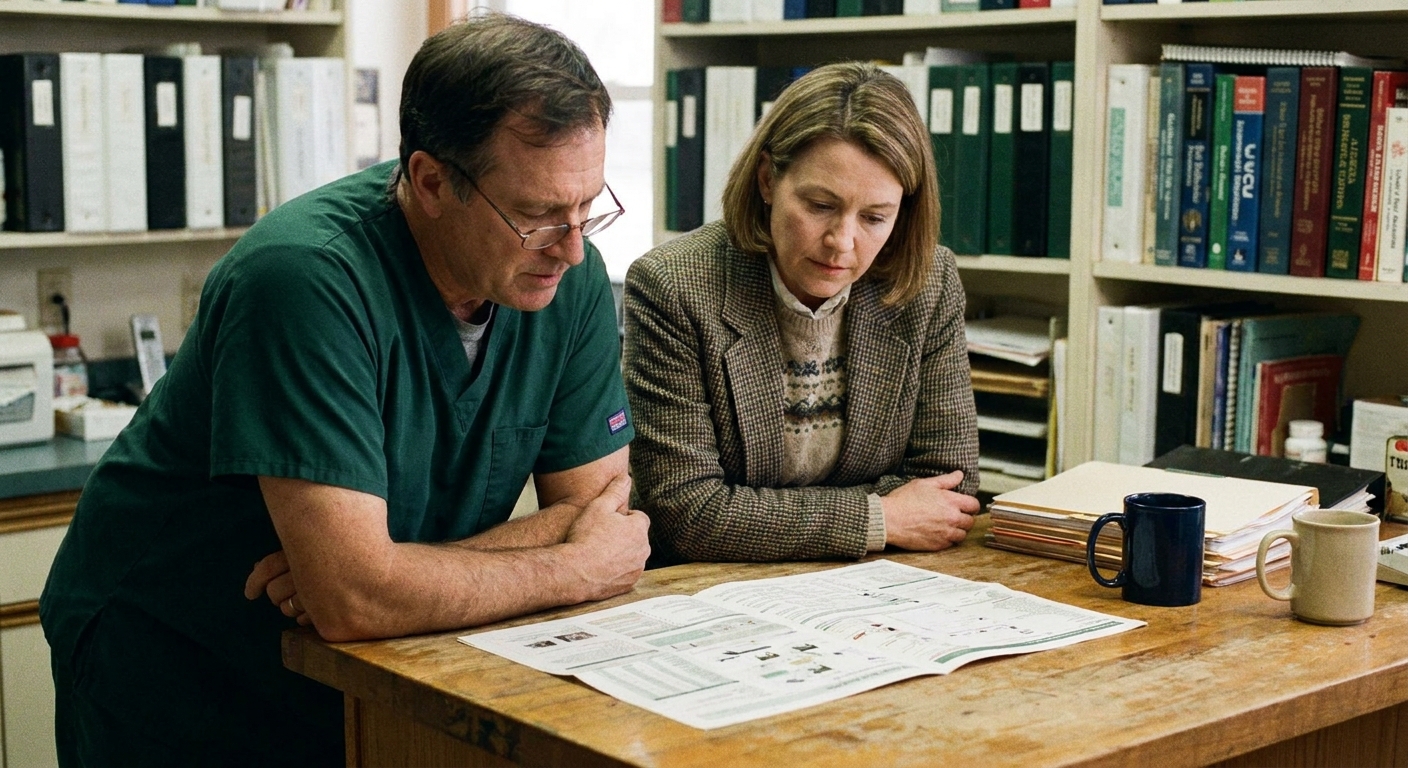
What can happen when a Vets Pets seller wants to leave rather than remain as the veterinarian partner in 2026?
Vets Pets says a seller who does not want to keep working may use a tailored plan in which a new partner veterinarian purchases the practice.
That person could be an associate, a veterinarian Vets Pets introduces, or another veterinarian. It does not promise timing, terms, or an exit structure.
This is the most seller-specific language on the live page. Vets Pets does not insist publicly that every owner remain as the long-term veterinarian partner.
Instead, it says the group typically likes to find a new partner to purchase the practice. The possible successor may already work inside the hospital or may come from outside.
A succession plan is the written arrangement for who will own, lead, and serve the practice after the current owner reduces work or leaves. The public page offers possibilities, not that plan.
Owners often hear “we can find someone” as a promise. I hear it as a diligence topic until a qualified veterinarian, financing path, ownership agreement, and closing condition are identified.
An existing associate can bring continuity. Yet interest, clinical skill, leadership readiness, financing, and agreement on governance are separate questions.
A veterinarian introduced by Vets Pets may bring another route. That still leaves the owner to verify timing, fit, licensing, employment, capital, and what happens if the person withdraws.
The current page also says a seller can discuss a partnership without selling the entire practice. Partial liquidity and complete departure are different outcomes, even if both begin with the word partnership.
If the seller retains an interest, the governing documents should name the issuer and explain voting, distributions, information rights, dilution, transfer restrictions, and repurchase mechanics.
If the seller wants to leave, the agreement should explain whether departure is a closing condition, a later event, or dependent on the successor’s arrival. Silence becomes expensive when everyone assumes a different timetable.
I would ask these questions early:
- Intended partner: Who is the veterinarian expected to step into ownership?
- Ownership conditions: What must happen before that person can own?
- Fallback plan: What happens if that person cannot close?
- Interim duties: What does the seller owe meanwhile?
Then I would separate practice ownership from employment. Selling an interest, serving as medical director, and working scheduled clinical shifts are distinct commitments.
The Vets Pets page emphasizes flexibility. Flexibility can be valuable, but it must eventually become precise language about people, dates, entities, obligations, and alternatives.
Where does Vets Pets operate, and what does its 30-plus-practice scale measure in 2026?
Vets Pets says it has 30-plus practices in North Carolina and is open to practices throughout the state and surrounding areas.
The count includes several care models and cannot be treated as a general-practice count or an acquisition total. The company does not define the surrounding-area boundary.
The current veterinarian openings page says the organization grew from 2 practices in 2007 to 30-plus practices in North Carolina. Its homepage uses “over 30” locations.
That is the defensible current scale statement. I would not replace it with a third-party estimate or manufacture a more exact number by counting map pins.
The live practice directory shows why. It includes primary care, emergency, specialty, spay-and-neuter, pharmacy, imaging, and resort locations under one regional umbrella.
An owner of a companion-animal general practice should care about the relevant subset, not the largest possible total. Thirty-plus locations does not mean 30-plus acquired general practices.
Geography needs the same restraint. The seller page says North Carolina and surrounding areas, but it does not define which neighboring markets qualify.
Call that a conversation boundary, not a national mandate. A practice near a state line may fit; a distant practice should not assume interest from a broad phrase.
Recent activity shows a network still investing across North Carolina. The April 28, 2026 Wilson announcement described a second location for an established companion-animal practice.
The May 12, 2026 AVL announcement described an urgent-care hospital rebuilt after hurricane damage. Both confirm active investment.
Neither proves a recent acquisition cadence. They show expansion, construction, rebuilding, and regional commitment.
When an owner asks who to sell a veterinary practice to, geography is only one filter. Clinical fit, transition goals, successor needs, property, and the complete proposal matter too.
For a $2M-plus companion-animal general practice, I would ask Vets Pets to confirm market interest before releasing detailed records. A simple written yes or no can save weeks.
Then ask which local leaders and support teams would serve the practice. Regional focus has value only if the proposed support map reaches the owner’s actual market.
Which support functions does Vets Pets say it provides in 2026?
Vets Pets lists support across recruiting, human resources, training, operations, technology, purchasing, accounting, finance, marketing, facilities, and leadership.
A seller should still document who provides each service, which entity pays, what authority remains local, and what remedy applies if performance falls short.
The public list is unusually specific. It gives an owner a useful starting point instead of a vague promise of administrative help.
Recruiting includes veterinarian and staff hiring strategies. Human resources includes payroll, employee relations, insurance administration, training, and regulatory compliance.
Technology covers software and vendor relationships. Purchasing covers inventory and supplier relationships, while accounting and finance include reporting, budgeting, cash management, tax oversight, and lender relations.
Marketing and facilities round out the list. The page describes website work, advertising, events, maintenance, construction, renovation, and site development.
Now the caveat: a category name is not a service level. It does not identify response times, approval rights, allocated costs, data ownership, local staffing, or escalation.
The seller page says Vets Pets offers resources and recommendations rather than directives. That is a current representation worth discussing, not a universal contractual guarantee.
I would turn the public list into a responsibility map:
| Support area | Public description | Written verification for the seller |
|---|---|---|
| Recruiting and people | Recruiting, payroll, employee relations, insurance, training, and compliance | Employer entity, approval rights, response times, benefits, escalation, and hiring authority |
| Operations and technology | Practice-leader collaboration, software, vendors, and communication tools | Required systems, conversion timing, data access, local discretion, downtime support, and costs |
| Purchasing | Inventory, pricing, and vendor relationships | Required vendors, formularies, approval thresholds, rebates, inventory ownership, and exceptions |
| Accounting and finance | Reporting, cash management, budgeting, taxes, and lender relations | Reporting calendar, bank authority, budget approval, allocations, tax responsibility, and audit access |
| Marketing and facilities | Websites, advertising, events, maintenance, renovations, and development | Brand control, local budget, project approval, property obligations, timelines, and cost responsibility |
The right-hand column is where marketing becomes diligence. Every item needs a responsible legal party, a decision maker, a timetable, and a way to resolve failure.
The broader veterinary practice sale guide places operating diligence beside financial, legal, employment, and transition review. Support is part of the proposal, not a substitute for the rest.
Ask for recent references from practices using the same services in a similar market. A primary-care owner needs examples closer to primary care than to a resort or specialty hospital.
I also ask what remains local. The useful answer names decisions, thresholds, and exceptions rather than promising autonomy in the abstract.
Finally, ask which services begin at closing and which require later migration. A support package that arrives in stages can change the first-year workload substantially.

Which Vets Pets transaction entities and documents should a seller verify in 2026?
Verify the acquisition entity, signer, funding party, employer, property counterparty, any guarantor, equity issuer, and approval parties named in the current documents.
Vets Pets, the local practice, and the veterinarian partner may occupy different roles, so each material promise should map to the party that owes it.
An acquisition entity is the legal organization named as buyer in the transaction documents. Its name may differ from Vets Pets or the local hospital name.
A guarantor promises to satisfy another party’s covered obligation if that party does not. Shared branding, common leadership, or co-ownership never creates a guaranty by itself.
The employer may be another entity again. The seller’s employment agreement and the team’s payroll records should identify who actually owes wages, benefits, and workplace obligations.
Property creates another branch. The practice buyer, equipment owner, tenant, landlord, and real-estate purchaser can be different parties with different remedies.
Retained ownership requires a named issuer. If the proposal includes any continuing interest, obtain that entity’s governing documents before treating the interest as understandable.
Over dinner, I ask the owner to read every defined party aloud. The awkward legal names are useful because they stop the familiar brand from swallowing the contract.
Use this checklist before signing exclusivity:
- Copy every legal name exactly. Include the entity suffix, jurisdiction, defined role, and document where it appears.
- Match every signature. Record the signer’s title, authority, and represented entity instead of relying on an email footer.
- Trace funds delivered at closing. Identify the party required to send them and whether another party guarantees that duty.
- Identify the post-closing employer. Match employment promises, benefits, restrictive terms, and dispute procedures to that entity.
- Separate property documents. Map the practice purchase, equipment, lease, and any real-estate transaction to their actual parties.
- Name the ownership issuer. Obtain the agreement governing votes, distributions, dilution, transfers, information, and repurchase.
- List every approval. Identify boards, owners, lenders, veterinarian partners, or other parties whose consent is required.
- Assign continuing promises. Put support, reporting, transition, indemnification, and other duties beside the party that owes each one.
The checklist does not imply that every proposal contains every layer. It prevents the seller from filling an unanswered box with a reassuring brand name.
It also keeps the article neutral. Vets Pets’ actual documents, not assumptions about a cooperative model, should establish transaction-specific rights and duties.
Ask counsel to create a one-page entity chart from the final documents. If the parties cannot explain the chart plainly, the owner is not ready to sign.
How should an owner compare Vets Pets with other buyers before exclusivity in 2026?
Compare the complete proposals before granting exclusivity: legal buyer, funds delivered at closing, retained ownership, employment, transition, property terms, support commitments, approvals, and continuing obligations.
Vets Pets’ cooperative model is one diligence category, not a verdict. Seller leverage comes from qualified alternatives evaluated on the same information and timeline.
Exclusivity is a negotiated period when the seller agrees not to pursue or negotiate with other potential buyers. It changes leverage because the comparison window narrows.
Do not compare a Vets Pets introductory conversation with another buyer’s complete proposal. Bring each qualified party to the same level of information and specificity first.
I begin with a common practice profile: normalized financials, doctor and team information, property, equipment, clinical mix, and the owner’s preferred transition. Then every bidder answers the same questions.
Place the proposals side by side. Compare the legal buyer, funds delivered at closing, contingent value, retained ownership, employment, property, support, approvals, and continuing duties.
The co-ownership model deserves its own column. Record the issuer, percentage, voting rights, distributions, required capital, dilution, transfer rules, repurchase mechanics, and departure treatment.
Do the same for successor risk. If a new veterinarian partner is central, identify that person, the required approvals, the financing path, and the fallback if the succession plan fails.
Our Elite Selling System hand-selects and vets every buyer allowed to bid, the way a doorman with a velvet rope admits only the right people.
Vets Pets can be one qualified participant where the geography and model fit. The process does not presume that a familiar structure, a larger network, or the first conversation produces the right answer.
It asks each buyer to become comparable. Comparable proposals expose tradeoffs that friendly language and headline value can hide.
If Vets Pets has contacted your $2M-plus companion-animal general practice, I can help map the proposed ownership and compare it through a free, confidential practice value estimate before exclusivity changes the conversation.
Bring the message, confidentiality agreement, and every legal name already mentioned. The useful work starts with the boxes nobody has filled yet.
Frequently asked questions for veterinary practice owners in 2026
Is Vets Pets still acquiring or partnering with existing companion-animal general practices in 2026?
Yes. Vets Pets’ live seller page says it typically considers acquisitions and new builds, and it addresses owners who want to sell or transition out.
That is a current regional invitation, not proof of a newly disclosed acquisition. The group says it is open throughout North Carolina and surrounding areas.
Who owns Vets Pets in 2026, and what does its no-outside-investors statement establish?
Vets Pets describes itself as a privately owned cooperative and says it has no outside investors. Steve Thomas is President and CEO, while Frank Batten, DVM, remains engaged.
That first-party description does not disclose ownership percentages, voting rights, debt providers, or every intermediate entity.
How does Vets Pets distinguish an acquisition partnership from an associate buy-in or a new-clinic build in 2026?
Vets Pets says it considers acquisitions and new builds, while its ownership materials also describe associate buy-ins. These are different paths.
An acquisition adds an existing practice; a new build creates a hospital from the ground up; an associate buy-in moves a veterinarian into ownership of an existing location.
What can happen when a Vets Pets seller wants to leave rather than remain as the veterinarian partner in 2026?
Vets Pets says a seller who does not want to keep working may use a tailored plan in which a new partner veterinarian purchases the practice.
That person could be an associate, a veterinarian Vets Pets introduces, or another veterinarian. It does not promise timing, terms, or an exit structure.
Where does Vets Pets operate, and what does its 30-plus-practice scale measure in 2026?
Vets Pets says it has 30-plus practices in North Carolina and is open to practices throughout the state and surrounding areas.
The count includes several care models and cannot be treated as a general-practice count or an acquisition total. The company does not define the surrounding-area boundary.
Which support functions does Vets Pets say it provides in 2026?
Vets Pets lists support across recruiting, human resources, training, operations, technology, purchasing, accounting, finance, marketing, facilities, and leadership.
A seller should still document who provides each service, which entity pays, what authority remains local, and what remedy applies if performance falls short.
Which Vets Pets transaction entities and documents should a seller verify in 2026?
Verify the acquisition entity, signer, funding party, employer, property counterparty, any guarantor, equity issuer, and approval parties named in the current documents.
Vets Pets, the local practice, and the veterinarian partner may occupy different roles, so each material promise should map to the party that owes it.
How should an owner compare Vets Pets with other buyers before exclusivity in 2026?
Compare the complete proposals before granting exclusivity: legal buyer, funds delivered at closing, retained ownership, employment, transition, property terms, support commitments, approvals, and continuing obligations.
Vets Pets’ cooperative model is one diligence category, not a verdict. Seller leverage comes from qualified alternatives evaluated on the same information and timeline.
Related Buyer Profiles
Sources
Vets Pets ownership, leadership, partnership, and operating materials
- Vets Pets. “Entrepreneurs.” Current page accessed July 18, 2026. thevetspets.com
- Vets Pets. “Who We Are.” Current page accessed July 18, 2026. thevetspets.com
- Vets Pets. “Leadership.” Current page accessed July 18, 2026. thevetspets.com
- Vets Pets. “Where People, Pets, and Innovation Meet.” Current homepage accessed July 18, 2026. thevetspets.com
- Vets Pets. “Veterinarian Openings.” Current page accessed July 18, 2026. thevetspets.com
- Vets Pets. “Our Practices.” Current page accessed July 18, 2026. thevetspets.com
Vets Pets announcements and dated operating activity
- Vets Pets. “2 N.C. Veterinary Hospitals Join Vets Pets; Brings to 30 the Number of Practices Belonging to the Multifaceted Support Network.” June 22, 2022. prnewswire.com
- Vets Pets. “Vets Pets Unveils Wake Veterinary Medical Center’s Expansion and Rebranding.” March 5, 2024. prnewswire.com
- Vets Pets. “Vets Pets Expands Wilson Veterinary Hospital with Additional Location.” April 28, 2026. prnewswire.com
- Vets Pets. “Vets Pets to Open AVL Animal Urgent Care in Asheville After Hurricane Helene Forced a Complete Rebuild.” May 12, 2026. prnewswire.com

Melani Seymour, co-founder of Transitions Elite, helps veterinary practice owners take action now to maximize value and secure their future.
With over 15 years of experience guiding thousands of owners, she knows exactly what it takes to achieve the best outcome.