
Veterinary Practice Goodwill in 2026: What It Is and How It’s Valued
Key takeaways
- Goodwill is everything your practice is worth above its hard assets — the intangible residual after equipment and inventory are accounted for, captured by the formula Goodwill equals Purchase Price minus Assets minus Liabilities.
- Goodwill is usually the biggest part of the price. Standard deal protocol allocates roughly 75 to 80 percent of the purchase price to goodwill, because buyers pay for earnings, not equipment.
- Enterprise goodwill transfers, personal goodwill mostly doesn’t. The part tied to your practice carries to the next owner; the part tied to you personally gets discounted unless you make it transferable before you sell.
- Goodwill gets the best tax treatment in the whole deal. It is generally taxed as a long-term capital gain, up to about 20 percent federal, rather than as ordinary income that can run to 37 percent.
- You can grow your goodwill before you sell by converting personal goodwill into enterprise goodwill and improving documented profit, which raises both the multiple and the share buyers will pay full value for.
A vet asked me a question over dinner a couple of years back that I think about often. We’d been talking through an offer on her practice, a good one, and she stopped me mid-sentence. “I get the equipment,” she said. “I get the building.
But this number is way bigger than all of that. What am I actually selling them?”
That’s the whole article, right there. The answer is goodwill, and it’s the part of a practice sale almost nobody is taught to understand, even though it’s usually the largest single number on the page.
Here’s the thing most owners get backwards. They assume the value of a practice lives in the X-ray machine, the surgical suite, the build-out, the lease.
Real money, in their minds, is physical. But a buyer isn’t paying millions for used equipment.
They’re paying for everything that equipment produces: a loyal client base, a trained team, a reputation in town, a phone that rings on its own Monday morning. That’s goodwill, and learning how it works is the difference between knowing what you’re selling and just hoping the number is fair.
Veterinary practice goodwill is the amount a buyer pays above the fair market value of your net assets. The clean way to say it: Goodwill = Purchase Price minus (Assets minus Liabilities).
It is the intangible residual, the value left over once the hard assets are counted, and on most practice sales it is the single biggest component of the price. This is a sub-topic of how a practice gets valued overall, which we cover in our veterinary practice valuation guide.
Here we go deep on goodwill specifically: what it is, the two kinds of it, how it gets quantified, and why it carries the best tax treatment in the entire deal.
What goodwill actually is, in plain English
Let me define the term properly before we go anywhere else. Goodwill is the intangible value of a practice over and above the fair market value of its tangible assets. Fair market value (FMV) is the price something would change hands at between a willing buyer and a willing seller, neither under pressure.
The arithmetic is simple. Add up the practice’s assets, subtract its liabilities, and you have the net value of the hard, countable stuff.
Whatever a buyer pays beyond that is goodwill.
So if a buyer pays $4 million for a practice whose equipment, inventory, and other net assets are worth $400,000, then $3.6 million of that price is goodwill. Per Mahan Law’s framing of practice goodwill, that residual is the standard accounting definition: the price minus the net assets.
What does that residual represent in the real world? It’s the answer to the vet’s dinner question.
It’s the clients who’ve trusted the practice for years, the staff who know the systems, the location people already drive to, the name that means something locally. None of it shows up on an equipment list.
All of it is what the buyer is really buying.
Why goodwill is usually the biggest number in the deal
Owners are routinely surprised by how small the hard-asset portion of their price turns out to be. The reason traces straight back to how practices are valued.
Buyers don’t price a practice off its equipment. They price it off its earnings.
A practice sells for a multiple of EBITDA, what it earns in pure operating profit, before taxes and accounting choices, and the multiple is the multiplier buyers apply to that profit to set the price.
Veterinary practices in 2026 commonly trade at roughly 3 to 10 times EBITDA, and sometimes higher for larger, multi-doctor practices, depending on size, location, and buyer type. Individual buyers tend to sit toward the lower end of that range, while larger buyers fold the practice into a platform and can justify the higher end.
We get into where a given practice lands on that range in our EBITDA benchmarks article. The point for goodwill is what it does to the math.
The price is set by earnings. The hard assets are worth a small slice of that price.
Goodwill is the bridge between the two, and that bridge is wide.
That’s why standard deal protocol commonly allocates roughly 75 to 80 percent of the purchase price to goodwill, with a small amount to the non-compete and the remainder to equipment. Goodwill isn’t a footnote on the price.
On most deals, it is the price.
There’s a second reason goodwill runs so high at the top of the market. A PE-backed group or strategic buyer like Mars can often justify a higher multiple than an individual buyer, because they fold your earnings into an existing platform and capture efficiencies a solo purchaser can’t.
We cover how private equity prices vet practices in its own piece. A higher multiple means a higher price, and a higher price means more goodwill, since the hard assets don’t get any more valuable just because the buyer is larger.
Personal goodwill vs enterprise goodwill: the distinction that decides what transfers
Here’s where it gets interesting, and where most of the real money is won or lost. Not all goodwill is the same, and a buyer knows it.
Goodwill splits into two kinds. Enterprise goodwill is the part that belongs to the practice itself, its location, systems, brand, staff, and the client loyalty that’s attached to the practice rather than to any one doctor. Personal goodwill is the part that attaches to an individual veterinarian, their reputation, their skill, the clients who come specifically for them.
The distinction matters because of one ruthless rule a buyer applies: goodwill is only worth paying for if it transfers. Enterprise goodwill derives from the practice’s characteristics regardless of who owns it, while personal goodwill attaches to the individual doctor and is far harder to transfer.
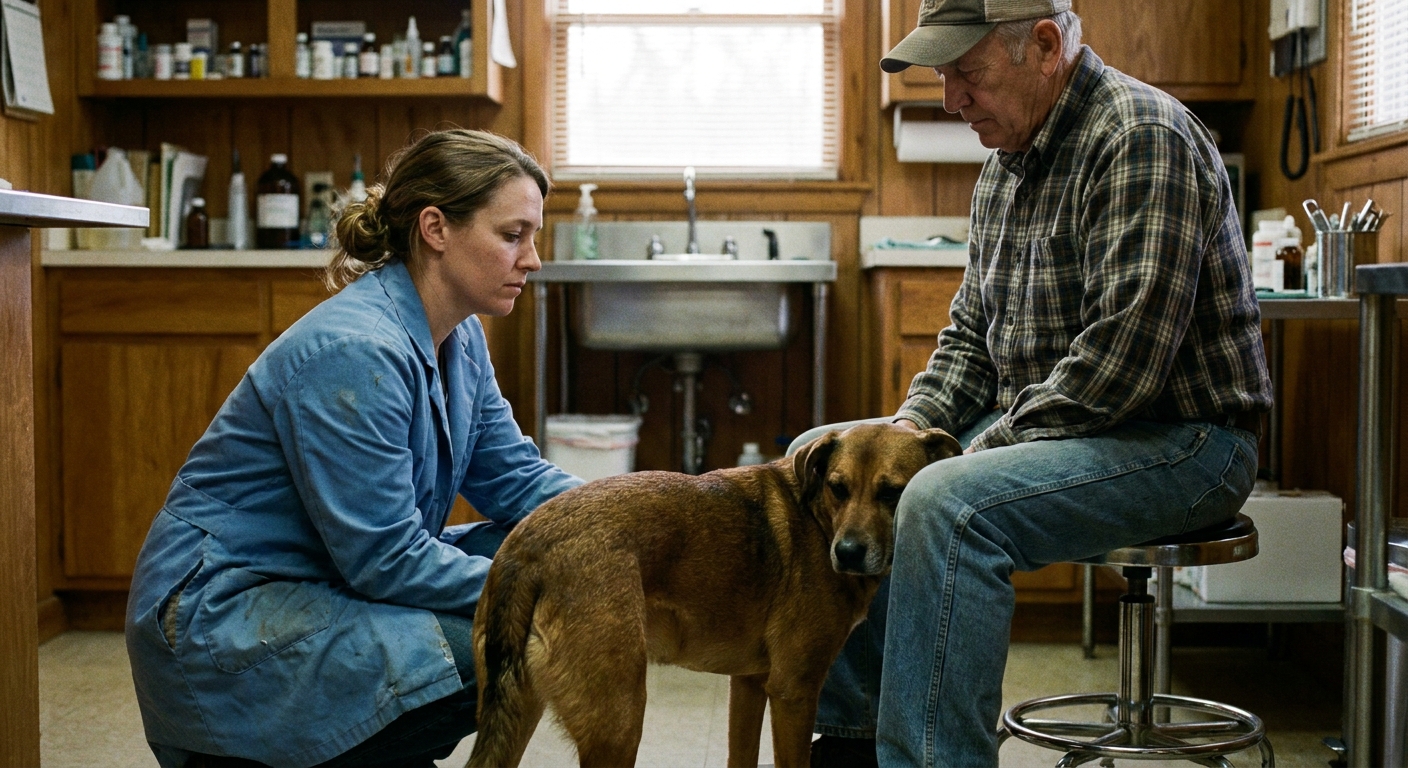
Think about what that means in practice. If your clients come because they trust the practice, they stay when you leave, and your goodwill transfers cleanly.
If your clients come because they trust you specifically, and they’d follow you out the door or won’t accept an associate, then a buyer has a problem. They’re being asked to pay for relationships that walk away on closing day.
So buyers discount personal goodwill. Per Mandelbaum Barrett, goodwill has value only to the extent it transfers, and a solo practitioner whose clients won’t stay with an associate must actively introduce buyers to clients, while multi-doctor practices retain clients far more reliably.
How does the split typically land? Enterprise goodwill is generally cited as roughly 70 to 80 percent of total practice value, with the remainder personal.
But that range moves hard depending on your structure. A multi-doctor practice with strong systems and a recognizable brand sits high on the enterprise side.
A solo practice built entirely around one beloved veterinarian sits much lower, and that’s a real valuation risk worth understanding before you ever talk to a buyer.
| Dimension | Enterprise goodwill | Personal goodwill |
|---|---|---|
| What it’s tied to | The practice: location, systems, brand, staff, client loyalty to the practice | An individual doctor: reputation, skill, personal client relationships |
| Does it transfer to a buyer? | Yes, it stays with the practice when ownership changes | Hard to transfer; clients may follow the doctor instead of staying |
| Typical share of value | Generally cited at 70 to 80 percent of total | The remainder, larger in solo practices, smaller in multi-doctor ones |
| How a buyer treats it | Pays full value, low risk | Discounts it unless the seller makes it transferable |
| Tax angle (if a C corp) | Owned by the corporation | May be sold by the doctor directly, outside the corporation |
This table is the one I’d want a solo owner staring at a year before they sell. Because the personal-versus-enterprise split isn’t fixed.
You can move it, and moving it is one of the highest-return things you can do before a sale.
How goodwill gets valued: the residual, step by step
People ask me how goodwill is “calculated,” as if there’s a formula that spits out the goodwill number on its own. There isn’t, and understanding why is the key to the whole thing.
Goodwill isn’t measured directly. It’s whatever is left after you set the total price and subtract the hard assets.
It’s a residual, not an independent calculation.
The sequence runs like this. First, the buyer values the whole practice, almost always as a multiple of normalized earnings.
Then they assign fair market value to the tangible assets, the equipment, inventory, and fixtures, net of liabilities. Then they subtract.
The remainder is goodwill, and it gets divided between enterprise and personal.
That’s why everything that grows your price grows your goodwill. The hard-asset value barely moves.
So when a competitive process pushes the multiple up, almost the entire increase lands in goodwill. We’ve watched this directly: across the deals we’ve closed over the past four-plus years, the gap between a single direct offer and the result of a real competitive process is consistently large, and nearly all of that gap is goodwill, because the equipment was always going to be worth what it was worth.
The way we move that number is the Elite Selling System. We hand-select and vet every buyer who gets to bid on your practice, the way a doorman with a velvet rope lets in only the right people, then run a private competitive window inside that vetted group.
The leverage that creates is what drives the multiple up, and because goodwill is the residual, that leverage flows almost entirely into the goodwill line.
The tax story: why goodwill is the most valuable line on the page
Now for the part that surprises owners most, and the reason getting goodwill right matters far beyond the headline number. Goodwill carries the best tax treatment of anything in the deal.
For a seller, the sale of goodwill is generally treated as a long-term capital gain, taxed at a maximum federal rate around 20 percent, rather than as ordinary income, which can be taxed up to 37 percent. Per Eton Venture Services, that gap makes goodwill the most tax-favored component of the price.
Run the 2026 numbers and you see why this isn’t a rounding error. For 2026, federal long-term capital gains are taxed at 0, 15, or 20 percent.
Per Kiplinger’s 2026 thresholds, a single filer pays 15 percent on income roughly between $49,451 and $545,500, and 20 percent above that, with the married-filing-jointly 20 percent threshold rising to $613,700.
So on a large goodwill component, the difference between capital-gains treatment near 20 percent and ordinary-income treatment near 37 percent can be a seven-figure swing in what you actually keep. That’s after-tax money, the only kind that matters when the deal is done.
We go deeper on this in our tax guide to selling a vet practice.
Here’s the contrast that creates an opportunity. In an asset sale, tangible assets like equipment and inventory are generally taxed as ordinary income to the extent they’re sold above their basis, your remaining tax cost in the asset after depreciation.
Intangibles like goodwill get capital-gains treatment. That means a seller benefits from negotiating a higher allocation to goodwill and a lower allocation to hard assets.
But you can’t just declare the split you want. The IRS requires the total sale price to be allocated across asset classes at fair market value, with both buyer and seller reporting that allocation on Form 8594, the IRS form where both sides report how the price was split across asset classes, per Keiter CPA.
Buyer and seller have to report it the same way, which is exactly why the allocation gets negotiated, not assumed.
And the two sides don’t want the same thing. For the buyer, purchased goodwill is a Section 197 intangible, an acquired intangible the buyer deducts straight-line over 15 years, per Sofer Advisors.
That means the buyer recovers goodwill slowly. Some equipment, by contrast, can be written off faster, so buyers often prefer more value in the assets they can deduct sooner, while sellers prefer more in goodwill.
That tension is real, it’s normal, and it’s one more reason the allocation belongs in experienced hands.
The C corporation trap, and the personal-goodwill escape hatch
There’s one structural situation where goodwill turns from your best friend into a tax problem, and it catches owners who never saw it coming. It’s the C corporation.
If your practice is a C corporation, a corporation taxed as its own entity, separate from its owners, an asset sale of corporate goodwill can be taxed twice. Per Walz Group CPA, the gain is taxed once at the corporate level and again as a distribution to the shareholder when the money comes out.
Two layers of tax on the same dollars.
There’s an escape hatch, and it runs straight through the personal-versus-enterprise distinction we covered earlier. Properly documented personal goodwill can be sold by the shareholder directly, outside the corporation, which avoids the corporate-level layer entirely.
Per PCE Companies, courts have recognized this, but only under strict conditions.
The conditions are not casual. The owner generally cannot have a non-compete or non-solicitation agreement with the corporation, because that would mean the corporation, not the doctor, controls the relationships.
The practice must genuinely depend on the owner’s personal reputation and relationships. And the personal-goodwill allocation should be named in the letter of intent early, because last-minute allocations bolted on at closing have been denied by courts.
I flag this not to give tax advice, that’s your CPA’s and attorney’s job, and this is fact-specific work that needs their sign-off. I flag it because owners who don’t know it exists can lose a large chunk of their proceeds to a second layer of tax that careful structuring, started early, could have avoided.
If you run a C corp, this is a conversation to have a year before you sell, not a week before closing.
How to grow your goodwill before you sell
Everything above leads to one practical question: if goodwill is most of the price, and the transferable part is what a buyer pays full value for, can I grow it before I sell? Yes.
And the levers are concrete.

The core move is converting personal goodwill into enterprise goodwill, the kind that transfers. Per our own guidance on boosting practice value before a sale, the proven levers are redistributing clients to associate veterinarians, hiring and training associates at least a year ahead of a sale, building the practice’s branded online reputation rather than your personal one, and improving documented, normalized profitability.
Each of those does double duty. Diversifying production away from you makes the practice less dependent on one person, which shifts goodwill from the personal column to the enterprise column, the column a buyer pays full value for.
And improving documented profit raises the EBITDA that the multiple gets applied to, which raises the price, which, because goodwill is the residual, raises goodwill almost dollar for dollar.
The catch is lead time. An associate hired the month before you go to market does nothing, because a buyer wants to see several quarters of sustained production they can verify before they’ll underwrite it.
This is patient work, and it’s exactly the work we do with owners in the 1-to-2-year window before a sale.
There’s a strategic dimension too, which is matching your transferable goodwill to the right kind of buyer. A practice heavy on enterprise goodwill, with strong systems and an associate bench, is precisely what a PE-backed consolidator is built to buy and pay up for.
We help owners think through who to sell to once we know how their goodwill actually breaks down.
What this means for your practice
Step back and the picture is clear. Goodwill is most of what you’re selling, it carries the best tax treatment in the deal, and the share of it that transfers cleanly is the share a buyer will pay full value for.
That means three questions decide a large part of your outcome. How big is your goodwill, which is driven by your multiple and your earnings?
How much of it is enterprise versus personal, which is driven by how dependent the practice is on you? And how is it allocated and structured for tax, which is driven by your entity type and how early the planning starts?
None of those three are things an owner is well served handling alone, against a buyer’s experienced deal team, in the middle of a transaction. They’re things to get right before you ever go to market.
We get into the full set of pre-sale moves in our guide to selling a veterinary practice and our exit strategy guide.
What to do next
If you take one thing from all of this, take this: the value of your practice isn’t in the building or the equipment. It’s in the goodwill, and goodwill rewards owners who understand it early.
The single most useful first step is simply knowing what your practice is actually worth, and how that value breaks down between hard assets, transferable enterprise goodwill, and personal goodwill that may need work before a buyer pays full value for it. That breakdown tells you where the money is, where the risk is, and what’s worth doing in the runway before a sale.
Get a Free Practice Value Estimate →
We pull your numbers ourselves, build a defensible normalized EBITDA, and show you how your value splits between hard assets and goodwill, including how much of your goodwill is transferable today and how much you could convert with some lead time. Then, when you’re ready, we run a competitive process that drives the multiple, which is the lever that grows your goodwill.
The estimate is free and there’s no obligation to engage further. The Transitions Elite engagement model is success-based, with no upfront fees and no retainer, so we only get paid when a deal closes and only out of the value our process delivers.
Further reading
These are the related TE resources I’d point any vet toward as they think about value and a future sale. Each goes deep on one piece of the picture.
- How to value a veterinary practice — the full valuation methodology that goodwill sits inside.
- Veterinary practice EBITDA multiples — what practices actually sell for in 2026, by size and sale process.
- How much private equity is paying for veterinary practices — the components of a PE-backed offer and why the headline rarely equals the cash check.
- Tax consequences of selling a veterinary practice — the full tax picture beyond goodwill.
- Veterinary practice brokers — how advisory works and what to look for in representation.
- Sell my veterinary practice — the owner’s decision guide to the whole sale.
Frequently asked questions
What is goodwill in a veterinary practice?
Goodwill is the amount a buyer pays for a veterinary practice above the fair market value of its net assets. It is the intangible residual value left over after the hard assets are accounted for, captured by the formula Goodwill equals Purchase Price minus Assets minus Liabilities.
Goodwill reflects what makes the practice worth more than its equipment and inventory: its client base, reputation, location, systems, and earnings power. On most practice sales it is the single largest part of the price.
How is goodwill valued in a veterinary practice in 2026?
Goodwill is valued as a residual. A buyer sets a price for the whole practice, usually based on a multiple of earnings, then subtracts the fair market value of the hard assets such as equipment and inventory net of liabilities.
Whatever is left is goodwill. Because veterinary practices in 2026 commonly trade at roughly 3 to 10 times EBITDA, and sometimes higher for larger multi-doctor practices, depending on size, location, and buyer type, while the hard assets are worth a small fraction of that price, goodwill ends up being most of the value.
Standard deal protocol commonly allocates roughly 75 to 80 percent of the purchase price to goodwill, though the actual split varies with each practice.
What is the difference between personal and enterprise goodwill in a veterinary practice?
Enterprise goodwill belongs to the practice itself, its location, systems, brand, staff, and client loyalty to the practice, and it transfers to a new owner. Personal goodwill attaches to an individual doctor, their reputation and personal client relationships, and it is far harder to transfer because clients may follow the doctor rather than stay.
Enterprise goodwill is generally cited as 70 to 80 percent of total practice value, with the remainder personal, though the split varies sharply between a solo practice and a multi-doctor one.
Why is goodwill the largest part of a veterinary practice sale price?
Buyers pay for earnings, not equipment. A practice sells for a multiple of its profit, commonly 3 to 10 times EBITDA in 2026 and sometimes higher for larger practices, while its tangible assets such as equipment, fixtures, and inventory are worth only a small fraction of that figure.
Goodwill is the residual that bridges the modest hard-asset value to the much larger earnings-based price, so it is usually the single biggest component of the deal. Standard allocation commonly puts roughly 75 to 80 percent of the price into goodwill, though the split varies by practice.
How is goodwill taxed when selling a veterinary practice?
For sellers, the sale of goodwill is generally treated as a long-term capital gain, taxed at a federal rate up to about 20 percent, rather than ordinary income, which can be taxed up to 37 percent. That makes goodwill the most tax-favored part of the price.
By contrast, tangible assets sold above their tax basis are generally taxed as ordinary income, so sellers benefit from negotiating a higher allocation to goodwill. The allocation must be at fair market value and both sides report it to the IRS on Form 8594.
Can personal goodwill be sold separately to avoid C corporation double taxation?
Yes, in the right circumstances. If a practice is a C corporation, an asset sale of corporate goodwill can be taxed twice, once at the corporate level and again as a distribution to the shareholder.
Properly documented personal goodwill can be sold by the doctor directly, outside the corporation, avoiding that second layer. But the doctor generally cannot have a non-compete with the corporation, the practice must genuinely depend on their personal reputation and relationships, and the personal-goodwill allocation should be named in the letter of intent early.
Last-minute allocations have been denied by courts, so this needs CPA and attorney sign-off.
How can I increase the goodwill in my veterinary practice before selling?
Convert personal goodwill into transferable enterprise goodwill, and grow profitability so the multiple applies to a bigger number. Redistribute clients to associate veterinarians so the practice does not depend on you, hire and train associates at least a year ahead of a sale, build the practice’s own branded reputation online rather than your personal one, and improve documented, normalized profit.
Each lever raises both the multiple a buyer will pay and the share of goodwill that actually transfers, which is the share a buyer is willing to pay full value for.
How does a buyer treat goodwill for tax purposes after buying a veterinary practice?
For the buyer, purchased goodwill is a Section 197 intangible, amortized straight-line over 15 years for tax purposes. This applies to goodwill acquired in an asset purchase, not to goodwill a practice builds internally.
Because the buyer recovers goodwill slowly over 15 years but recovers some equipment faster, buyer and seller often have opposing incentives on how the price is allocated. The IRS requires the allocation to be at fair market value and reported consistently by both parties on Form 8594.
Related Reading
- Sell my
- What to expect during due diligence
- Earnouts and rollover equity
- Understanding the letter of intent
- Non compete agreement
Sources
Veterinary practice valuation and goodwill
- Mahan Law. “Valuing Goodwill of a Veterinary Practice.” mahanlaw.com
- Mandelbaum Barrett / DM Counsel. “How to Value a Veterinary Practice.” dmcounsel.com
Tax treatment of goodwill in a practice sale
- Eton Venture Services. “Goodwill Tax Treatment.” etonvs.com
- Kiplinger. “IRS Updates Capital Gains Tax Thresholds for 2026.” kiplinger.com
- Keiter CPA. “Tax Implications of Goodwill When Buying or Selling a Medical Practice.” keitercpa.com
- Sofer Advisors. “Is Goodwill Tax Deductible: A Section 197 Guide.” soferadvisors.com
- Walz Group CPA. “Sale of a Corporation: Who Owns the Goodwill?” walzgroupcpa.com
- PCE Companies. “Let’s Get Personal — Personal Goodwill, That Is.” pcecompanies.com
- TQD Law. “How C-Corp Owners Can Treat Goodwill as a Personal Asset During an Asset Sale.” tqdlaw.com
Practice sale strategy and market context
- Transitions Elite. “Veterinary Practice Consolidators.” transitionselite.com
- Transitions Elite. “How to Boost the Value of Your Veterinary Practice Before Selling.” transitionselite.com

Melani Seymour, co-founder of Transitions Elite, helps veterinary practice owners take action now to maximize value and secure their future.
With over 15 years of experience guiding thousands of owners, she knows exactly what it takes to achieve the best outcome.