
Guardian Dentistry Partners and Your Dental Practice: What Owners Should Know in 2026

The email lands at 6:40 on a Thursday morning. Subject line: “Partnership conversation.”
You have four locations, eleven operatories between them, and a schedule that has not had a real gap in it since March. You are not looking to sell.
You read it anyway. Everybody does.
By the weekend you have typed the name into Google twice — once from the office between patients, and once from the couch at eleven at night with the television on mute and a legal pad you have not written anything on.
What comes back is press releases, an award listing, and a headline about them buying another group entirely.
That last one matters. Almost nobody explains why.
Key takeaways
- Guardian Dentistry Partners buys existing practices. It is not a de novo builder. It supports 164 practices and more than 148 dentist partners across 11 states from a base in Miami.
- It also buys other groups. In July 2026 it announced an agreed majority acquisition of Select Dental Management, a 38-location group spanning eight states and Washington, D.C.
- The ownership is not a standard buyout fund. Published sponsor disclosures put the majority with a family office, management and Guardian’s own dentist owners, with growth capital from Morgan Stanley Private Credit.
- If you own three to ten locations, you are a different kind of target. Buyers that acquire groups can value infrastructure you have already built. A pure tuck-in acquirer usually cannot.
- Affiliation is rarely the last transaction. Whoever you join may itself be acquired, and that changes what any equity you rolled is a claim on.
Does Guardian Dentistry Partners buy dental practices? Yes. Guardian affiliates existing independent practices and also acquires whole groups.
It supports 164 practices across 11 states. In July 2026 it announced a majority acquisition of Select Dental Management, adding 38 locations across eight states and D.C.
Who Guardian Dentistry Partners actually is
Founded in August 2018. Headquartered in Miami.
The founding group was a set of practising dentists together with a family office, which is an unusual pairing and turns out to matter later.
Today Guardian supports 164 practices and more than 148 dentist partners across 11 states: Alabama, Florida, Maryland, Michigan, New Jersey, New York, North Carolina, Pennsylvania, South Carolina, Texas and Virginia.
A definition first. A DSO is a dental support organization — the management company owns the non-clinical side and handles everything outside the operatory, while a licensed dentist keeps ownership of the clinical entity and every decision made inside it.
That split is not a marketing choice. Most states restrict who may own or control a dental practice under the corporate practice of dentistry doctrine, and the DSO structure exists to operate inside those rules.
Guardian prefers the phrase dental partnership network. The legal mechanics are identical.
The emphasis is on the ownership stake a joining dentist keeps.
Growth has been quick. Guardian crossed 100 partners in November 2022, four years after launch.
Who actually owns Guardian, and why the short answer is wrong
The public shorthand fails here. Worth doing slowly.
Guardian is routinely described as private-equity-backed. The primary sources say something more specific, and the difference is not cosmetic.
Kaulig Capital announced a minority growth investment in October 2022.
In that announcement it stated that the majority of Guardian is held by NKP Capital — a family office — along with management and Guardian’s own dentist owners, who reinvested a substantial portion of their equity rather than cashing out.
Kaulig Capital is itself the private investment arm of the Kaulig Companies family office. Its position is a minority one, structured across debt and equity.
In May 2024, Morgan Stanley Private Credit led a strategic growth capital investment into Guardian, with Prudential Private Capital participating. TPG Twin Brook has been the lead senior financing partner since 2021.
Read that stack again. Family-office majority.
Dentist owners holding alongside it. Institutional money arriving mainly as private credit rather than as a control buyout.
That is a different animal from a platform owned outright by a buyout fund working to a fund life. Not automatically better for a seller.
Simply different.
What it changes is which questions are worth asking.
Does Guardian buy existing practices, or build new ones?
Buys. Overwhelmingly.
Worth stating plainly, because two of the three largest DSOs do the opposite. Aspen Dental and PDS Health grow primarily de novo — brand-new offices built from scratch rather than existing practices acquired.
Of the three biggest, only Heartland Dental is substantially acquisition-led. An owner who assumes every large name is bidding for existing practices is working from a false map, and will judge whatever number arrives against a comparison set that does not exist.
Guardian sits firmly on the acquiring side and has since 2018. Becker’s Dental Review has tracked a steady run of individual additions — a Cary, North Carolina practice in February 2026, New York practices, a Pennsylvania practice, a Houston addition.
So the single-practice pipeline is live. So is the group pipeline.
They are not the same thing, and that difference is the point of this article.
The Select Dental Management deal, and what it signals
On 15 July 2026, Guardian announced it had agreed a majority acquisition of Select Dental Management.
SDM is not a practice. It is a group in its own right, founded in 2018, with 38 locations, more than 130 dentists and over 720 team members across Connecticut, Massachusetts, Maryland, New Hampshire, New Jersey, New York, Pennsylvania, Vermont and Washington, D.C.
The deal was expected to close before the end of the third quarter of 2026. Guardian said the combined organization would support roughly 500 doctors.
Now the useful part.
A DSO buying a DSO is a fundamentally different transaction from a DSO buying a practice. The seller is not a dentist with four operatories and a hygiene schedule.
The seller is an organization, with its own partners, its own equity holders and its own back office.
Why does that happen? Because platforms of a certain size run out of runway on single-practice deals.
Adding 38 locations in one signature beats adding them one at a time. It also buys a management team and a set of doctor relationships that would take years to assemble.
Becker’s has described exactly this split. Some organizations concentrate on opening new offices.
Others deepen the market by acquiring smaller DSOs alongside individual practices.
Guardian is in the second category. So are a fair number of the buyers who might approach you.
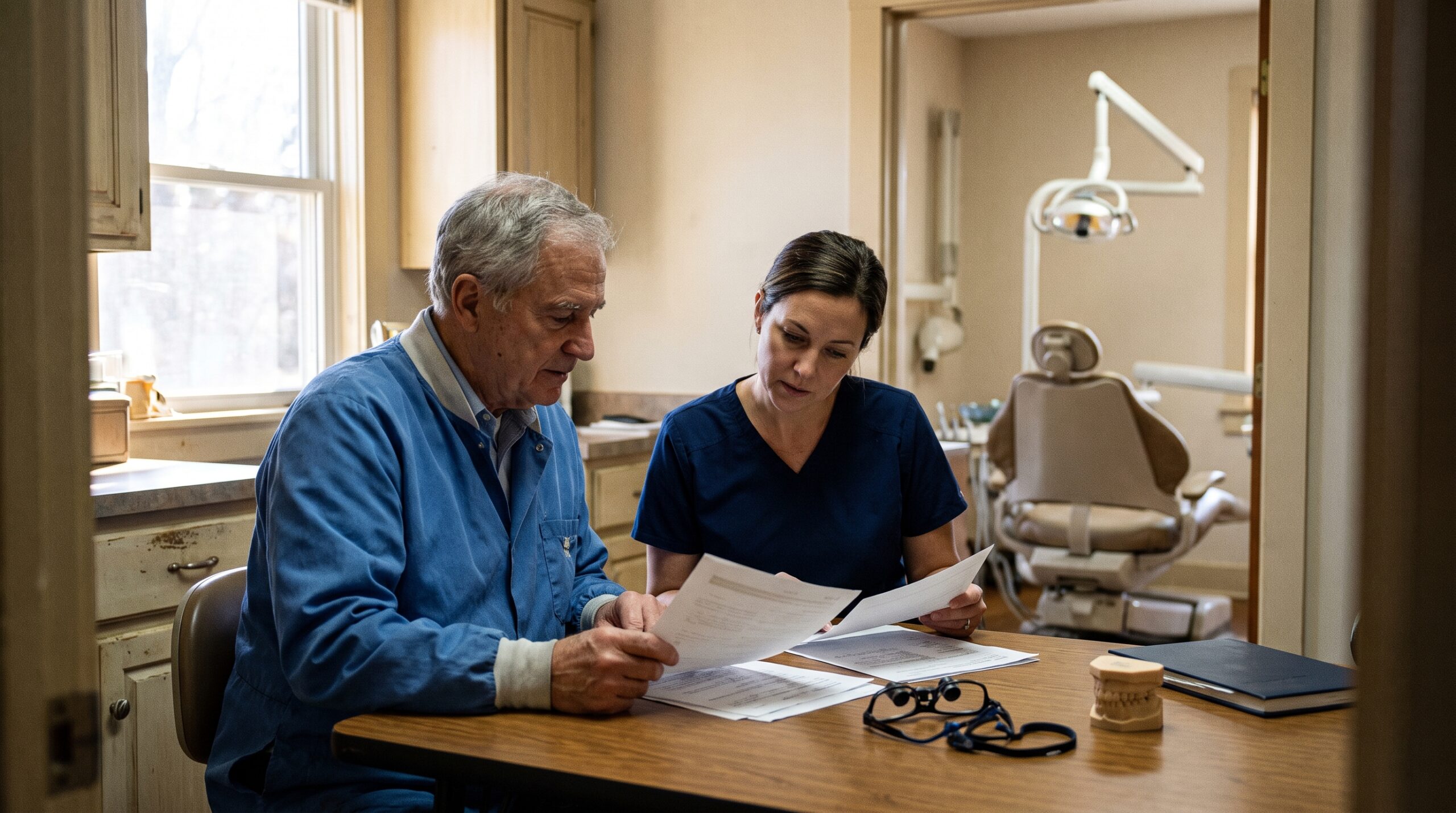
If you own three to ten locations, you are a different kind of target
Here is the practical consequence, and it is the reason this profile exists at all.
Almost everything written about selling a dental practice assumes a solo owner with one location. That owner is a tuck-in.
A buyer values the cash flow, folds it into an existing regional structure, and moves on.
Nothing wrong with that. It is just a narrow model.
A four-location group is not a tuck-in. It is a small platform, and buyers read it differently.
The difference is not sentiment. It is arithmetic and management.
A group that size usually has an operations lead, some centralized front office, real purchasing leverage and at least a partial answer to the associate-recruiting problem. A buyer acquiring it inherits infrastructure, not just chairs.
Organizations that acquire other groups pay for that infrastructure. A pure tuck-in acquirer frequently will not, because it already owns the infrastructure and only wants the earnings.
Which is why the same three-location group can get two very different responses from two entirely serious buyers in the same month.
Neither is being unreasonable. They are buying different things, and only one is buying what you actually built.
That asymmetry is worth money. You capture it only if more than one of them is at the table.
What changes when the buyer above you can itself be bought
Now the second consequence. Worth framing precisely, because it is easy to misread as a criticism, and it is not one.
This is a structural feature of a consolidating market, true of essentially every institutionally-backed group in dentistry rather than of any particular organization.
Here it is. If you affiliate with a group, and that group is later acquired, you end up owned by an organization you never met and never evaluated.
SDM’s dentist partners are living that right now, in the ordinary course of a friendly transaction. They joined SDM.
After close, the platform above them is Guardian.
By every public account this is an aligned pairing, both built around dentist equity partnership.
That is the good version of this. It happens often.
The point is not that the outcome is bad. It is that the event occurs, that it is common, and that you get no vote.
Regulators have noticed. California’s AB 1415, signed in October 2025 and effective from January 2026, extended state healthcare transaction oversight to management services organizations and the investment entities behind them.
An MSO is the management services organization a DSO uses to own the non-clinical side, because most states bar non-dentists from owning the clinical practice.
Under the expanded rules, transferring control of an MSO can itself trigger a pre-transaction notice. California’s Office of Health Care Affordability issued proposed emergency regulations in May 2026 to implement it.
Read that as confirmation of how the market works, not a warning about anyone. States write notice requirements for things that happen frequently.
What that means for rolled equity, specifically
This is where an abstract structural point turns into actual money.
Rollover equity means keeping a slice of ownership in the buyer’s company instead of taking all cash at close. It is a standard component of a group affiliation, and often a large one.
What owners consistently underestimate is what that slice is a claim on.
It is not a claim on your practice. Your practice is now one location among many.
It is a claim on the parent — its performance, its capital structure, and whatever ranks ahead of it when a liquidity event finally arrives.
So if the parent is acquired, your equity converts into whatever that deal determines. Possibly cash.
Possibly equity in the new parent. Possibly a blend, on terms negotiated by people whose interests are related to yours but not identical.
If the parent grows and exits at a higher valuation, rolled equity can be worth substantially more than its face value at close. Dentists who joined strong platforms early have done very well from precisely this.
If it exits flat, you get your money back years later, having carried the risk and lost the use of the cash meanwhile.
If liquidation preferences rank above the common, common equity can return a fraction of its stated number. That is how a preference stack works.
Not a prediction about anybody.
Nobody can tell you in advance which one you are in. Anyone who claims they can is guessing, and I would ask how they are paid.
What you can do is establish four things in writing. Where the equity sits.
What ranks ahead of it. Whether it survives a change of control.
What happens to it if you leave before one.
Ask those separately, or you will get a single vague answer covering all four.
The arithmetic, walked through
Abstractions do not help anyone decide. Numbers do.
Take a three-location group collecting $6.4 million. Overhead runs at 61 percent.
The owner produces at one site and manages the other two.
Now do the bridge most dentists never do. Collections minus true operating overhead leaves roughly $2.5 million.
Subtract what an associate would cost at market rate to cover the owner’s own production. Call it $360,000.
Then subtract a real salary for the management work the owner does unpaid. A regional operations manager, say $140,000.
What is left is about $2.0 million of adjusted EBITDA — the operating profit after paying market rate for every job the owner presently does for free.
That single number is what a buyer values. Not collections.
Not production. And certainly not a percentage-of-collections figure someone quoted at a study club, because the two are not interchangeable and mixing them is the most expensive mistake in dental exits.
A group of that size sits in a different band from a solo practice. Page-one search results routinely publish 2.5 to 4 times EBITDA for general dentistry.
Those figures are either very small deals or revenue multiples wearing the wrong label.
Credible 2026 framing runs higher. Roughly 5 to 7 times adjusted EBITDA for a solo practice sold as a tuck-in.
Around 7 to 9 times for a two-to-four-doctor group as a regional add-on. Nearer 8 to 11 times for a five-to-nine-location regional group.
Unrepresented owners taking a single direct approach land below all of those. That is most of why published ranges look inconsistent.
Say our group is valued at 8 times. Headline: $16 million.
Now split it. Seventy percent as cash at close is $11.2 million.
Thirty percent rolled is $4.8 million of paper.
That $4.8 million is what the previous section was about. It is not $4.8 million in an account.
It is a claim on a company whose eventual owner may not yet exist.
Notice one more thing. The 70/30 split is not a law of nature.
Owners hear it as policy. Frequently it is an opening position.
Owners who wanted more cash have got more cash — where somebody else was bidding.
What kind of practice Guardian looks for
Guardian does not publish a revenue floor, a location minimum or a geographic screen. Almost no buyer does, and the few that do move the goalposts anyway.
The footprint tells you more. Eleven states before the SDM close, weighted toward the Southeast, the Mid-Atlantic, Texas and the Northeast, with the SDM deal adding New England depth and Washington, D.C.
Density is the pattern. Buyers prefer to deepen markets they already understand.
The model shapes the target too. Guardian’s stated proposition is that a joining dentist takes an ownership stake and shares in the network’s growth.
That points toward dentists who want to keep practising and building, not owners on a two-year runway to retirement. Be honest about which one you are.
A strong hygiene department reads well to a buyer of this shape. Hygiene production as a share of collections gets treated as a proxy for recurring, transferable patient revenue.
Transferability is the underlying test everywhere here. Patients who come for the practice survive your departure.
Patients who come only for you are harder to underwrite, and buyers price that gap.

What an offer typically contains
Guardian does not publish a price sheet, and neither does anybody else here. What any buyer pays depends on the practice, the geography, their current appetite, their capital position, and above all on who else is bidding.
Any source quoting a specific multiple for a named buyer is generalizing from a handful of deals it half-remembers.
What holds broadly across the institutionally-backed pool:
Cash at close is typically a portion of the headline figure, not all of it. Rollover equity usually makes up part of the balance.
An earnout may make up the rest — part of the price paid later, only if the practice hits agreed targets after closing.
There is also a post-closing employment agreement, near-universally. Its length, compensation formula and restrictive covenants are terms, not formalities.
Two offers with identical headline numbers can therefore be worth materially different amounts. I have watched an owner choose the bigger headline and receive less money.
For a multi-site seller there is a fourth moving part. What happens to your associates’ contracts, and to any junior partners holding equity in your entity?
Sort that before the letter of intent. Discovering a junior partner’s consent right mid-diligence costs weeks and leverage.
What changes after the sale
Start with what does not change. Owners routinely assume the worst.
The sign generally stays. Guardian’s own network pages name practices that kept their local identity, and the model is built around the dentist continuing to lead the practice.
Clinical decisions are stated to remain with the doctor. Treat that statement, from every buyer, as the beginning of a conversation rather than the end of one.
The reliable test is not the pitch deck. It is a phone call with two dentists who joined at least two years ago — long enough for integration to have happened and for any honeymoon to have ended.
What does change is the back office. Human resources, finance, revenue cycle, insurance operations, marketing, IT, supply chain and compliance move to a central function.
For plenty of owners that is the entire attraction. Chairside four days a week, no payroll on a Sunday night.
Your team feels it too. New benefits, a new payroll system, new reporting lines.
Worth knowing before you tell them, not after.
Questions worth asking Guardian specifically
Generic questions get generic answers. These are the ones I would put in front of this particular organization.
“Who holds the majority today, and has that changed since the growth capital investment?” The published answer is a family office alongside management and dentist owners. Ask them to confirm it currently.
“What happens to my equity if Guardian itself is acquired one day?” Ask it directly. There is a live example on their own press page to point at.
“Which of your partner practices are near me, and can I speak with two of those doctors?” Ask for two, by name, rather than accepting whoever is offered. A confident organization arranges that call inside a week.
“Does my practice name stay, and is that in the agreement or just the intention?” The model favours you here. Get it written down regardless.
“Which clinical decisions remain mine, in writing?” Materials, labs, hygiene protocols, scheduling templates, case-acceptance targets. Name them individually or you get a general reassurance.
“How is my equity valued when I join, and how is it valued when I leave?” Two different formulas, surprisingly often. Get both.
“What is the earnout measured on, and who controls those inputs?” An earnout measured on a number the buyer controls is not really an earnout.
“Who is my day-to-day contact, and how many practices do they support?” That tells you more about your Monday mornings than any organizational chart.
Ask these of every buyer, not only this one. Answers are comparable only when the questions are identical.
How to know whether the offer is competitive
Here is what actually decides your outcome. It is not whose name sits on the letterhead.
A buyer who approaches you directly is competing with nobody. Their opening number reflects that.
It would be strange if it did not.
The same organization, bidding against three others who also want your practice, behaves differently. Not because the first number was dishonest.
Because the leverage changed.
The pool is deep enough for that to be real. Becker’s Dental Review tracked more than 200 DSO affiliations across the United States in 2025.
The ADSO alone counts more than 80 member companies.
Roughly 30 to 35 organizations acquire independent general practices at meaningful scale. Most owners have heard of four.
Regional platforms frequently outbid national ones inside their own footprint. Filling a gap in a market they already run delivers density.
A scattered national addition delivers none.
For a multi-site group the spread is wider still, because only a subset of buyers is structured to acquire groups at all. Finding that subset is most of the work.
Creating that competition is what the Elite Selling System exists to do. We hand-select and vet every buyer who gets to bid on your practice, the way a doorman with a velvet rope lets in only the right people.
Then we run a private competitive window inside that group. The purpose is not to squeeze anyone.
It is that you cannot know whether a number is good until a second serious buyer has told you what they think it is worth.
What to do next
If a Guardian approach is sitting in your inbox, the first job is not to judge it against your expectations. It is to make it comparable to anything at all.
Get your adjusted EBITDA documented properly, with the owner-production and owner-management adjustments done honestly, not optimistically.
Separate cash at close from equity from earnout. Read the employment agreement as carefully as the price.
Then ask the change-of-control questions in writing. Keep the answers where you can find them in three years.
Then find out what your practice attracts when several qualified organizations compete for it, rather than one.
Guardian may well be the right home. A dentist-equity model, family-office majority ownership and a stated commitment to clinical independence make a serious proposition.
Plenty of dentists have been glad of that shape of deal.
The point is to choose it on the numbers rather than the warmth of the email.
We will give you that assessment free and in confidence, including the answer that you should wait eighteen months and fix two things first when that is the honest one. It starts with a free, confidential practice value estimate.
Our fee varies depending on the value of the practice and is entirely success-based. If we do not get you a result, we do not get paid.
Frequently asked questions
Does Guardian Dentistry Partners buy dental practices?
Yes. Guardian affiliates existing independent practices rather than growing mainly through new offices, and it also acquires whole groups.
It supports 164 practices and more than 148 dentist partners across 11 states, with individual additions reported through early 2026.
What is the Guardian Dentistry Partners and Select Dental Management deal?
Announced on 15 July 2026, Guardian agreed a majority acquisition of Select Dental Management. Founded in 2018, SDM has 38 locations, more than 130 dentists and over 720 team members across eight states and D.C.
Close was expected before the end of the third quarter.
Who owns Guardian Dentistry Partners?
Published sponsor disclosures describe the majority as held by NKP Capital, a family office, together with management and Guardian’s dentist owners. Kaulig Capital holds a minority growth position.
Morgan Stanley Private Credit led a growth capital investment in May 2024, with Prudential Private Capital participating.
What happens to my practice if the group I join is later acquired?
Your affiliation agreement usually continues, but the organization above you changes. Any equity you rolled becomes a claim determined by that transaction.
This is a structural feature of a consolidating market, not a quirk of one buyer. Address it in your documents before you sign.
Is a multi-location dental group worth more per location than a single practice?
Frequently yes, because a group brings management infrastructure a buyer would otherwise have to build. Credible 2026 ranges run higher for a five-to-nine-location regional group than for a solo tuck-in.
Every deal still turns on the practice and on who else is bidding.
What does Guardian Dentistry Partners pay for a practice?
There is no published price sheet, and any specific multiple attached to a named buyer is generalized from limited data. What an organization pays depends on the practice, the market, its appetite, its capital position and the competition it faces.
Will my practice keep its name if I partner with Guardian?
The model is built around the dentist continuing to lead the practice, and Guardian’s own network materials name practices that kept their local identity. Get the specific commitment written into the agreement rather than relying on the general pattern.
Should I accept a direct offer from Guardian?
Not before other qualified buyers have had a chance to bid. A single offer tells you what one organization will pay when nobody is competing.
It tells you very little about what your practice is worth.
Sources
Guardian Dentistry Partners scale, ownership and activity
- Guardian Dentistry Partners. “Our Story.” guardiandentistry.com
- Guardian Dentistry Partners. “Become a Partner.” guardiandentistry.com
- Guardian Dentistry Partners. “Guardian Dentistry Partners Expands Northeast Footprint Through Strategic Majority Acquisition of Select Dental Management,” 15 July 2026. guardiandentistry.com
- Guardian Dentistry Partners. “100+ Partners. Unlimited Possibilities,” November 2022. guardiandentistry.com
- Group Dentistry Now. “Guardian Dentistry Partners Expands Northeast Footprint Through Strategic Majority Acquisition of Select Dental Management.” groupdentistrynow.com
- Becker’s Dental Review. “Guardian Dentistry Partners acquires Select Dental Management, adds 38 locations.” beckersdental.com
- Becker’s Dental Review. “Guardian Dentistry Partners adds North Carolina partner.” beckersdental.com
- Becker’s Dental Review. “Guardian Dentistry Partners secures growth capital investment.” beckersdental.com
- Kaulig Capital. “Kaulig Capital Invests in Guardian Dentistry Partners,” 6 October 2022. kauligcapital.com
- Morgan Stanley Investment Management. “MSPC Leads Strategic Growth Capital Investment in Guardian Dentistry Partners,” May 2024. morganstanley.com
- PitchBook. “Guardian Dentistry Partners Company Profile: Valuation, Funding & Investors.” pitchbook.com
Buyer pool, deal activity and market structure
- Association of Dental Support Organizations. “About ADSO.” theadso.org
- Becker’s Dental Review. “200+ DSO affiliations in 2025: State-by-state breakdown.” beckersdental.com
- Becker’s Dental Review. “The big trends driving DSO growth in 2026.” beckersdental.com
- Becker’s Dental Review. “What the 3 largest DSOs have been up to.” beckersdental.com
Deal structure, process and regulation
- Mandelbaum Barrett PC. “The Four-Phase DSO Transaction Process.” mblawfirm.com
- Cranfill Sumner LLP. “Selling Your Dental Practice to a DSO.” cshlaw.com
- Goodwin. “California Governor Signs AB 1415, Extending Healthcare Transaction Oversight to MSOs.” goodwinlaw.com
- Nixon Peabody LLP. “OHCA’s proposed emergency regulations clarify AB 1415 notice requirements,” 27 May 2026. nixonpeabody.com
Ownership trends and practice economics
- ADA Health Policy Institute. “Practice Ownership Trends in Dentistry: A New Look at Old Data.” ada.org
- US House Committee on Oversight. “Survey of State Laws Governing the Corporate Practice of Dentistry.” oversight.house.gov

Melani Seymour, co-founder of Transitions Elite, helps veterinary practice owners take action now to maximize value and secure their future.
With over 15 years of experience guiding thousands of owners, she knows exactly what it takes to achieve the best outcome.